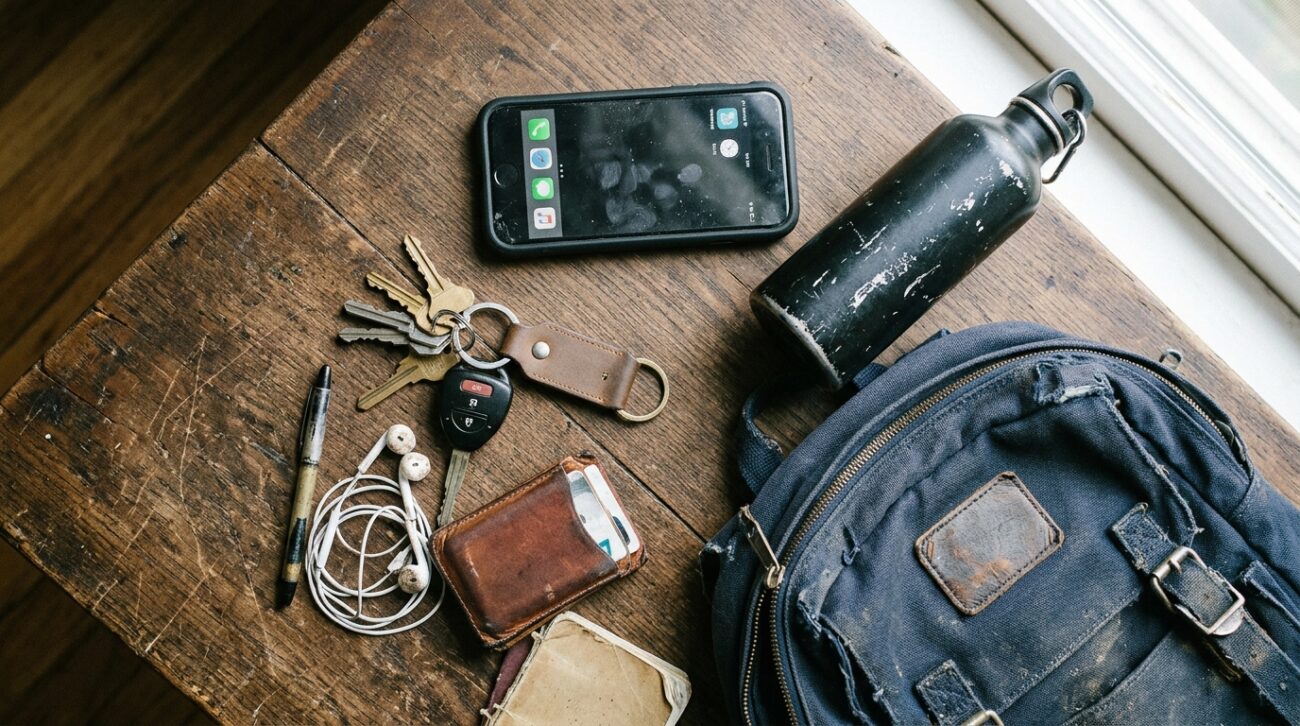
You can clean the apartment from top to bottom and still bring the city back inside in your pocket. The phone that rode the subway in your hand. The bag that sat on the floor of a train, a restaurant, and a gym locker room before landing on your bed. The keys that touched every door handle between here and the office. The umbrella that dripped on a stranger’s coat.
New Yorkers carry more stuff, through more places, with more contact with strangers than almost any other commuters in the country. Everything you carry picks up something from the day, and most of it comes home with you. Cleaning rituals tend to stop at the front door, which means the items that cross the threshold most often are the ones that get skipped most reliably.
This guide covers those things: what each item actually collects, how to clean it without damaging it, how often to bother, and how to set up the entry of a small apartment so the day’s grime doesn’t travel any further than it has to.
A quick note on tone. None of this needs to become a source of anxiety. Everyday germs are part of everyday life, and nobody is asking you to sterilize your wallet. But a few five-minute habits make your belongings last longer, look better, and stay out of your food and your bed.
Why these items get missed
Cleaning routines are built around rooms and surfaces: the kitchen counter, the bathroom floor, the windowsills. Personal items don’t belong to a room. They live in pockets, bags, and drawers, so they never show up on a checklist.
They’re also the things we touch most. A phone gets picked up dozens of times a day, often right before eating, right after the subway, or in the bathroom. Keys go from door handle to hand to pocket to table. Bags touch floors, seats, and counters. They carry the day’s surfaces from place to place.
The practical move is to give each item a short, specific cleaning routine and to set up a place at the door where the dirtiest ones stop.
Your phone
It’s the item people touch more than anything else they own, and it’s the one most often cleaned with the wrong thing.
What it collects: skin oils, makeup, food, grime from every surface you touched before you picked it up, and lint in the ports.
How to clean it:
- Turn it off and unplug any cables.
- Remove the case, since the case and the phone underneath both need cleaning.
- Wipe the phone with a slightly dampened, lint-free microfiber cloth. Apple’s guidance for its devices accepts 70 percent isopropyl alcohol wipes on hard, nonporous exterior surfaces, so a wipe of that kind is a reasonable choice. Check your manufacturer’s page for yours.
- Don’t let liquid get into openings.
- Don’t use bleach, hydrogen peroxide, abrasive cleaners, aerosol sprays, or compressed air. Don’t spray anything directly onto the device.
- Clean the case separately. Silicone and hard plastic cases can be washed with soap and water and dried completely. Leather cases need a damp cloth and conditioning.
- For ports and speaker grilles, a soft, dry brush or a wooden toothpick (gently) removes lint. Skip metal tools.
How often: a quick wipe once a week, and a proper cleaning when it feels grimy or after you’ve been sick.
Habit worth adopting: don’t take the phone into the bathroom, or at least wipe it after. And put it face-up on a clean spot at home, not on the kitchen counter.
Keys
Keys touch every door handle, lock, and railing on your route, then your pocket, your hand, and your table.
- Wash them with warm soapy water, rinse, and dry. A key ring with a fob or electronic part can be wiped with a cloth dampened with 70 percent isopropyl alcohol instead.
- Do this once a week or whenever they look dull.
- Put them in the same place every time. A tray or bowl by the door contains the grime in one spot, and it makes them easier to find.
What the commute adds
The subway is where most of this starts, and a few small habits cut down what you pick up.
- Keep your bag on your lap or on a hook, not the floor, whenever you can. Platforms and train floors are the dirtiest places it will visit all day.
- Keep your phone in a pocket on crowded trains rather than holding it against poles and straps with the same hand.
- Wash or sanitize your hands before you eat, not after you’ve touched the pole, but before the food reaches your mouth. A small bottle in the bag handles this on the go.
- Carry a spare pack of tissues or wipes for the umbrella handle, the phone, and your hands when you reach a sink-free stretch of the day.
- Don’t set your bag on a restaurant or bar floor, and use a hook if one is available.
None of this is about avoiding the subway. It’s about making the bag and phone the last things that need attention when you get home, instead of the first.
Wallet, cards, and transit pass
Wallets sit in back pockets, on bar tops, and on counters. Cards pass between hands.
- Empty the wallet every month or two. Remove old receipts, which are paper clutter and a source of dust.
- Wipe the wallet exterior with a damp cloth. Leather needs a gentle wipe and an occasional conditioner.
- Wipe cards with a cloth lightly dampened with isopropyl alcohol, then dry. Don’t use anything that could damage a chip or a magnetic strip.
Your bag
This is the big one. A backpack, tote, or work bag rides on subway floors, seats, restaurant floors, and office carpet. It then goes on your bed, your couch, or your kitchen counter, because there’s nowhere else to put it in a small apartment.
What it collects: street grime, crumbs, and food residue from the bottom, and a layer of whatever was on the surfaces it sat on.
How to clean it:
- Empty it completely once a month. Shake out crumbs. Turn the bag upside down over the sink or outside.
- Vacuum the interior with a brush attachment, especially the seams and pockets.
- Check the care label. Many canvas and nylon bags can be washed by hand in cool water with mild soap, or in the machine on a gentle cycle in a pillowcase. Leather needs a damp cloth and a leather conditioner. Avoid soaking.
- Wipe the bottom and straps weekly with a damp cloth. They get the most contact.
- Let it dry completely before putting things back. A damp bag grows mildew.
The better habit: don’t put your bag on the bed or the counter. Hang it on a hook by the door, or set it on a shelf, a stool, or a designated spot. The aim is for the dirtiest side of the bag to never touch the places you sleep and eat.
Reusable shopping bags
Public health agencies recommend washing reusable grocery bags regularly, because they carry raw food, produce, and spills, then get tossed in a closet and used again. They don’t have to be elaborate.
- Wash fabric bags in the machine or by hand with hot water and soap, and dry completely.
- Wipe plastic-coated or insulated bags with a damp, soapy cloth.
- Keep bags used for raw meat separate from bags used for produce and bread.
- Check bags for leaks and stains. Replace if they smell and won’t clean.
Do this every couple of weeks if you shop often, and immediately after anything leaks.
Headphones and earbuds
Earbuds and headphones sit against skin and ears, collecting oil, wax, and sweat.
- Wipe the exterior with a dry or barely damp microfiber cloth.
- For the mesh of earbuds, use a soft, dry brush or a clean, dry cotton swab to remove wax gently. A toothpick or pin can damage the mesh.
- Ear tips on some models are removable and can be washed with soap and water. Dry them fully before refitting.
- Over-ear headphones with removable pads can have the pads cleaned according to the manufacturer’s directions.
- Never submerge them unless they are rated for it, and even then, follow the manual.
Clean them every couple of weeks, or more if you use them at the gym.
Water bottle and travel mug
A reusable bottle is one of the more neglected items on this list, because it holds water and looks clean.
- Wash it daily with hot water and dish soap. Use a bottle brush to reach the bottom and walls.
- Take the lid apart. The gasket, straw, and mouthpiece collect residue and mold.
- Soak once a week in a mix of white vinegar and water, or a cleaning tablet made for bottles, then rinse well.
- Let all parts air dry fully before closing it.
- If you carry coffee or tea, stains and smells build up faster. Baking soda and warm water helps.
A bottle left closed with a little water at the bottom is how mold gets started.
Glasses and sunglasses
Most people clean their glasses with their shirt, which scratches the lenses over time.
- Rinse them under lukewarm water to remove grit.
- Wash with a drop of mild dish soap, rinse, and dry with a clean microfiber cloth.
- Don’t use paper towels, tissues, or household glass cleaner, which can damage coatings.
- Wipe the nose pads and the ear tips of the frames, where skin oils collect.
Once a day for glasses you wear all day, weekly for sunglasses.
The umbrella
New York is a rainy city and an umbrella is often the last thing in the bag. It’s also a mildew factory when it’s put away wet.
- Open it up to dry fully after every use, away from heat sources.
- Wipe the handle and the shaft once in a while, since they pick up grime.
- If it has gotten musty, wash it by hand with mild soap and water, rinse, and dry open.
Your shoes
This one is up for debate in many households, but the habit is simple: the bottom of your shoe has been on every surface in the city. Studies that have sampled shoe soles have found a wide variety of bacteria.
You don’t have to ban shoes, but a few small steps reduce what comes in.
- Use a doormat inside and out. Wipe your feet.
- Take your shoes off at the door if you can, and put them on a tray or rack so the soles don’t touch the floor or other shoes.
- Wipe the soles with a damp cloth after wet or muddy days, and wash fabric sneakers according to the label.
- Keep a pair of indoor slippers or house shoes by the door if you like the barefoot-free routine.
If you live in a walk-up, our guide to cleaning a walk-up apartment in NYC has more on entry logistics.
Gym bag and gear
Sweat, damp clothes, and closed zippers produce a smell quickly.
- Unpack the bag when you get home. Hang damp clothes and towels to dry.
- Leave the bag open in a ventilated spot overnight.
- Wash the bag every few weeks, following its label.
- Wipe down a yoga mat or water bottle after each use, and clean shoes by letting them air out.
Coats, scarves, hats and gloves
In winter, a whole second layer of belongings rides along with you and goes straight to the closet or the back of a chair. Coats brush against subway seats, poles, and crowded elevators. Scarves and hats sit against your face and hair. Gloves touch everything.
- Wash scarves, hats, and gloves every few weeks in the cold season, following the label. Wool needs gentle handling and flat drying.
- Don’t drape the coat over the bed. Hang it on a hook or hanger in the entry, so it doesn’t carry street grime onto bedding.
- Wipe the lining and pockets of a coat that goes everywhere. Pockets collect lint, receipts, and crumbs.
- Air out wool and down coats near an open window after wearing them. It freshens them between dry cleanings.
- Salt stains from winter streets leave white lines on boots and coat hems. Wipe them with a cloth dampened with a mix of water and white vinegar, then dry.
Gear for kids and strollers
If you have a small child, the list gets longer. A stroller wheel rolls over exactly what you tried to avoid, then lands in the hallway. A backpack sits on classroom floors. A toy goes everywhere.
- Wipe stroller wheels and the handle regularly, and keep the stroller near the door, not in the main living area.
- Wash the stroller tray and any fabric parts according to the label.
- Wash kids’ backpacks and lunch bags every couple of weeks, and keep the lunch bag out of the bag that holds shoes or gym clothes.
- Keep a tray or hook at kid height for backpacks, so they get hung up instead of dropped.
After a cold or the flu
When someone in the home has been sick, the things they carry are part of the cleanup. Wipe the phone, keys, wallet, headphones, and water bottle. Wash the pillowcase, the bag, and any scarf or hat. Replace or wash the toothbrush holder and the hand towel.
You don’t need heavy chemicals. Soap and water, plus a wipe-down of electronics and hard surfaces following the manufacturer’s directions, is enough in most cases. Do the pass once, when the person starts to recover, and again if someone else in the home gets sick.
Set up the entry so the grime stops there
You don’t have to sanitize everything every day. A better strategy is to contain it, using a “landing zone” at the door.
A simple setup works in even a tiny apartment:
- A hook or shelf for the bag and coat, so they don’t go on the bed or counter.
- A tray or bowl for keys, wallet, and sunglasses.
- A shoe tray or mat for wet shoes and umbrellas.
- A small bottle of hand soap or sanitizer near the door.
- A habit: wash your hands once you get in, before touching food.
That one spot does more than a dozen separate cleaning routines, because it keeps the dirtiest things out of the places that matter. For more on what counts as clean, sanitized, and disinfected, see our piece on cleaning, sanitizing and disinfecting.
A simple schedule
Daily: wash your hands when you get home, put keys and bag in their place, take your bottle apart to wash it.
Weekly: wipe your phone and case, keys, and sunglasses. Wipe the bag’s straps and bottom. Wash the reusable bag if needed.
Monthly: empty and clean the bag, the wallet, and the gym bag. Clean headphones. Wash the phone case.
Seasonally: wash the umbrella, reusable bags, and any washable backpack. Sort through the entry area.
The point isn’t to check every box. It’s to pick two or three habits that fit your life, like putting the bag on a hook and wiping the phone on Sundays, and let them cover most of the problem. For the cleaning that happens in the rest of the apartment, our guide to whether cleaning your home is actually good for your health explains which surfaces matter most.
The short version
The things you carry pick up the day and bring it home. Give the phone a weekly wipe with the right cloth, wash keys and bottles, empty and clean your bag, and let umbrellas dry open. Most of all, set up a landing zone at the door, so the dirtiest items stay near the entrance and your bed, couch, and kitchen counter stay out of it.
Tired of Dealing With This Yourself?
Let our NYC pros handle it — fast, thorough, done right the first time.
Book a Cleaning