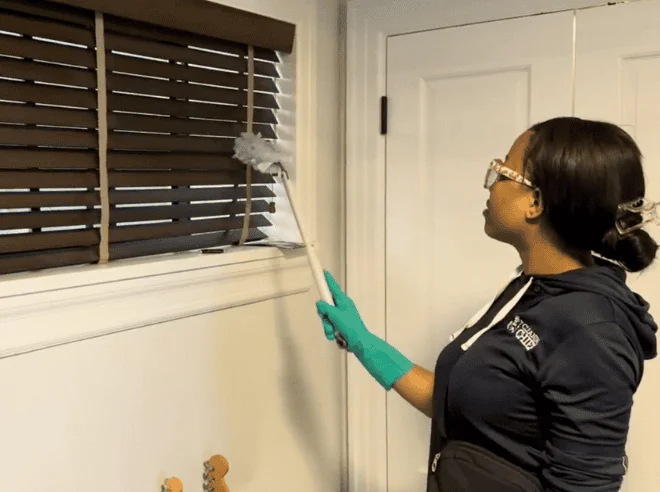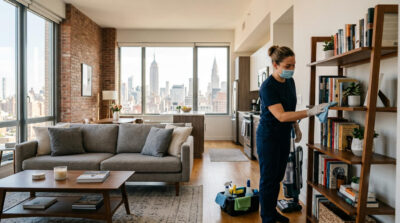
Somewhere in the back of most New York kitchen cabinets, there’s a half-used canister of disinfecting wipes from 2020. They were bought in a hurry, used with great enthusiasm for a few months, and then mostly forgotten. Chances are, they were also used wrong most of the time.
That’s not a criticism. The words on cleaning product labels are genuinely confusing. “Cleans,” “sanitizes,” “disinfects,” “kills 99.9 percent of germs.” They sound like variations on the same idea, but to regulators and professional cleaners, they describe three different jobs with three different results.
This guide explains what each term really means, why the order matters, how to read a product label, which surfaces in your apartment need which treatment, and why disinfecting everything all the time isn’t the goal.
Three Words, Three Different Jobs
Here’s the simplest way to understand the difference.
Cleaning removes dirt, grease, food residue and germs from a surface. It doesn’t necessarily kill anything. It physically lifts it away, usually with soap or detergent, water and some friction. Cleaning is what you do most of the time, and for most surfaces, most of the time, it’s enough.
Sanitizing reduces the number of bacteria on a surface to a level considered safe by public health standards. It lowers the germ count significantly, but it doesn’t claim to eliminate everything. Sanitizers are common in restaurant kitchens, where surfaces need to be made safe quickly and often.
Disinfecting kills specific germs listed on the product label, including many viruses and bacteria, on hard surfaces, as long as the product is used exactly as directed. It’s a stronger standard than sanitizing, and it usually requires the surface to stay wet with the product for a set amount of time.
Think of it this way: cleaning is sweeping the floor, sanitizing is making sure it’s safe to walk on barefoot, and disinfecting is making sure a specific list of intruders has been dealt with.
There’s also a fourth term, sterilizing, which means eliminating all microbial life, including hardy bacterial spores. That’s for hospitals and laboratories, not apartments. No household product sterilizes your kitchen counter, whatever the marketing suggests.
Why Cleaning Always Comes First
This is the most important point in this article, and it’s the one most people miss. Sanitizers and disinfectants work best on surfaces that have already been cleaned.
Dirt, grease and food residue act like a shield. Germs sitting under a film of dried sauce or soap scum are partly protected from the disinfectant. Many disinfecting ingredients are also weakened when they come in contact with organic material like food or body fluids, which means some of their strength is spent on the grime instead of the germs.
So if you spray disinfectant on a sticky counter and wipe it off, you’ve mostly just cleaned it, and not very well. The correct approach has two steps: clean first to remove visible dirt, then sanitize or disinfect the clean surface.
Some products are labeled as one-step cleaner-disinfectants. They can handle both jobs on lightly soiled surfaces, but for anything visibly dirty, the label usually still instructs you to pre-clean.
Read the Label: It’s Not Just Marketing
In the United States, products that claim to sanitize or disinfect are regulated by the Environmental Protection Agency. In the industry, there’s a saying that “the label is the law,” and it’s worth taking literally. The label tells you exactly what the product does, what it kills, and how to use it so that it actually works.
Here’s what to look for.
An EPA registration number. Look for “EPA Reg. No.” followed by a number. If a product claims to kill germs but doesn’t have one, it hasn’t been through the EPA’s testing process for those claims.
The exact claim. A product that says “sanitizes” and one that says “disinfects” are not interchangeable. Sanitizer claims for household surfaces are generally based on testing against bacteria only. If you’re concerned about viruses, like the ones behind colds, flu or stomach bugs, you need a product that lists them as disinfection claims.
The organisms it kills. Disinfectant labels list the specific bacteria and viruses the product has been tested against. If the germ you’re worried about isn’t on the list, the product hasn’t been proven to kill it.
The contact time. This is the amount of time the surface must stay visibly wet for the product to work. More on this below, because it’s where most home disinfecting goes wrong.
Surface and food-contact instructions. Some disinfectants must be rinsed off surfaces that touch food. Others are only for certain materials. The label will tell you.
Contact Time: The Step Almost Everyone Skips
If you remember only one thing from this guide, make it this: disinfectants need time.
Every disinfectant has a contact time, sometimes called dwell time. It’s the length of time the surface must stay wet with the product to kill the germs listed on the label. Depending on the product and the germ, it can range from about 30 seconds to 10 minutes.
The typical way most people use a spray disinfectant looks like this: spray, wipe immediately, done. That feels productive, but if the contact time is four minutes and the surface was wiped dry after five seconds, the product didn’t disinfect anything. It acted as an expensive cleaner.
Disinfecting wipes have the same problem. A single wipe dragged across a whole kitchen counter usually doesn’t leave enough liquid behind to keep the entire surface wet for the full contact time. To get the results on the label, you may need to use several wipes, or go over the surface again so it stays wet.
The fix is simple, if a little inconvenient. Spray or wipe the surface generously, leave it alone for the full contact time listed on the label, and then wipe or let it air dry. If the surface starts drying out before the time is up, apply more.
What Actually Disinfects, and What Doesn’t
Chlorine bleach. A diluted bleach solution is one of the most effective and inexpensive disinfectants available. The CDC’s guidance for household surfaces is 5 tablespoons of regular unscented household bleach per gallon of room-temperature water, or 4 teaspoons per quart. Leave the surface wet for at least one minute, and make a fresh batch each time, because diluted bleach loses strength. Bleach can discolor fabrics and damage some surfaces, including natural stone and certain metals, so check before using it.
Alcohol. Solutions with at least 70 percent alcohol disinfect well on hard surfaces and evaporate quickly, which is useful for electronics and small items like phones and keys. The quick evaporation also means you need to use enough to keep the surface wet for the full contact time.
Hydrogen peroxide products. Many modern disinfectants use hydrogen peroxide. They tend to have a milder smell and break down into water and oxygen. Plain 3 percent hydrogen peroxide from the pharmacy has some disinfecting properties, but EPA-registered peroxide products are formulated and tested for specific claims.
Quaternary ammonium compounds. Often shortened to “quats,” these are the active ingredients in many common disinfecting sprays and wipes. They’re effective and gentle on most surfaces, but they can leave a residue, which is one reason some labels call for rinsing food-contact surfaces afterward.
Now, what doesn’t disinfect, at least not by EPA standards:
Vinegar. Vinegar is a great cleaner for mineral deposits and soap scum, and it has some mild antimicrobial properties. But it’s not registered as a disinfectant and hasn’t been shown to reliably kill the range of germs a registered disinfectant does. Our guide to eco-friendly cleaning in NYC apartments covers where natural products perform well and where they don’t.
Baking soda. A useful mild abrasive and deodorizer, but not a disinfectant.
Essential oils. Tea tree, lemon and other oils smell pleasant and may have limited antimicrobial effects in lab settings, but homemade oil sprays aren’t a substitute for a disinfectant.
Hand sanitizer. It’s made for skin, not surfaces, and usually evaporates too fast to meet surface contact times.
Never Mix These
A small NYC bathroom without a window is exactly the wrong place for a chemical reaction. Some common cleaning products produce toxic gases when combined, even in small amounts.
- Bleach and ammonia produce chloramine gas, which irritates the lungs and can be dangerous. Some glass cleaners contain ammonia.
- Bleach and acids, including vinegar and many toilet bowl cleaners, release chlorine gas.
- Bleach and rubbing alcohol can form harmful compounds, including chloroform.
- Hydrogen peroxide and vinegar combined in the same container create peracetic acid, which is corrosive and can irritate the skin, eyes and lungs.
Use one product at a time, rinse surfaces with water between products, and keep the fan running or a window open. If you ever notice a sharp, stinging smell while cleaning, leave the room and let it air out.
Where Each Level Belongs in Your Apartment
Most of your apartment needs cleaning, some of it needs sanitizing, and only a few surfaces need disinfecting, most of the time.
Surfaces that need regular cleaning
Floors, walls, windows, furniture, shelves, bedroom and living room surfaces, and most of what you touch in a normal day. Regular cleaning removes dirt, dust, allergens and a large share of germs. For these surfaces, disinfectant adds little except cost, residue and fumes.
Surfaces that benefit from sanitizing
Kitchen counters and cutting boards, especially after preparing raw meat, poultry or fish. Clean with hot soapy water, then sanitize. For surfaces that touch food, choose a product approved for food-contact use and follow the rinsing instructions.
Sponges and dish towels. A kitchen sponge is one of the most germ-heavy objects in any home. Rinse it well, let it dry between uses and replace it often, ideally every week or two. Wash dish towels frequently in hot water.
Items that children put in their mouths, such as teething toys, high chair trays and bottles. Use a sanitizer that’s safe for these surfaces, or wash them in hot, soapy water or a dishwasher. Our guide to keeping a clean home with kids in NYC has more on the high-touch surfaces that come with small children.
Surfaces that need disinfecting
Toilets and the areas around them, including the flush handle and seat.
Bathroom sinks and faucet handles, particularly in shared bathrooms.
High-touch surfaces when someone is sick, including doorknobs, light switches, remote controls, refrigerator handles, phones and keyboards.
Trash cans, inside and out, every so often.
When to Step Up From Cleaning to Disinfecting
In a healthy household, regular cleaning plus targeted disinfection of the bathroom and kitchen is plenty. There are times when it makes sense to do more.
When someone in your home is sick. Disinfecting shared high-touch surfaces daily can reduce the chance of an illness spreading to everyone else in the apartment. In a small NYC apartment where everyone shares a single bathroom and a galley kitchen, this matters more than it would in a larger home.
After a stomach bug. Norovirus, the most common cause of stomach bugs, is harder to kill than many other germs and isn’t eliminated by every disinfectant. Look for a product that specifically lists it on the label, or use a bleach solution. Public health agencies recommend a stronger bleach concentration for norovirus than for routine disinfecting, so check current guidance before mixing.
When someone vulnerable lives with you. A newborn, an older family member or anyone with a weakened immune system is a reason to be more consistent about disinfecting high-touch areas.
After handling raw meat. Sanitize or disinfect counters, cutting boards, faucet handles and anything else you touched during preparation.
What About Soft Surfaces?
Couches, rugs, mattresses, curtains and clothing are porous, which makes them much harder to disinfect than hard surfaces. Most disinfectant claims only apply to hard, non-porous surfaces.
For washable items, hot water and a full drying cycle are the most effective option. Some products are specifically registered for soft-surface sanitizing, but their claims are usually more limited than hard-surface disinfectants. For upholstery and rugs, professional hot water extraction is the most practical way to deep clean them.
NYC Hot Spots Worth Thinking About
City life adds a few germ-transfer points that suburban cleaning guides tend to ignore.
The entryway. Your keys, wallet, phone and bag spend the day on subway poles, office desks and restaurant tables. Where they land when you come home, and how often you clean that spot, matters more than most people think.
Shared laundry rooms. Folding tables and machine handles in building laundry rooms are touched by dozens of people. Wiping them down before you fold is a small habit with real value.
Roommate bathrooms. When several people share one bathroom, faucet handles, the toilet flush and light switches become shared high-touch surfaces. They deserve regular disinfection, especially in cold and flu season.
Takeout. Delivery bags and containers travel through a lot of hands before they land on your counter. Put them on a surface you can wipe down easily, and wipe it afterward.
The Case Against Disinfecting Everything
After a few years of heightened germ awareness, many people disinfect far more than they need to. That comes with costs.
Strong disinfectants can irritate the skin, eyes and lungs, especially in small apartments with limited ventilation. People with asthma often find that fumes from cleaning products make their symptoms worse. Residue from some disinfectants can build up on surfaces, particularly food-contact surfaces that aren’t rinsed. And researchers continue to study whether overuse of certain antimicrobial products contributes to germs becoming more resistant over time.
There’s also evidence that living in a completely sterile environment isn’t necessarily good for us, a topic we cover in our article on whether cleaning your home is actually good for your health. The balanced approach that most health experts favor is simple: clean regularly, and disinfect strategically.
Common Mistakes to Avoid
Skipping the cleaning step. Disinfectant on a dirty surface works poorly.
Wiping too soon. If the surface isn’t wet for the full contact time, it isn’t disinfected.
Using a dirty cloth. Wiping a clean surface with a used cloth or sponge just redistributes germs. Use fresh cloths, and don’t use the same one for the bathroom and the kitchen.
Diluting incorrectly. More isn’t better. Too much bleach can damage surfaces and create fumes without improving results. Too little won’t work. Follow the label or official guidance.
Using old bleach solution. Diluted bleach loses strength quickly. Mix it fresh.
Disinfecting food-contact surfaces without rinsing, when the label says to rinse.
Assuming “natural” means “disinfecting.” Vinegar and essential oils are useful cleaners, but they aren’t a replacement for a registered disinfectant when you actually need one.
How Professionals Approach It
Professional cleaners follow the same basic principles, with a few habits worth borrowing.
Many use color-coded cloths, with one color for bathrooms, another for kitchens and another for general surfaces, so a cloth that cleaned a toilet never touches a kitchen counter. They clean before they disinfect, respect contact times and switch to fresh cloths often. Many also pay attention to how cloths interact with products. Some cotton and microfiber cloths can absorb part of the active ingredient in quat-based disinfectants, reducing how much actually reaches the surface, which is why product instructions and cloth choice matter.
Most importantly, they match the method to the situation. A bedroom dresser gets dusted and wiped. A bathroom gets cleaned and then disinfected. A kitchen counter gets cleaned and, where needed, sanitized with a food-safe product.
The Bottom Line
Cleaning, sanitizing and disinfecting aren’t competing options. They’re steps, and each has its place. Clean most things most of the time. Sanitize surfaces that touch food and mouths. Disinfect bathrooms, high-touch surfaces and anything involved in an illness, following the label and giving the product time to work.
Do that, and that old canister of wipes in the back of your cabinet finally gets used the way it was meant to be.
Tired of Dealing With This Yourself?
Let our NYC pros handle it — fast, thorough, done right the first time.
Book a Cleaning