Most people think of allergens as an outdoor problem. Pollen in spring, ragweed in fall, the general assault that sends half the city reaching for antihistamines every time a season changes. What gets less attention is what’s happening inside the apartment — and inside is where the average New Yorker spends the majority of their time.
Indoor allergens are persistent in a way outdoor allergens aren’t. They don’t wash away in rain. They don’t disappear when the season changes. They accumulate quietly in surfaces, circulate through the air, and produce symptoms — sneezing, congestion, itchy eyes, disrupted sleep, general low-grade respiratory discomfort — that most people attribute to everything except the specific cause.
Dust mites are the primary offender in most homes. But they’re not the only one. Mold spores, pet dander, cockroach allergens (a real and common problem in New York City specifically), and pollen tracked in from outside all contribute to the indoor allergen load. Managing that load isn’t complicated, but it requires understanding what you’re actually dealing with and where it lives.
What Dust Mites Actually Are
Dust mites are microscopic arthropods — related, distantly and uncomfortably, to spiders — that live in soft surfaces throughout any home. They don’t bite. They don’t burrow into skin. What they do is feed on the dead skin cells that humans and animals shed continuously, which means any surface that accumulates organic material is potential habitat.
A single gram of dust can contain thousands of dust mites. The average mattress, left untreated, is home to hundreds of thousands of them. This is not a reflection of how clean or dirty a household is — it’s a reflection of the basic biology of human habitation. We shed skin cells. Mites eat them. The cycle is continuous.
The allergen isn’t the mites themselves but their waste proteins, which become airborne when bedding is shaken, upholstery is disturbed, or a vacuum without proper filtration sends fine particles back into the air. These proteins are what trigger immune responses in the roughly 20 million Americans with dust mite allergies.
Dust mites thrive in warm, humid conditions — temperatures between 65°F and 85°F and humidity above 50%. New York City apartments in summer hit both thresholds reliably. Buildings with forced-air heating in winter create indoor warmth that extends the comfortable range. The result is a year-round environment that supports dust mite populations more effectively than most people realize.
Why NYC Apartments Have a Particular Problem
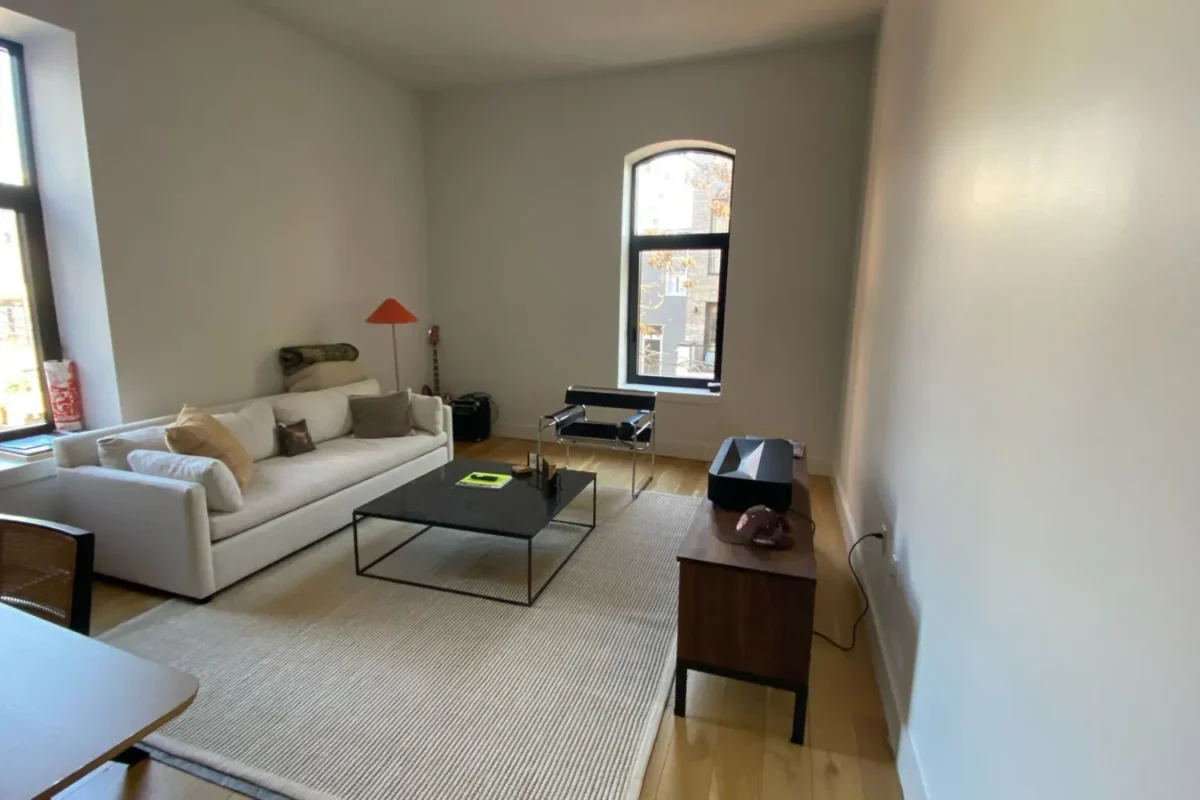
Standard allergen advice is written for houses. NYC apartments present a specific set of conditions that change the math.
Smaller square footage means allergens are concentrated in less air volume. A bedroom that’s 10 by 12 feet accumulates the same amount of skin cell debris as a larger room but circulates it through a fraction of the air. The concentration per cubic foot of air is higher.
Older buildings — and New York has an enormous stock of pre-war and mid-century construction — have characteristics that favor allergen accumulation. Radiator heat raises temperatures and lowers humidity in winter, which doesn’t eliminate dust mites but can cause their allergen particles to become lighter and more airborne. Gaps in older windows and doors allow outdoor allergens — pollen, mold spores, urban particulate — to enter continuously. HVAC systems, where present, often circulate air through ductwork that hasn’t been cleaned in years.
Building density adds another layer. Cockroach allergens are a documented and significant indoor allergen problem in New York City specifically, with studies showing high rates of cockroach allergen presence in urban apartment buildings regardless of visible infestation. Cockroach allergens accumulate in dust and kitchen areas and are a known trigger for asthma, particularly in children.
None of this is cause for alarm. It’s context. Understanding what the actual sources are makes it possible to address them specifically rather than cleaning vaguely and wondering why symptoms persist.
The Bedroom Is the Starting Point
The single most important room for allergen management is the bedroom, and within the bedroom, the bed.
Adults spend roughly a third of their lives in bed. That’s eight hours per night of continuous contact with a surface that — unless managed deliberately — is one of the densest allergen environments in the home. Body heat creates the warm conditions mites prefer. Moisture from breathing and perspiration creates the humidity they need. Shed skin cells provide the food source. A mattress and pillow set that hasn’t been properly maintained is effectively an ideal dust mite habitat that you sleep inside every night.
The solution has three components.
Allergen-proof mattress and pillow encasements are the most effective single intervention available. These are tightly woven covers that zip around the mattress or pillow and create a physical barrier between the sleeping surface and the sleeper. They don’t eliminate mites from the mattress — nothing short of replacing the mattress does that — but they prevent allergen proteins from reaching the person sleeping above them. Encasements need to be wiped down or washed periodically; the covers themselves accumulate allergens on their surface over time.
Bedding — sheets, pillowcases, blankets — should be washed in hot water. The threshold that kills dust mites reliably is 130°F. Most residential hot water heaters are set between 120°F and 140°F; checking the setting matters if allergy management is a goal. Cold or warm water washing cleans the fabric but doesn’t address the mite population within it. Weekly washing at the right temperature is the standard recommendation for households where dust mite allergies are a concern.
Comforters and duvet inserts need attention too. Down and down-alternative fills accumulate dust and mites over time. Washing every one to two months, or using a duvet cover that can be washed weekly while the insert is washed less frequently, keeps the load manageable. Comforters that can’t be washed at home need to be laundered at a commercial laundry with appropriately hot water settings.
Floors: Carpet vs. Hard Surface
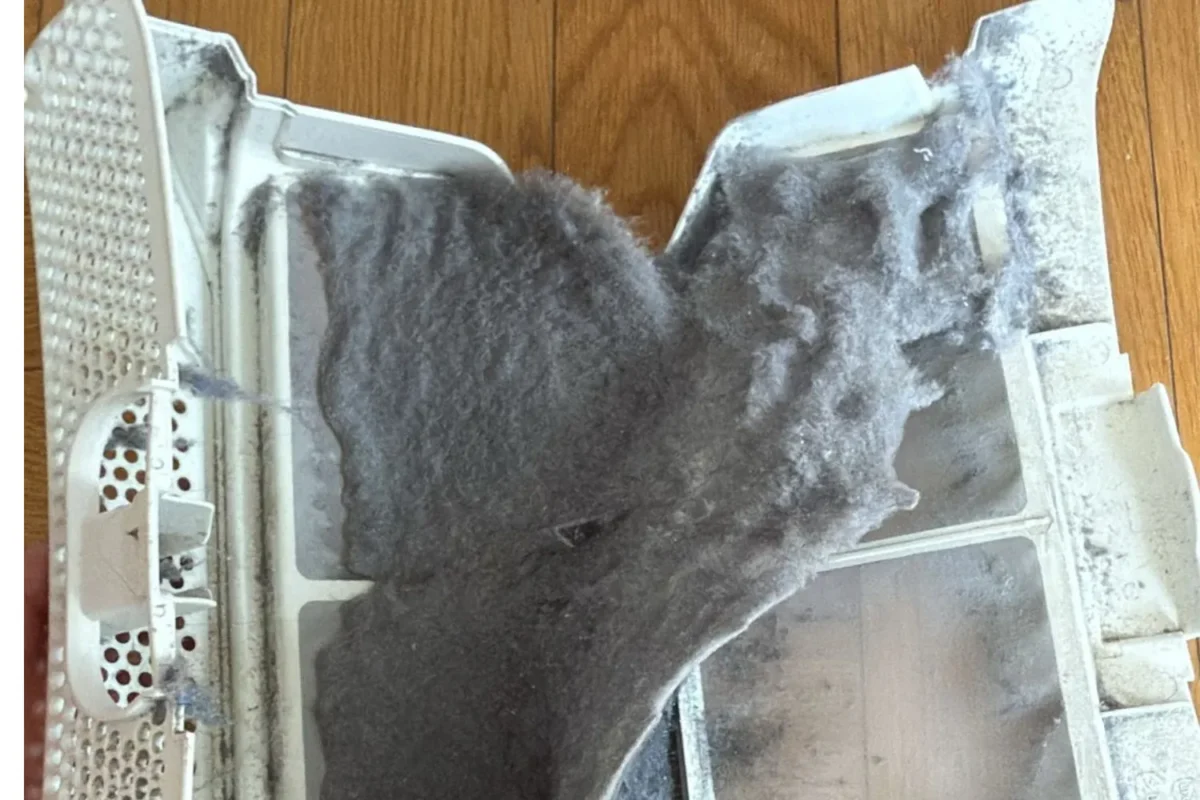
Carpet is an allergen reservoir. This isn’t a controversial statement — it’s a straightforward description of how carpet fibers interact with the particles that settle on them.
Dust, dander, pollen, and mite debris settle into carpet pile and stay there. Walking across carpet disturbs the surface layer and sends fine particles back into the air. Standard vacuum cleaners without HEPA filtration capture the larger particles but allow finer ones — the ones most likely to cause respiratory reactions — to pass through and be redistributed into the air. In apartments with carpet throughout, the effect is measurable: allergen concentrations in carpeted rooms are reliably higher than in comparable hard-floor spaces.
The practical implications:
Hard floors — hardwood, tile, vinyl, polished concrete — are significantly easier to maintain at low allergen levels. A microfiber dry mop or damp mop removes particles from the surface and holds them rather than redistributing them. There’s no pile for debris to sink into and resist removal.
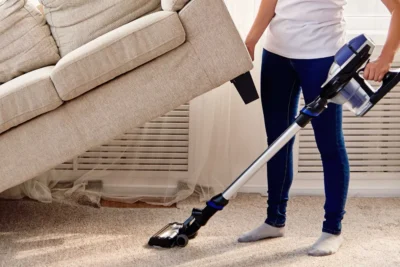
For apartments with carpet, a HEPA-filter vacuum is not optional if allergen management is the goal. HEPA filters capture particles at 0.3 microns and larger, which includes the allergen proteins from dust mites and most other indoor allergens. Standard filters don’t achieve this. Vacuuming frequency matters too — in high-traffic areas and bedrooms, twice weekly is the appropriate standard rather than once.
Area rugs present a middle situation. They can be taken up, beaten out, and washed in ways that wall-to-wall carpet cannot. Smaller rugs can be machine washed; larger ones benefit from periodic professional cleaning. The floor under the rug also needs attention — allergens migrate through rug backing over time.
Steam cleaning carpet and area rugs periodically removes what regular vacuuming leaves behind. The heat of steam also kills dust mites in the surface layers of carpet pile. Professional carpet steam cleaning equipment reaches temperatures and suction levels that home rental units don’t match; for apartments where allergy symptoms are a consistent issue, periodic professional treatment of carpeted surfaces is worth the consideration.
Soft Furniture and Curtains
The sofa, armchair, and upholstered furniture in a living room accumulate allergens by the same mechanism as carpet. Fabric fibers trap particles. Sitting disturbs the surface and creates a small cloud of allergens at exactly the level a seated person is breathing.
Regular vacuuming of upholstered surfaces with an upholstery attachment removes the surface accumulation. Removable slipcovers and cushion covers that can be washed in hot water make a meaningful difference in washable allergen load. Furniture with tight weaves accumulates allergens more slowly than furniture with loose, textured fabric.
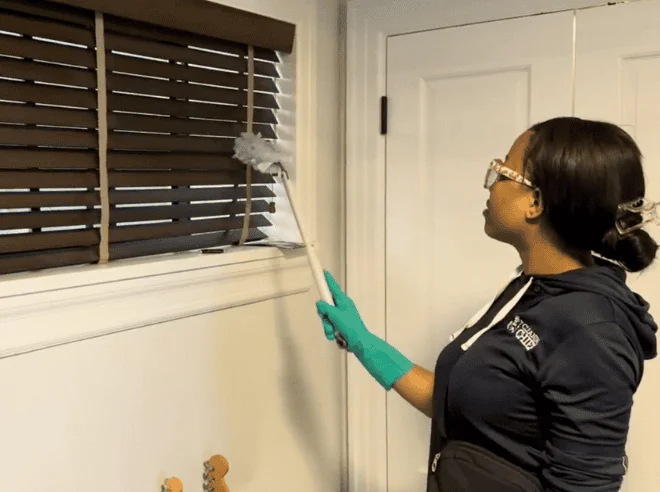
Curtains are one of the most overlooked allergen surfaces in apartments. Fabric curtains hang in windows — which is to say, they hang in the path of every breeze that comes through an open window, collecting whatever that air carries. They also accumulate dust from the surrounding room continuously. Washing curtains every month or two during high-pollen seasons, and every one to two months otherwise, keeps the load down. Alternatively, blinds or shades that can be wiped rather than washed are easier to maintain allergen-free, though they carry their own dust accumulation pattern on horizontal surfaces.
Dusting: Why Most People Do It Wrong
The goal of dusting is to remove particles from surfaces. The problem is that many dusting methods don’t remove particles — they relocate them.
A dry feather duster or dry cloth sweeps dust off one surface and sends it airborne, where it circulates for several hours before settling elsewhere. The total allergen load in the room is unchanged; it’s just been temporarily redistributed. This is why apartments can be dusted frequently and still feel dusty — the dusting isn’t removing allergens, just moving them around.
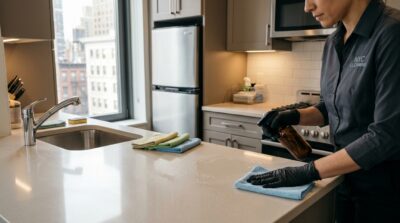
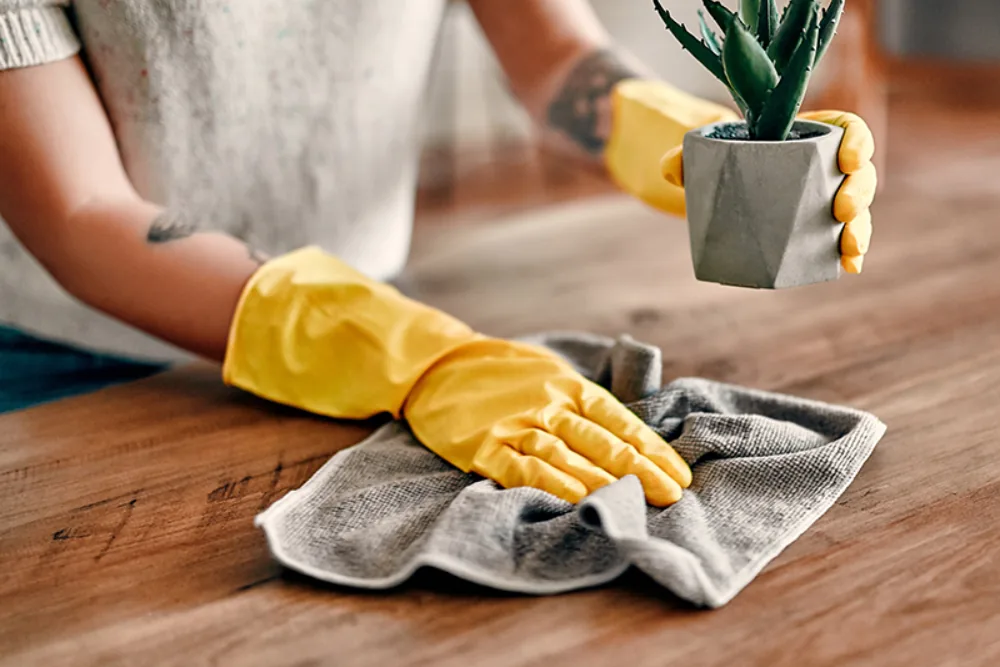
Microfiber cloths, either dry or slightly damp, trap particles through the physical structure of the fabric rather than just displacing them. A barely damp microfiber cloth on a hard surface picks up dust and holds it. The cloth needs to be shaken out or rinsed away from the living area, and washed between uses, to actually remove the captured material from the environment.
Technique also matters. Always dust from higher surfaces to lower ones — shelves, ceiling fan blades, and tops of furniture first; lower shelves, baseboards, and floors last. Dust that falls from higher surfaces gets captured when you address the surfaces below. Reversing the order means re-contaminating surfaces you’ve already cleaned.
The Zones People Consistently Miss
Standard cleaning routines address the visible and obvious. Allergen management requires attention to areas that fall outside those routines.
Ceiling fan blades. In apartments where ceiling fans run regularly, the blades develop a significant dust layer that gets thrown into the air every time the fan operates. This is one of the more effective allergen dispersal mechanisms in a home, and one of the easiest to address. A damp cloth on the blade surface every two to three weeks eliminates the problem.
Air vents and returns. Dust accumulates in HVAC vents and circulates through the apartment every time the system runs. Wiping vent covers regularly and replacing air filters on the stated schedule — monthly for standard filters, every three months for higher-grade filters — keeps this manageable. HVAC filter ratings matter: filters in the MERV 11–13 range capture significantly more allergen particles than standard MERV 1–4 fiberglass filters without restricting airflow in most residential systems.
Baseboards. Dust settles along baseboards continuously, and it’s rarely a priority during routine cleaning. A wipe-down every two to three weeks prevents significant buildup.
Window tracks and sills. Open windows bring in outdoor allergens — pollen in spring, mold spores year-round — that collect in window tracks and on sills. Vacuuming tracks and wiping sills removes this accumulation. In a city apartment, window sills also collect significant urban particulate from outdoor air.
Tops of cabinets, door frames, picture frames, and the surfaces above eye level in general. These accumulate dust continuously and are cleaned infrequently. A damp microfiber cloth run across these surfaces monthly makes a real difference in total particulate load.
Humidity: The Variable Most People Ignore
Dust mite populations are directly responsive to indoor humidity. Below 50% relative humidity, mites struggle to survive and reproduce. Above 50%, they thrive.
In New York City summers, indoor humidity without climate control regularly exceeds 60% to 70%. Air conditioning reduces humidity as well as temperature, which is one of the reasons air-conditioned apartments have better allergen profiles in summer than non-air-conditioned ones — not just for human comfort, but because the humidity reduction suppresses mite populations.
A dehumidifier used in humid months to maintain indoor humidity below 50% is one of the more effective interventions available for dust mite control. This is especially relevant in basements, ground-floor apartments, and spaces with limited ventilation. A basic humidity meter (hygrometer) costs very little and provides the actual reading rather than requiring guesswork.
Mold is a separate allergen category that responds even more directly to humidity. Mold spores become airborne and trigger respiratory symptoms in much the same way dust mite allergens do. NYC apartments — particularly older buildings with variable ventilation and occasional plumbing issues — are susceptible to mold growth in bathrooms, under sinks, around window frames, and in any space where moisture accumulates. Keeping humidity down, fixing water leaks promptly, running bathroom ventilation fans during and after showers, and addressing any visible mold growth immediately are the relevant interventions.
Ventilation: When Opening Windows Helps and When It Doesn’t
Fresh air is generally good. But for people managing indoor allergens, the question of when to open windows is more nuanced than it might seem.
In spring and early summer — prime pollen season in New York — open windows introduce outdoor pollen directly into the apartment. Pollen counts are highest on dry, windy days and lowest after rain. Checking pollen forecasts before opening windows on high-count days is a practical habit for anyone with significant pollen sensitivity.
In fall and winter, the outdoor allergen load is lower and ventilation is genuinely beneficial — it reduces indoor concentration of dust mite allergens, mold spores, and any other particles that accumulate in closed spaces. Even brief ventilation during cooler months improves indoor air quality measurably.
HEPA air purifiers address the limitation of closed windows during high-pollen periods. Running a HEPA air purifier in the bedroom provides meaningful filtration of the air in that space — reducing airborne allergen concentration even when outdoor conditions make ventilation counterproductive. The bedroom is the priority space because of time spent there; a living room purifier is secondary.
Clutter Is an Allergen Issue
This connection is underappreciated but real.
Every object in an apartment is a surface that collects dust. Books, decorative items, piled clothing, stacked papers, storage boxes left in living spaces — all of them accumulate particulate and represent surfaces that are rarely cleaned. A shelf with ten decorative objects is cleaned much less thoroughly than a clear shelf, because wiping around objects is slower and less complete than wiping a clear surface. Objects stored on the floor collect floor-level dust and interfere with vacuuming.
This doesn’t mean apartments need to look minimal to be healthy. It means that storage decisions have cleaning consequences. Items stored in closed containers, closed cabinets, or drawers don’t collect ambient dust. Items left open on surfaces do. The practical resolution is to store what’s stored and display what’s genuinely intentional — and to clean display surfaces regularly enough that they don’t become reservoirs.
Building a Realistic Maintenance Routine
None of the above requires heroic effort. It requires consistency and the right tools applied to the right surfaces at appropriate frequency.
Weekly: wash all bedding in hot water, vacuum carpets and upholstered furniture with HEPA vacuum, damp-mop hard floors, wipe bathroom and kitchen surfaces.
Every two to three weeks: dust all surfaces including ceiling fan blades and tops of furniture with damp microfiber, wipe baseboards, vacuum window tracks and sills.
Monthly: wash curtains or wipe blinds, check and replace HVAC filter if needed, wipe inside of air vents, check humidity levels and adjust dehumidifier settings seasonally.
Every few months: professional carpet or upholstery cleaning as needed, wash or replace pillow encasements, assess any areas where moisture or mold may be developing.
The cumulative effect of maintaining this schedule is a meaningfully lower allergen load across the apartment — not zero, because zero is not achievable in a lived-in space, but low enough that most people with standard sensitivity notice the difference. For households with diagnosed allergies or asthma, the difference can be significant in terms of symptom frequency and severity.
A clean apartment isn’t just more comfortable to live in. In the specific context of indoor allergens, it’s genuinely healthier — and the gap between a maintained space and a neglected one is measurable in the air you breathe every time you’re home.
Tired of Dealing With This Yourself?
Let our NYC pros handle it — fast, thorough, done right the first time.
Book a Cleaning