Anyone who shares an apartment with a dog or cat already knows the deal. You vacuum Thursday. By Saturday there’s a visible layer of fur on the couch again. You wash the dog, dry him off, and twenty minutes later he smells exactly like he did before the bath. You scrub the area around the litter box until it’s genuinely clean, and by the following afternoon it needs attention again.
Living with pets raises the baseline cleaning requirement of any home. Not because pets are dirty in any meaningful sense — they’re not — but because they generate specific, persistent messes that standard cleaning routines weren’t really designed for. Hair, dander, odor, and tracked-in debris operate by different rules than regular household dust, and they respond to different approaches.
The good news is that once you understand what you’re actually dealing with in each category, the maintenance becomes a lot more manageable. Here’s what actually works.
The Hair Problem, Honestly
Pet hair is the most visible challenge and the one most people address first. It’s also the one where effort and results are most directly connected — meaning the right approach makes a real difference, and the wrong one wastes a lot of time.
The most important thing to understand about pet hair is that vacuuming alone doesn’t solve it. Vacuuming removes hair from floors and rugs, but it doesn’t address hair that’s embedded in upholstery fibers, worked into carpet pile, or collecting in corners, baseboards, and under furniture edges. In a New York City apartment with limited square footage and furniture pushed close to walls, those hidden accumulation zones fill up faster than most people realize.
Effective pet hair management has three components working together.
The first is brushing. Fur that comes off the pet during a brushing session is fur that doesn’t end up on the couch, floor, or in the air. For heavy shedders — huskies, German shepherds, golden retrievers, Maine coon cats — daily brushing during shedding season isn’t excessive. For lighter shedders, two or three times a week is usually enough to make a noticeable difference in ambient fur levels. A deshedding tool like a Furminator or similar undercoat rake removes far more loose fur per session than a standard brush, particularly for double-coated breeds.
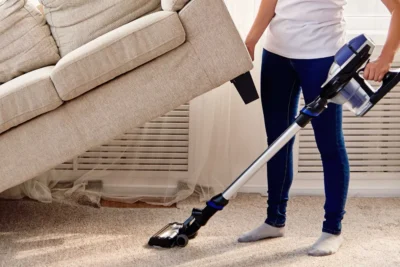
The second is vacuuming frequency. In a home with pets, once a week isn’t enough. High-traffic areas — wherever the animal sleeps, eats, or spends most of its time — need vacuuming every two to three days. This sounds like a lot until you see how much it reduces the general fur situation. Not all vacuums perform equally on pet hair. A vacuum with strong suction, a motorized brush roll, and a HEPA filter is worth the investment for a pet household. The HEPA filter matters specifically because it captures dander particles that a standard filter allows to recirculate into the air.
The third is furniture management. Lint rollers and rubber-bristled pet hair remover mitts work on upholstery, but they’re maintenance tools — they address the surface. Fabric furniture in homes with pets accumulates hair well below the surface layer over time, which is why it can smell faintly of animal even after a wipe-down. Washable slipcovers, throws, or blankets that the pet uses as preferred spots make a meaningful difference here, because those can go through the washing machine regularly rather than requiring the furniture itself to be cleaned.
Dander: The Problem You Can’t See
Hair gets the attention, but dander is the more complicated issue.
Pet dander consists of microscopic flakes of dried skin that all animals with fur or feathers shed continuously. It’s what triggers most pet allergies — not the hair itself. And unlike hair, which is visible and collectable, dander is light enough to remain airborne for hours, settles on every surface in an apartment, and passes through many standard air filters without being captured.
In a smaller NYC apartment, dander concentration can be significantly higher than in a house with more air volume and better cross-ventilation. This affects air quality noticeably, particularly for anyone in the household with respiratory sensitivities.
Addressing dander requires a few specific habits. HEPA air purifiers reduce airborne dander meaningfully — one unit in the main living area and one in the bedroom makes a real difference in homes where pets sleep in the bedroom. Washing pet bedding weekly in hot water reduces the dander reservoir that builds up in their sleeping areas. Dusting with a damp microfiber cloth rather than a dry duster or feather duster matters because damp microfiber traps dander rather than redistributing it into the air.
Hard floors are significantly easier to keep dander-reduced than carpet. Carpet holds dander in its fibers and releases it back with foot traffic. If there are rugs in a pet household, they need to be vacuumed more frequently than the surrounding floor, and a periodic steam clean removes what regular vacuuming misses.
Floors: What Each Type Actually Needs
Hardwood floors are the most common in New York City apartments, and they’re the most forgiving for pet owners in some ways. Hair and dander are visible on hardwood, which means you see the problem clearly and can address it. A dry microfiber mop picks up hair and surface dust effectively and can be done quickly. Wet mopping once or twice a week with a hardwood-appropriate cleaner keeps the surface from getting that gummy residue that builds up from dog paws and general foot traffic.
One note on hardwood and dogs: nails. Unclipped dog nails scratch hardwood over time, particularly in high-traffic areas like the entry, around food bowls, and wherever the dog does the excited spin when you come home. Keeping nails trimmed protects floors and reduces the debris the nails carry in from outside.
Tile floors — common in kitchens and bathrooms in NYC apartments — handle pet traffic well. The main issue is grout. Grout is porous and absorbs pet debris, organic matter from food bowls, and general floor residue. Sealed grout holds up better than unsealed; if grout lines around a pet’s feeding area are darkening and don’t respond to regular mopping, they need a proper scrub with a grout brush and then sealing.
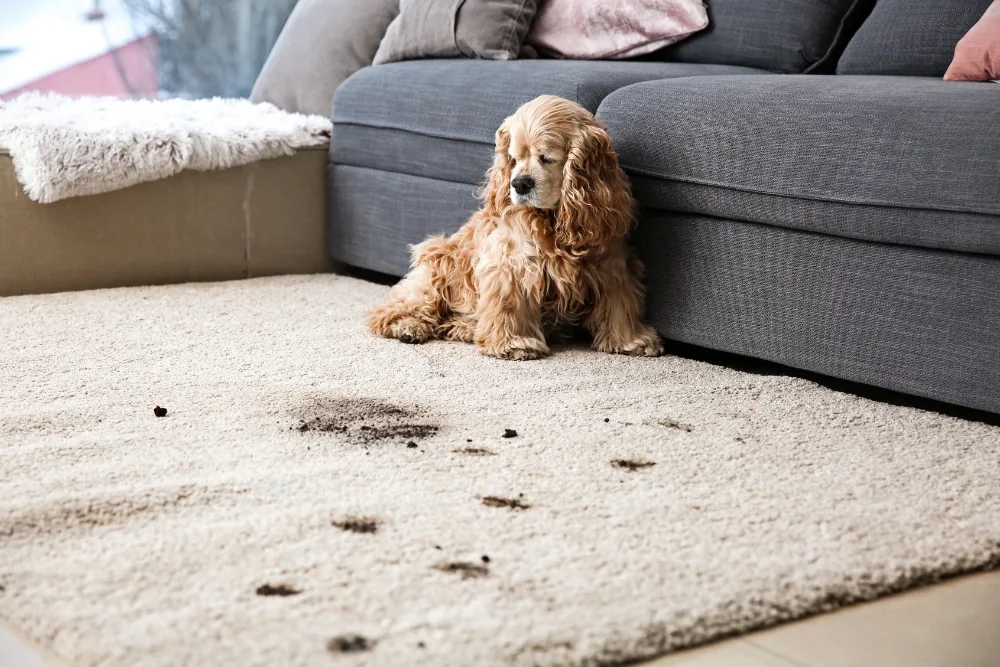
Carpet and rugs are the most demanding surface in a pet household. Hair embeds. Dander accumulates. Accidents soak in. Odors develop over time even without any specific incident, simply from the concentration of pet use. For area rugs, professional cleaning once or twice a year is the practical answer — home steam cleaners work but rarely reach the temperature and suction of professional equipment, which means they clean the surface without fully extracting what’s deeper in the pile.
Upholstery: The Long Battle
The sofa situation in a pet household is one of the more honest conversations in home cleaning.
If the dog or cat is allowed on the furniture — and in most apartments they are, because trying to stop a determined cat from getting onto the couch is largely theoretical — the upholstery accumulates fur, dander, oils from skin and coat, and eventually a faint but unmistakable animal smell.
Lint rollers and rubber mitts handle surface fur adequately between deeper cleans. But the embedded layer — fur worked into the fabric weave, dander in the cushion filling, oils absorbed into the upholstery material — requires more than surface tools.
Vacuuming upholstery with an upholstery attachment removes considerably more than rolling. Do it against the grain of the fabric for best results, the same way a lint roller works better when you go with the nap and then against it. Cushion covers that can be removed and washed extend the time between deep cleans significantly.
For odor specifically: if a couch smells faintly of dog even after vacuuming and airing out, baking soda is genuinely useful. Sprinkle liberally over fabric surfaces, leave it for twenty to thirty minutes, then vacuum. Baking soda absorbs odor compounds rather than masking them. It works. It also works on rugs for the same reason.
Beyond that, upholstered furniture in pet households benefits from a professional fabric clean once a year, or more often if there have been accidents. Home spotting doesn’t reach the full depth of the material.
The Odor Question
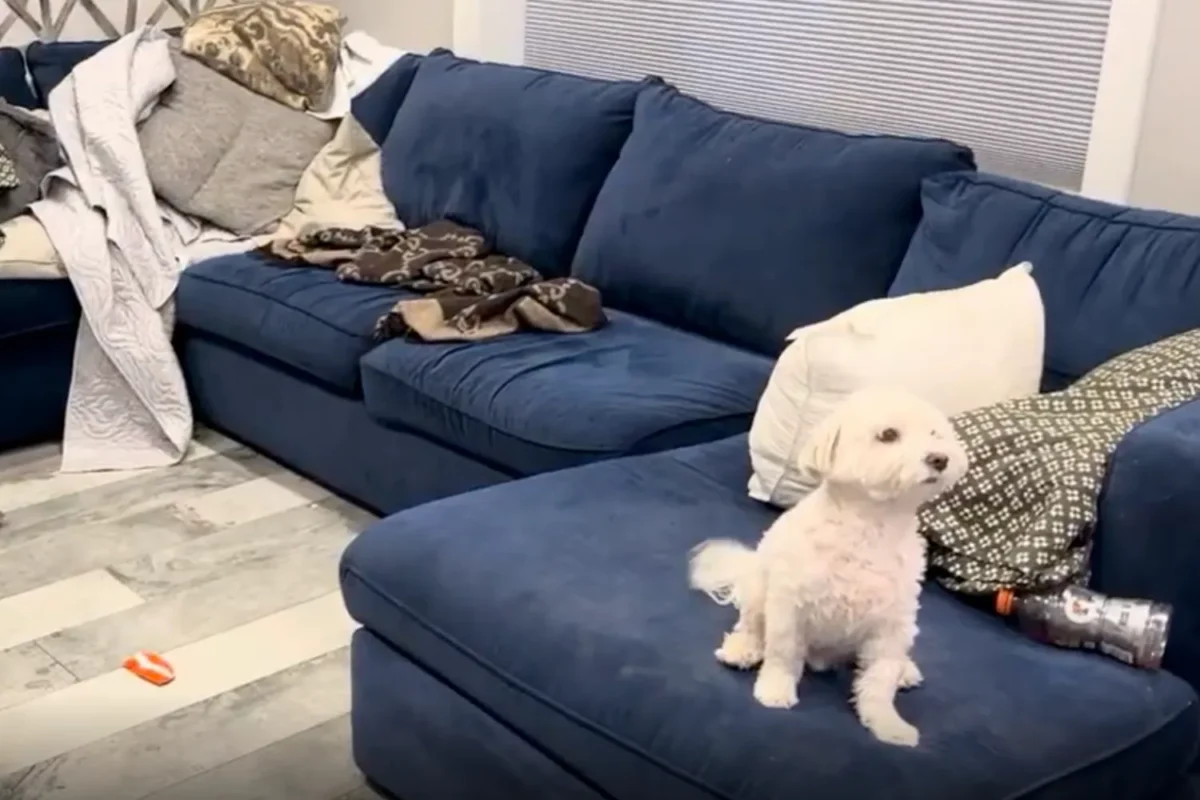
Pet odor is one of the more misunderstood aspects of keeping a clean home with animals. Most people’s instinct is to mask it — air fresheners, scented candles, plug-ins. These work for a few minutes and then the underlying smell reasserts itself, now mixed with vanilla or lavender.
Odor masking doesn’t work. Odor elimination does.
There are two main sources of persistent pet odor in a home. The first is biological residue: the oils, dander, saliva, and general biological material that animals leave on surfaces they use regularly. This responds to proper cleaning with appropriate products — enzyme-based cleaners break down the organic compounds that cause odor rather than covering them up.
The second source is accident history. Even a single urine accident that wasn’t fully treated leaves residue in carpet, flooring, or upholstery that creates recurring odor, particularly in humid weather or when the area gets warm. The smell intensifies because urine contains uric acid crystals that don’t break down with water-based cleaning alone. Enzyme cleaners specifically designed for pet urine — formulated to digest the uric acid — are the correct tool here. Apply generously, let it sit for the time specified on the product, then blot (never scrub) and allow to fully dry.
Areas that get the most odor attention: litter box surroundings, feeding areas, sleeping spots, and anywhere a dog spent extended time wet or damp.
Litter boxes specifically: the box itself should be scooped daily and fully emptied and washed with soap and water weekly. The floor around it needs wiping regularly because litter tracks and fine dust settles. If the odor from a litter area is noticeable from several feet away despite daily scooping, the box itself may have absorbed odor into its plastic — a new box is usually the answer rather than more cleaning.
The NYC Dog-Walk Factor
Dogs in New York City walk on surfaces that dogs in suburban or rural settings generally don’t.
Sidewalks that receive heavy foot traffic and occasional puddles of unknown origin. Subway grates. Park paths used by hundreds of other dogs. The area in front of a bodega where somebody dropped something two days ago. Urban sidewalks concentrate everything the city generates, and a dog’s paws pick up a meaningful amount of it on every walk.
The standard recommendation — wipe paws at the door — is correct and underutilized. A small tub of water and a towel by the entrance handles wet or visibly dirty paws. Paw wipes are useful for quick wipe-downs when a full rinse isn’t practical. Beyond visible dirt, sidewalk residue includes de-icing salt in winter (which irritates paw pads and gets tracked across floors), asphalt residue, and general urban particulate.
This matters for floor cleaning frequency more than most dog owners account for. A dog walked twice a day in a city neighborhood tracks in considerably more than a dog walked in a suburban backyard. Daily sweeping or dry mopping in the entry area and wherever the dog walks after coming inside is maintenance, not obsession.
Accidents: The Right Response
The first thirty minutes after an accident determine whether there’s a lasting problem.
Blot immediately. Use paper towels or a clean cloth, press firmly, and remove as much liquid as possible. Do not scrub — scrubbing spreads the stain and pushes the liquid deeper into the material. Apply an enzyme-based cleaner appropriate for the surface and let it work. Enzyme cleaners require dwell time to function; rushing the process reduces effectiveness. Allow to fully dry before assessing whether a second application is needed.
On hardwood, liquid needs to be removed quickly before it penetrates the finish and reaches the wood itself. Once urine or other liquid reaches unfinished wood, odor becomes very difficult to eliminate without refinishing.
On carpet or rugs, a second or third enzyme treatment may be needed for older accidents or accidents that weren’t treated promptly. If the accident reached the carpet pad — the foam layer under the carpet — the pad may need to be replaced in that area. Carpet pad holds odor very effectively and doesn’t respond to surface treatment.
On upholstery, treat the same way as carpet. If the accident soaked through to the cushion fill material, the cushion itself may need to be dried completely before odor can be accurately assessed — damp foam smells worse than dry foam, so wait until fully dry before concluding that more treatment is needed.
Pet-Safe Cleaning Products: What to Know
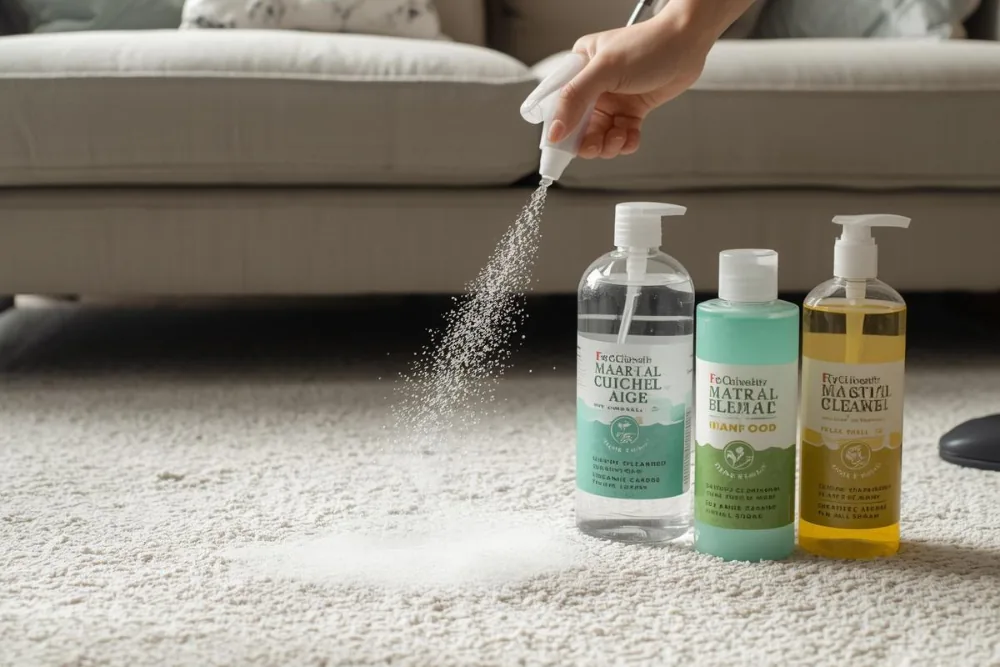
Pets spend time on floors, on furniture, and in general on every surface in the home. They groom themselves, which means they ingest whatever is on their coat. This makes the cleaning products used in a pet household a legitimate concern.
The category of products to be genuinely careful with includes anything containing phenols — found in some pine-based cleaners and disinfectants — which are toxic to cats. Essential oils, particularly tea tree, eucalyptus, and citrus concentrates, can be harmful to both dogs and cats in sufficient concentration. Some floor cleaners and furniture polishes contain compounds that are safe for humans but accumulate to problematic levels in animals that are in contact with treated surfaces daily.
The practical rule: once a surface is cleaned, allow it to dry fully before pets have access to it again. Liquid product residue on a surface is higher concentration than the dried version. For regular maintenance cleaning in areas where pets spend most of their time — floor areas, sleeping spots, feeding areas — using products specifically labeled as pet-safe removes the variable entirely.
The EPA’s Safer Choice program labels products that meet specific safety and environmental standards, which is a useful reference point when evaluating cleaning product options. Fragrance-free or unscented products are generally the lower-risk choice for households with sensitive animals.
Seasonal Shedding: Preparing for the Surge
Dogs and cats with double coats — the insulating underlayer beneath the outer coat — shed that underlayer twice a year, typically in spring and fall. During these periods, the volume of hair a single animal produces can be genuinely startling. Dogs that shed minimally for ten months a year may spend six weeks in spring distributing fur across every surface in the apartment at a rate that makes normal maintenance feel pointless.
The preparation is the same as regular maintenance, just at higher frequency. Daily brushing during blowout periods removes the bulk before it disperses. Vacuuming every day or every other day during peak shedding is not unreasonable for heavy-shedding breeds. A professional grooming session that includes a thorough deshedding treatment reduces what comes off at home significantly.
This is also the period when HEPA air purifiers earn their keep. The spike in airborne dander that accompanies heavy shedding is meaningful for anyone with respiratory sensitivities, and a running air purifier keeps the concentration down to manageable levels.
After the main shed passes — usually four to six weeks — things return to baseline, and regular maintenance resumes.
The Deep Clean Cycle
Regular maintenance keeps a pet household functional and comfortable. But it doesn’t fully address what accumulates at the deeper level over months of consistent animal presence.
The things that require a genuine deep clean: embedded fur in carpet pile and upholstery beyond what vacuuming reaches, dander in soft surfaces, accumulated biological residue in feeding areas and sleeping spots, grout lines in kitchen and bathroom, and any odor that has settled into soft surfaces over time.
For pet households, a thorough deep clean two to four times per year resets the baseline in a way daily maintenance can’t achieve. This is why many pet owners with apartments across Manhattan, Brooklyn, and Queens book professional cleaning on a recurring schedule rather than relying entirely on their own maintenance — not because the daily routine isn’t working, but because the deep-layer accumulation that happens in any home with animals requires periodic professional attention to stay genuinely clean.
The combination works: consistent daily and weekly habits handling the surface layer, and periodic professional cleaning addressing what’s underneath. Together they keep the apartment in a state that’s genuinely clean, not just presentable.