
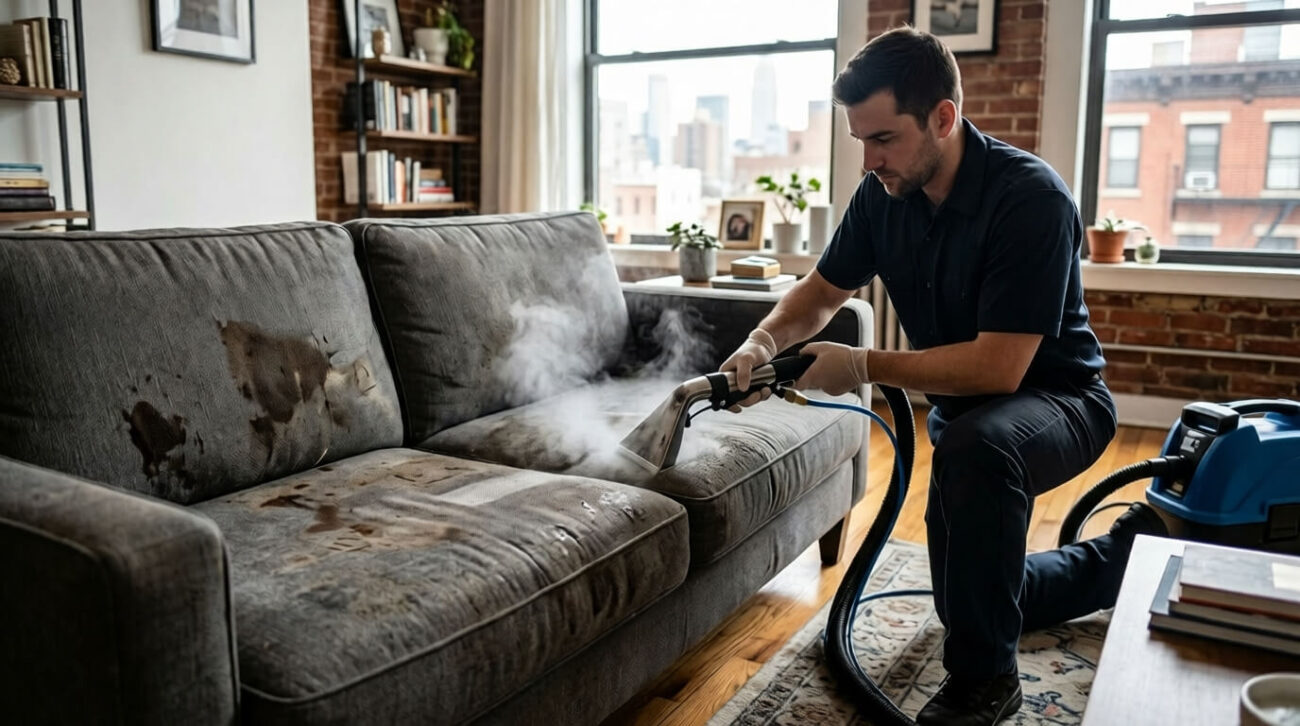
In New York apartments, furniture works harder than it does in many larger homes. Space is limited. The sofa isn’t simply a sofa anymore. It becomes an office, dining room, guest bed, reading corner, and occasionally a reasonably convincing gym bench during someone’s January fitness ambitions.
That constant use means upholstery collects more than visible dirt. Dust settles deep inside the fabric. Body oils gradually build up. City soot drifts through open windows. Pet hair settles into seams with astonishing determination. Add spilled coffee, red wine, pizza grease, children’s fingerprints, makeup, and suddenly furniture begins looking older than it really is.
Fortunately, not every stain demands panic. Not every stain deserves an internet miracle hack either.
Knowing which problems can safely be handled at home — and when upholstery cleaning NYC professionals become the smarter choice — can extend the life of furniture while avoiding expensive mistakes because replacing a designer sectional costs considerably more than cleaning one.
Common NYC Upholstery Stains and What Causes Them
Every city leaves fingerprints. New York leaves them literally.
Furniture in city apartments experiences a unique combination of wear that isn’t always obvious until it slowly builds over months or years.
Coffee Never Falls Gracefully
Coffee spills possess remarkable timing. It’s almost never the empty mug — always the completely full one. Morning meetings. Late-night deadlines. Weekend brunch. A quick reach for the remote. Gravity quietly enters the conversation.
Coffee contains tannins that can leave noticeable marks, especially on lighter fabrics if allowed to dry. Add cream and sugar, and now you’re dealing with proteins and sticky residue too.
One tiny splash can become surprisingly constant.
Wine Prefers Expensive Furniture
It’s an unwritten rule somewhere. White couch. Red wine. Someone gestures enthusiastically while telling a story. The ending writes itself.
Wine penetrates fabric quickly, particularly natural fibers, making prompt action much more effective than waiting until tomorrow.
Tomorrow usually has different priorities. The stain doesn’t.
City Dust Has Its Own Personality
Open windows welcome fresh spring air into apartments. They also invite traffic particles, construction dust, pollen, and fine soot. Those particles settle into upholstery gradually. Not enough to notice today. Or tomorrow. Six months later? Entirely different conversation.
Furniture begins looking dull rather than dirty. That’s because embedded dust changes how fabric reflects light.
Pet Hair Rarely Travels Alone
Dogs and cats contribute far more than loose fur. Body oils. Dander. Outdoor dirt carried indoors after walks. Tiny paw prints that somehow reach locations apparently inaccessible to physics. Hair works its way into seams. Dander settles below surface fibers. Odors gradually become part of the upholstery instead of simply sitting on top.
A lint roller handles only part of the story.
Food Finds a Way
Eating on the couch feels wonderfully convenient. Until it isn’t. Pizza, chocolate, popcorn butter, sweet chili, ice cream — children possess a particularly creative relationship with snacks and upholstered furniture.
Scientists may someday study this. Parents already understand it perfectly, though.
Everyday Living Leaves Invisible Residue
Here’s the stain people rarely notice. Body oils. Skin cells. Hair products. Lotions. Makeup. Over time these naturally occurring residues slowly accumulate where people sit most often.
The favorite seat gradually darkens. Not because anyone did something wrong — because humans are, surprisingly enough, living creatures.
Safe At-Home Spot Cleaning by Fabric Type
The internet enjoys confidence. Sometimes more confidence than accuracy.
Mixing random household products because someone posted a fifteen-second video rarely counts as professional upholstery care.
It occasionally creates a much larger problem.
First Rule: Identify the Fabric
This matters enormously. Cotton behaves differently from microfiber. Velvet behaves differently from linen. Leather follows entirely different rules. Most furniture includes a care tag indicating recommended cleaning methods.
Finding it may require minor detective work beneath cushions. Worth the effort.
Blot
Don’t Scrub. People panic, then they scrub. The stain spreads. The fabric gets damaged. Everyone regrets the decision. Fresh spills should generally be blotted gently using a clean white cloth or paper towel.
Lift moisture. Avoid pushing it deeper. Simple. Also surprisingly effective.
Water Isn’t Always the Hero
Some fabrics tolerate light moisture. Others absolutely dislike it. Using too much water can create water rings, encourage mildew inside cushions, or push stains farther into padding.
A damp cloth often works better than a soaking one. More isn’t automatically better. Cleaning has taught that lesson repeatedly.
Mild Soap Often Beats Strong Chemicals
For many durable upholstery fabrics, a small amount of mild dish soap diluted in water handles fresh spills remarkably well. Notice the word “small”.
Soap residue left behind attracts additional dirt later. Nobody wants today’s cleaning becoming next month’s problem.
Microfiber Likes Gentle Technique
Microfiber remains popular partly because it handles everyday use well. Soft brushes. Light blotting. Minimal moisture. Those usually produce better results than aggressive scrubbing.
The couch isn’t resisting. It simply prefers diplomacy.
Leather Requires Different Care
Leather deserves dedicated leather cleaners and conditioners. Harsh household chemicals can dry natural leather, remove protective finishes, or cause discoloration.
Expensive furniture appreciates specialized products. Reasonable expectation.
Steam Isn’t Always Safe
People occasionally purchase handheld steam cleaners believing they’ll solve every upholstery issue. Sometimes they help. Sometimes excessive heat damages adhesives, delicate fabrics, or cushioning.
Read manufacturer guidance first. Steam possesses tremendous enthusiasm. Not always tremendous judgment.
Test Hidden Areas
Always. Inside seams. Beneath cushions. Hidden corners. Testing first feels slightly boring. Replacing damaged upholstery feels considerably worse.
Boring occasionally wins.
Signs It’s Time to Call a Professional Upholstery Cleaning Service
DIY cleaning has limits. Healthy limits.
Recognizing them usually saves money instead of wasting it.
The Stain Keeps Coming Back
Ever cleaned a stain successfully only to watch it mysteriously reappear several days later? That’s called wicking. Moisture trapped below the surface gradually rises, bringing dissolved residue back with it.
The stain wasn’t completely removed. It simply took a brief vacation. Professional extraction equipment often solves what surface cleaning cannot.
Odors Remain After Cleaning
Air freshener isn’t upholstery cleaning. Neither is opening a window. If odors return shortly after cleaning, they’re probably embedded beneath surface fibers or inside cushion padding.
Pet accidents. Smoke. Food spills. Moisture. All have ways of lingering beyond what ordinary household cleaning reaches.
Furniture remembers. Professional extraction helps it forget.
Large Furniture Needs Uniform Cleaning
Cleaning one cushion perfectly often creates another challenge. The surrounding cushions now look dirtier. Spot cleaning occasionally leaves obvious contrast. Professional cleaning addresses the entire piece, creating more consistent appearance across the furniture.
The couch stops looking like it belongs to three different families. Helpful improvement.
Allergy Symptoms Keep Returning
Dust mites. Pet dander. Pollen. Fine city particles. These settle deep into upholstery over time. Routine vacuuming removes part of the buildup. Professional equipment often extracts considerably more from beneath the surface.
The furniture doesn’t merely look cleaner. The room often feels fresher too.
The Fabric Is Valuable
Designer furniture. Family heirlooms. Custom upholstery. Vintage pieces. These deserve thoughtful care. Experimenting with internet cleaning recipes becomes significantly less appealing once replacement costs enter the conversation.
Professional cleaners understand different fibers, cleaning agents, moisture levels, and drying techniques. Experience quietly protects expensive mistakes.
It’s Simply Been Too Long
Sometimes nothing terrible happened. No wine spill. No pet accident. No chocolate catastrophe. Just years of ordinary living. Gradually. Patiently. The couch slowly collected everything life leaves behind.
Professional furniture cleaning service appointments often function less like emergency repairs and more like preventative maintenance. The furniture lasts longer. Looks better. Feels different somehow.
Conclusion
Professional upholstery cleaning NYC services aren’t about chasing impossible perfection. Furniture exists to be used. It should collect memories. Maybe not marinara sauce, but certainly memories.
The occasional couch stain removal job fits comfortably within most homeowners’ abilities, especially when spills are handled quickly and the right cleaning methods match the right fabric. Blotting instead of scrubbing, using gentle products, and respecting manufacturer recommendations usually accomplish far more than aggressive cleaning ever will.
Still, there comes a point when home methods stop making meaningful progress. Deep odors settle beneath the surface. Embedded dust quietly accumulates over several seasons. Favorite seats begin looking tired despite repeated cleaning. That’s usually the apartment telling you something.
A professional furniture cleaning service doesn’t simply remove visible dirt. Commercial extraction equipment reaches below surface fibers, lifting soil, allergens, oils, and residues that ordinary vacuums and household products simply weren’t designed to handle.
The transformation often surprises people. Not because the couch suddenly looks brand new — because they forgot what its actual color was in the first place.
Furniture changes so gradually that we barely notice. Then one thorough cleaning arrives, sunlight hits the fabric the next morning, and you realize the couch wasn’t beige after all. It had simply been wearing New York for a while.
Skip the Cleaning. Keep the Weekend.
Book your cleaning in 60 seconds — we handle the rest.
Book Now