
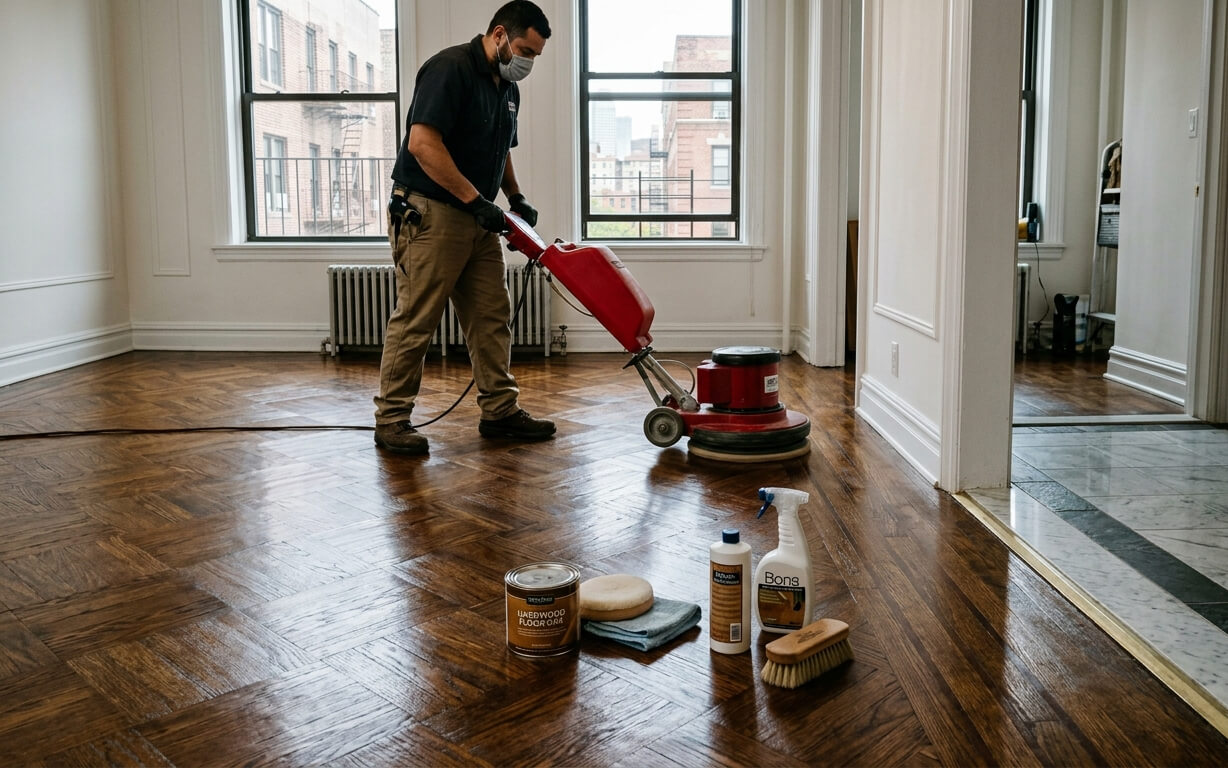
Floors remember everything. Not emotionally — physically. Every chair dragged across the dining room. Every winter boot carrying sidewalk salt inside. Every rolling office chair that quietly follows the exact same path day after day until one section of hardwood begins looking just a little different. Not ruined. Just tired.
Apartments have their own rhythm. Floors absorb it. New York floors especially.
Walk into an older Manhattan building and you might find oak planks installed decades before television became common. Visit a converted warehouse in Brooklyn and polished concrete shares space with reclaimed hardwood. Luxury towers introduce natural stone that reflects afternoon sunlight like still water. Meanwhile, somewhere in the East Village, original wood flooring continues surviving another generation of renters with astonishing determination.
Old floors possess character. Character occasionally needs maintenance.
People often assume caring for flooring means buying whichever cleaner happened to be on sale. That’s a wonderfully optimistic theory. Unfortunately, hardwood and natural stone aren’t particularly interested in optimism. They’re interested in chemistry. Moisture. Abrasion. Protective finishes. Tiny habits repeated thousands of times over months and years.
One poor cleaning decision rarely destroys a wonderful floor. Hundreds of tiny poor decisions quietly might. The encouraging part? Most of them are easy to avoid once you understand what different floor finishes actually need. Because hardwood floor care apartment routines should preserve beauty, not accidentally sand it away one mop at a time.
How NYC’s Older Buildings Wear Down Hardwood and Stone Differently
New York apartments don’t age the way suburban homes do. The buildings have lived entire lives before many residents ever received the keys. Sometimes several lives. That’s part of their charm.
It’s also why their floors deserve a slightly different kind of attention.
Hardwood Has Been Working for Decades
Many original hardwood floors in NYC buildings have survived countless owners, tenants, renovations, pets, children, furniture rearrangements, and holiday dinners involving far too many folding chairs. Remarkable endurance.
Every scratch tells a tiny story. Not every story deserves another chapter.
Older hardwood often carries thinner protective finishes than newer installations. Repeated cleaning with excessive water, harsh chemicals, or abrasive pads slowly wears that protection away. The damage isn’t immediate. That’s what makes it sneaky. People rarely notice until sunlight catches dull patches across the living room one spring afternoon.
Winter Is Surprisingly Tough on Floors
City winters don’t stop outside. They arrive attached to boots. Salt. Sand. Tiny bits of gravel. Moisture. They all travel indoors. Those tiny particles behave like fine sandpaper beneath shoes and chair legs. Individually? Almost harmless. Thousands of footsteps later? Entirely different conversation.
Adding entrance mats helps. Taking shoes off helps even more. The floor quietly appreciates both.
Stone Floors Have Different Enemies
Natural stone doesn’t scratch exactly like hardwood. Instead, marble, limestone, travertine, and similar materials often struggle more with acidic spills and improper cleaners.
A splash of lemon juice or vinegar, certain bathroom products — stone doesn’t always stain immediately. Sometimes it etches. The surface loses its polished finish in small areas, creating dull marks that cleaning alone can’t reverse.
Rather unfair. Chemistry rarely negotiates.
Apartments Mean Concentrated Wear
Large suburban homes spread traffic across many rooms. City apartments? Everyone walks through the same hallway. The same kitchen entrance. The same living room path between sofa and television. After enough repetition, those routes become visible.
Floors develop habits. People do too. Office chairs deserve a special mention. They quietly roll across identical sections of flooring every single day. Eight hours here. Ten hours there.
Months pass. Eventually one rectangle beneath the desk looks noticeably different from everything around it.
Radiators and Sunlight Add Their Own Twist
Radiators create warmth. Warmth changes humidity. Wood notices. Seasonal expansion and contraction remain completely normal, but maintaining stable indoor humidity helps reduce unnecessary movement over time.
Sunlight joins the discussion too. Area rugs protect sections of the floor while exposed wood gradually changes color. Move the rug after five years and you’ll receive a surprisingly accurate history lesson.
The floor remembers where the sunlight lived.
Buffing vs. Waxing vs. Sealing — What Each Actually Does
These terms become mixed together constantly. They’re related but are definitely not identical.
Understanding the difference saves confusion — and occasionally saves beautiful flooring.
Buffing Restores the Surface
Think of buffing as polishing rather than rebuilding. Machines equipped with specialized pads smooth away tiny surface imperfections while restoring shine to existing finishes. No new protective coating necessarily appears — instead, the existing finish receives careful refinement.
Professional floor buffing NYC services often help hardwood or stone floors regain their appearance after years of ordinary foot traffic without immediately requiring complete refinishing. Sometimes that’s all a floor needs.
Waxing Adds a Protective Layer
Wax behaves differently. Instead of merely polishing, it creates an additional protective coating over certain floor types. Older hardwood floors originally designed for wax maintenance often respond beautifully. Modern polyurethane finishes? Not so much.
Applying wax over incompatible finishes can create cloudy buildup, uneven appearance, or future maintenance headaches. This is why identifying the existing finish matters before reaching for any product promising miraculous shine.
Miracles occasionally complicate things.
Sealing Protects Porous Materials
Natural stone appreciates sealing. Marble. Slate. Travertine. Limestone. Some grout lines too. Sealers reduce how quickly liquids penetrate porous surfaces. Notice the wording. Reduce — not eliminate. Spilled coffee still deserves attention.
The sealer simply buys valuable time.
Hardwood Usually Doesn’t Need Wax Forever
Modern hardwood flooring frequently relies on factory-applied polyurethane finishes rather than traditional wax. These surfaces generally require appropriate cleaners and periodic maintenance — not fresh layers of wax every season.
Adding incompatible products often creates more work later. The floor didn’t ask for extra ingredients.
Stone Polishing Isn’t the Same as Cleaning
Cleaning removes dirt. Polishing restores surface clarity and shine. Natural stone gradually loses luster through ordinary wear, especially in high-traffic apartment entrances or kitchens.
Professional stone floor polishing uses specialized equipment and compounds designed specifically for natural stone. Household polish rarely achieves the same result. Different tools. Different goals.
Mistakes That Damage Floors Faster Than They Protect Them
Interestingly, many floor problems begin with good intentions. People genuinely want beautiful floors. They simply receive questionable advice somewhere along the journey.
The internet has confidence. Confidence and correctness occasionally live in different neighborhoods.
Too Much Water
Hardwood dislikes moisture. A soaking mop allows water to seep between boards, increasing the likelihood of swelling, cupping, or finish damage over time. Damp works. Wet often doesn’t.
Simple distinction. Important one.
Vinegar Isn’t Universal
Vinegar cleans many household surfaces effectively. Natural stone generally declines the invitation. Acid gradually etches marble, limestone, and similar materials, reducing shine while leaving dull patches behind.
Homemade cleaning recipes occasionally skip this detail. The floor notices anyway.
Steam Cleaners Aren’t Always Appropriate
Steam sounds wonderfully hygienic. On certain finished hardwood floors, repeated high heat and moisture may compromise protective finishes over time. Some manufacturers approve steam cleaning. Others don’t.
Checking recommendations first requires five minutes. Ignoring them occasionally requires refinishing.
Abrasive Pads
Scouring pads belong in specific situations. Finished hardwood floors usually aren’t one of them. Tiny scratches accumulate. Shine fades. The floor slowly begins looking older despite regular cleaning.
Rather ironic.
Ignoring Furniture Pads
Tiny felt pads beneath chairs and tables accomplish astonishingly little until you remove them. Then the scratches begin. Quietly. Furniture moves far more often than people realize. An inch today, two inches tomorrow. Another dinner party next month.
The floor keeps score.
Letting Grit Stay Too Long
Dust seems harmless. Fine sand seems harmless. Tiny stones from city sidewalks appear insignificant. Together they become constant abrasion beneath every step.
Regular sweeping and vacuuming remove the particles responsible for much of everyday wear. Sometimes prevention really is that ordinary.
Using Whatever Cleaner Happens to Be Nearby
Kitchen cleaner. Bathroom cleaner. Glass cleaner. Multipurpose spray. Floors deserve products intended for floors. Even better, products appropriate for the specific floor material involved.
Not every bottle belongs everywhere. Labels exist for remarkably practical reasons.
Waiting Too Long
Small scratches become larger. Minor finish wear becomes exposed wood. Tiny etched areas spread gradually. Routine maintenance nearly always costs less than extensive restoration.
Floors rarely improve through prolonged optimism alone.
Conclusion
Good flooring isn’t maintained through luck. It’s maintained through consistency.
Understanding the unique demands of hardwood floor care, especially in older New York buildings, allows hardwood and stone surfaces to age gracefully instead of unnecessarily. City life introduces grit, salt, moisture, concentrated foot traffic, and changing humidity, but thoughtful maintenance goes a remarkably long way.
Professional floor buffing NYC services restore shine when ordinary cleaning can no longer bring a floor back to life, while proper stone floor polishing helps natural stone recover the depth and clarity that everyday wear slowly softens over time.
Those services aren’t about making a floor look artificial or impossibly glossy. Quite the opposite. The best-maintained floors still look like themselves. The floor isn’t demanding attention — it’s supporting everything else. Rather like New York itself. Always carrying more weight than people realize.
Not Sure What You Need?
Tell us about your space — we'll recommend the right service and give you a free, no-obligation quote.
Get a Free Consultation