Offices have a strange talent. They become messy in ways nobody actually witnesses. No one remembers spilling coffee near the copier. Then Monday arrives, clients walk through the front door, sunlight lands across every dusty surface with almost theatrical timing, and suddenly the building looks as though fifty people spent the weekend quietly competing to see who could leave the most subtle mess behind.
An office isn’t a house that happens to contain desks. It breathes differently. Hundreds of hands touch the same doors. Elevators open every few seconds. Delivery drivers come and go. Winter salt quietly settles into carpet fibers. Coffee disappears at astonishing speed while coffee stains somehow linger forever.
Buildings remember everything. Cleaning exists to help them forget.
A surprising number of businesses don’t actually lack a cleaning routine. They lack a realistic one. Their checklist was copied from somewhere online years ago, expanded every few months whenever somebody noticed a new problem, and eventually turned into a document so ambitious that nobody — not even the cleaning crew — could reasonably finish everything every day.
That’s how good intentions become impossible expectations.
A useful office cleaning checklist NYC companies can actually rely on should feel less like a wish list and more like choreography. Certain tasks repeat every day because people create the same mess every day. Others can wait until Friday. Others barely need attention once a month unless someone suddenly decides to remodel the conference room with powdered sugar from the marketing team’s donut meeting. That happens more often than you’d think.
The objective isn’t making an office look untouched. Untouched offices usually feel abandoned. The objective is making the space quietly reliable. Employees stop noticing the cleaning because everything simply works. The floors look cared for. The bathrooms never become a topic of conversation. The reception desk greets clients before the receptionist even says hello.
One thing about professional cleaning — when it’s done well, people mostly notice its absence.
Daily Tasks That Keep a NYC Office Presentable
Every office has a heartbeat. People arrive. Coffee starts brewing. Computers wake up. Someone immediately asks if the conference room is free despite the calendar saying otherwise. By lunchtime, the office already looks different than it did three hours earlier. That’s perfectly normal.
Daily cleaning isn’t about chasing perfection from sunrise to sunset — it’s about quietly resetting the building before small problems discover they enjoy becoming larger ones.
Reception Always Speaks First
Long before anyone notices the meeting room or the executive offices, they’ve already formed an opinion. Reception handles introductions without saying a word. Glass entrance doors deserve attention every day because fingerprints multiply with astonishing confidence. Dust settles on reception counters almost as if it pays rent. Visitor chairs gather crumbs, lint, coffee drips, umbrella water — New York weather contributes enthusiastically to entrance areas.
Keeping this space clean doesn’t require obsession. Just consistency. Clients rarely compliment spotless entryways. They absolutely remember neglected ones.
Restrooms Don’t Grant Second Chances
Bathrooms operate by different rules. Nobody walks into a spotless restroom and sends a company-wide email celebrating the achievement. A poorly maintained restroom? Entirely different story.
Daily attention means sanitizing fixtures, refilling soap, replacing paper products before they disappear at the least convenient moment, emptying trash bins, wiping mirrors, checking floors around sinks, and making sure the room smells neutral. Neutral is underrated.
Nobody enters a restroom hoping for a tropical fragrance experience.
Break Rooms Age Quickly
Office kitchens somehow experience an entire day’s worth of living before noon. Coffee spills. Microwave splatters. Sugar crystals. Tea bags. Lunch containers abandoned with tremendous optimism about returning later.
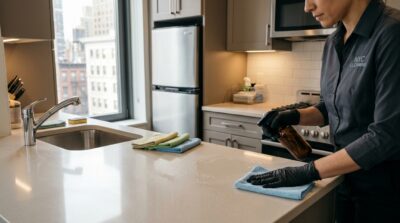
Daily cleaning keeps these shared spaces functional. Counters. Appliance handles. Tables. Sink. Floor. Trash removal before yesterday’s leftovers begin negotiating long-term residency. No office needs yogurt conducting scientific research inside the refrigerator.
Desks
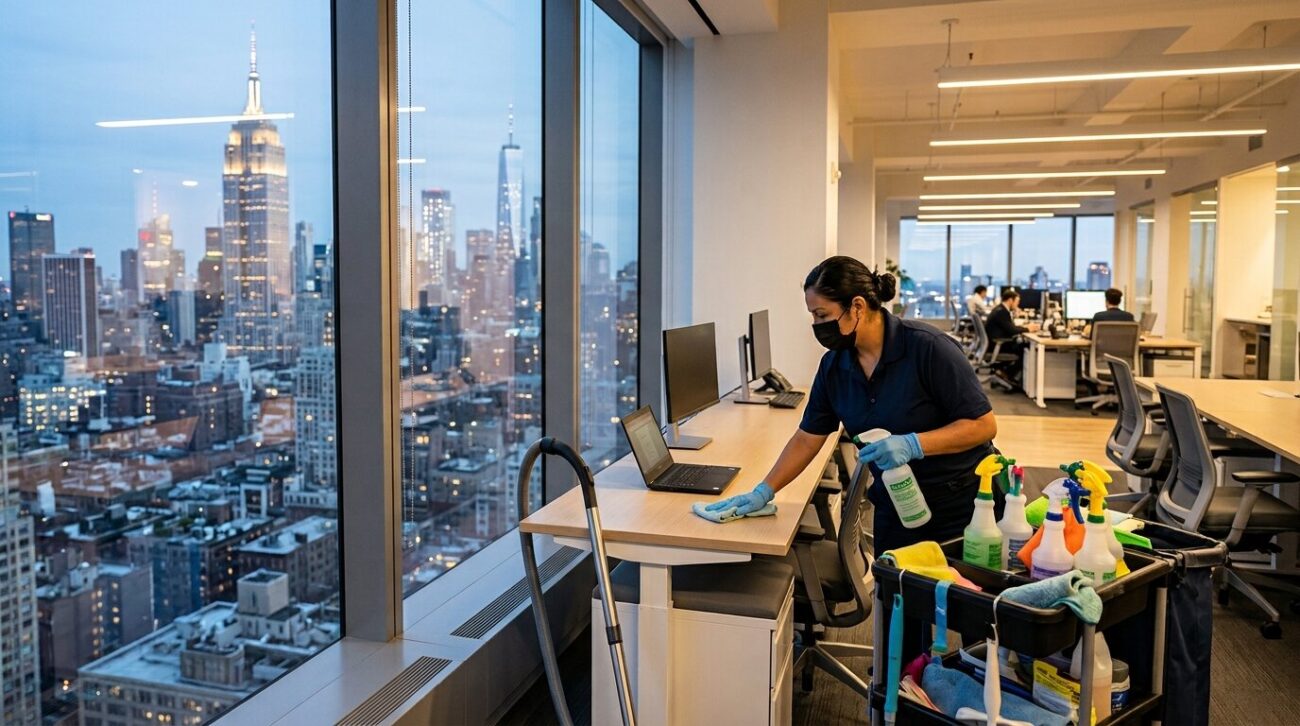
Here’s where commercial cleaning becomes slightly philosophical. Cleaning crews shouldn’t reorganize people’s work. Nobody wants important paperwork relocated because it looked untidy. Visible surfaces receive careful dusting. Common touchpoints like phones, keyboards, and desk edges may be sanitized when requested or included in the service plan.
Respecting personal workspace matters almost as much as cleaning it. Trust is surprisingly fragile.
Floors Carry the Entire Office
People underestimate floors because they’re always there. Until they aren’t clean. Rainy Tuesdays. Snowy January mornings. Busy elevator traffic. Construction nearby. Everything eventually lands under someone’s shoes.
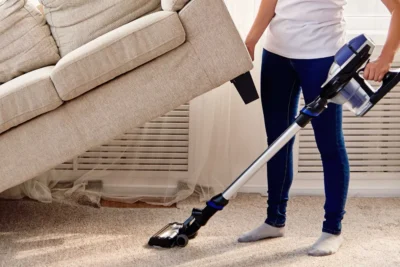
High-traffic carpet deserves daily vacuuming. Hard flooring benefits from regular sweeping and damp mopping, especially near entrances where New York politely delivers half the sidewalk indoors. Gravity has always been an overachiever.
Touchpoints Never Really Rest
Door handles. Light switches. Elevator buttons. Shared printers. Conference room remotes. Coffee machine buttons. These tiny surfaces experience hundreds of interactions every week while remaining almost invisible. Almost.
Regular disinfection quietly supports both appearance and workplace health. Nobody notices the process. Everyone benefits from the result.
Weekly and Monthly Deep-Clean Items Most Checklists Miss
Here’s where generic cleaning schedules usually lose interest. Daily work feels obvious. Weekly and monthly maintenance? Less so. Far more important than people realize, though.
Buildings age quietly. So does dirt.
Chairs Need More Than a Passing Glance
Office chairs collect dust, lint, crumbs, hair, and mysterious little particles nobody can identify with confidence. Fabric backs. Armrests. Chair wheels. Especially chair wheels. Those tiny casters quietly gather enough debris to qualify as archaeological sites after several months.
Weekly vacuuming helps enormously. Occasional deeper cleaning keeps furniture looking younger than the office lease.
Conference Rooms Hide Evidence
Meetings leave traces. Whiteboard marker dust. Fingerprint-covered glass. Coffee rings. Snack crumbs. Charging cables living improbable lives beneath the table. Conference rooms deserve a thorough weekly reset because they’re simultaneously public spaces and private workspaces. A curious combination.
One important client meeting can undo months of carefully built first impressions if the room quietly announces, “Nobody’s cleaned me since February”.
Air Vents and High Surfaces
Dust loves altitude. Cabinet tops. Door frames. Air vents. Light fixtures. Nobody notices these places until sunlight arrives at precisely the wrong angle.
Monthly attention prevents dust from becoming permanent architecture.
Inside Appliances
The refrigerator doesn’t merely store food — it stores forgotten intentions. Salad containers. Expired yogurt. Mystery sauces. Lunches whose owners have apparently changed careers. Microwaves develop their own artistic styles after enough reheated pasta.
Monthly appliance cleaning keeps shared kitchens civilized. Mostly.
Upholstery and Soft Surfaces
Reception furniture. Waiting area sofas. Fabric partitions. These surfaces absorb dust throughout the year. Vacuuming alone helps. Occasional professional upholstery cleaning restores appearance while extending furniture life.
Replacement costs considerably more than maintenance. Usually by a rather uncomfortable margin.
Baseboards, Corners and Quiet Places
Interesting thing about offices. Everyone cleans what people see. Dust prefers what people don’t. Corners. Behind storage cabinets. Under reception desks. Along baseboards. Behind printers nobody wants to move because reconnecting them feels suspiciously complicated.
These forgotten spaces slowly influence the entire building’s appearance.
Seasonal Details Matter
Windows collect city grime. Entry mats become saturated during winter. HVAC vents gather dust before heating and cooling seasons. A thoughtful commercial cleaning schedule adapts instead of pretending every month behaves exactly the same.
January isn’t June. New York never claimed otherwise.
Building a Schedule That Doesn’t Disrupt Business Hours
Cleaning should support productivity, not interrupt it. Some companies accidentally create cleaning schedules that require crews to vacuum around client meetings, empty trash during presentations, or polish conference room glass while executives negotiate contracts on the other side.
Technically possible. Not particularly elegant.
Learn the Building’s Rhythm First
Every office has quiet hours. Maybe accounting arrives early. Maybe marketing stays late. Maybe Fridays empty out after lunch while Tuesdays resemble airport terminals.
Observe first. Schedule second. Buildings reveal their habits if someone pays attention.
Different Spaces Have Different Clocks
Reception may need attention before employees arrive. Break rooms often benefit after lunch. Conference rooms make more sense between meetings. Restrooms deserve periodic checks throughout the day in larger offices rather than one heroic cleaning session every evening.
Cleaning isn’t one event. It’s timing.
Evening Cleaning Usually Makes Sense
For many NYC businesses, after-hours service solves countless small problems. Vacuums don’t compete with phone calls. Trash removal doesn’t interrupt presentations. Floors have time to dry. Employees arrive the next morning to a reset office instead of watching it happen around them.
Everyone wins. Including the vacuum cleaner.
Communication Prevents Awkward Surprises
Office renovations. Executive meetings. Holiday parties. Client events. Furniture deliveries. Cleaning teams should know these things beforehand. Otherwise someone arrives expecting an ordinary Tuesday and discovers the lobby filled with caterers assembling six-foot floral arrangements.
Adaptability matters. Advance notice helps even more.
Build Around Growth
An office with fifteen employees today might have thirty next year. Cleaning plans should anticipate change instead of waiting for overflowing trash bins to anounce that expansion has officially occurred.
Review the schedule occasionally. Adjust. Buildings evolve and cleaning should keep pace.
Consistency Outperforms Heroics
Businesses sometimes request one enormous monthly cleaning while neglecting routine maintenance. Interesting strategy, rarely successful one. Small, consistent work almost always produces better results than occasional cleaning marathons.
The office stays ready every day instead of recovering every few weeks. Employees notice. Clients notice. Nobody has to panic because the CEO announced an unexpected investor visit in forty-five minutes.
Conclusion
A practical office cleaning checklist NYC businesses actually follow isn’t measured by how many boxes appear on the page. It’s measured by how invisible the process becomes once everything settles into rhythm. Clean reception areas, reliable restrooms, orderly break rooms, fresh floors, and conference spaces that always look prepared instead of hurriedly rescued.
The smartest commercial cleaning schedule isn’t necessarily the busiest one, either. Daily attention handles the fast-moving parts of office life. Weekly work reaches deeper. Monthly maintenance quietly protects the building itself, catching the details that rarely demand attention until they’ve been ignored for far too long.
People want the real balance when they search “daily weekly monthly office cleaning” online
Not every task deserves equal frequency. Not every surface ages at the same pace.
An office is a living environment with its own habits, its own rush hours, even its own personality if you spend enough time inside it. Some mornings it hums along effortlessly. Other days it feels like someone shook the entire building before unlocking the front door.
A good cleaning routine doesn’t fight that rhythm. It learns it. And once it does, the office stops looking like a place that’s constantly being cleaned. It simply starts looking like a place that’s consistently cared for.
Skip the Cleaning. Keep the Weekend.
Book your cleaning in 60 seconds — we handle the rest.
Book Now