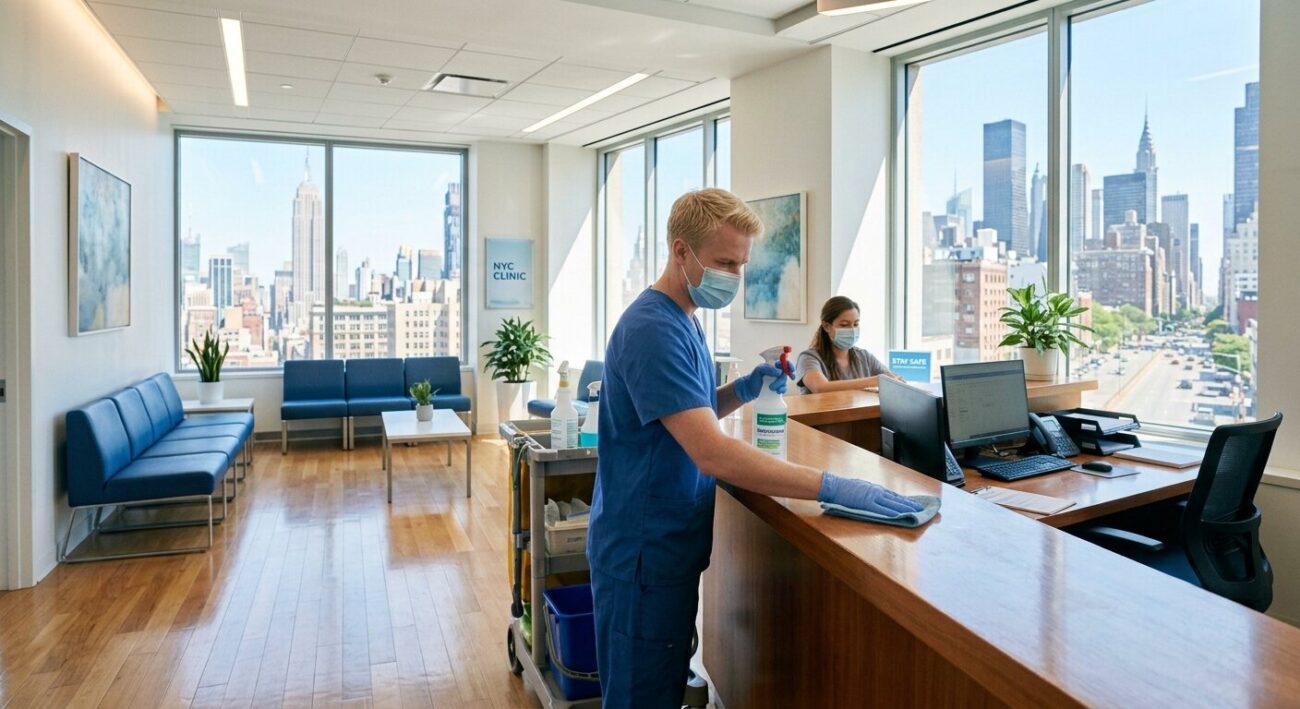
Walk into a medical office at eight-thirty on a Tuesday morning. It feels calm. The reception desk is organized. Chairs are lined up. The waiting room smells neutral. That’s usually a compliment. A nurse opens an exam room. Phones begin ringing. The first patient checks in. By lunchtime, dozens of people have touched the same counters, chairs, clipboards, door handles, pens, elevators, restrooms, payment terminals, and waiting room tables.
The building has already lived an entire day before many offices have even finished their second coffee. Medical spaces simply don’t behave like ordinary workplaces. That’s the first thing people outside healthcare sometimes underestimate.
A law office and a pediatric clinic may occupy neighboring suites in the same Manhattan building. They share elevators. They share hallways. They might even share the same view of the skyline. They should never share the same cleaning standards. Not even close.
The reason isn’t appearances. Appearance matters, certainly. Patients notice clean floors. They notice spotless restrooms. They notice fingerprints on glass doors and overflowing trash bins. Human beings are remarkably observant when they’re already feeling anxious, and very few people visit a clinic because they’re having the best day of their week.
Still, professional cleaning inside healthcare facilities goes well beyond making the office look polished. It becomes part of everyday operations. Part of patient confidence. Part of infection prevention. Part of protecting staff who move from room to room hundreds of times every week. That’s why questions about medical office cleaning NYC schedules don’t really begin with “How often should we clean?” They begin somewhere else. “What exactly needs cleaning and why?”
Why Medical Spaces Need a Different Standard Than a Typical Office
A regular office mostly collects evidence of work. Coffee cups. Dust. Paper. Footprints after rain. Medical offices collect something less visible.
Constant human contact. That’s a different challenge entirely.
Every Patient Brings Something New
Think about a waiting room for a moment. One patient comes in for a routine physical. Another has seasonal allergies. Someone else arrives with a persistent cough. Another is recovering from surgery. Children touch toys. Adults complete paperwork. Family members accompany appointments. Delivery drivers enter with supplies. Couriers stop by. The environment changes every few minutes.
Unlike a traditional office where employees generally interact with the same coworkers every day, clinics welcome an ongoing stream of new visitors. That changes the cleaning equation immediately.
High-Touch Surfaces Never Really Get a Break
Door handles. Reception counters. Check-in tablets. Payment terminals. Waiting room armrests. Light switches. Bathroom fixtures. Exam tables. Cabinet handles. Computer keyboards. Pens. Especially pens. They quietly travel through dozens of hands without anyone giving them much thought. Until someone does.
Professional cleaning routines inside healthcare settings pay extraordinary attention to these touchpoints because they’re involved in nearly every patient visit.
Patients Notice More Than You Think
People evaluate medical offices long before they meet the physician. The parking lot. The entrance. The reception desk. The restroom. The waiting room. A dusty vent or stained carpet won’t convince someone a doctor lacks medical expertise. It might quietly influence confidence anyway.
Healthcare is built on trust. Clean environments reinforce that trust before anyone says a single word.
Compliance Isn’t Optional
Medical facilities also operate under expectations far beyond ordinary commercial buildings. Cleaning protocols often support broader infection prevention programs, internal policies, and applicable regulatory requirements.
Documentation matters. Consistency matters. Training matters. A checklist scribbled on a sticky note taped inside the janitor’s closet isn’t really enough. Not here. Healthcare asks for systems. Systems ask for discipline.
Different Rooms Have Different Needs
Reception isn’t an exam room. An administrative office isn’t a treatment space. Staff kitchens don’t operate like laboratories. Every area carries different levels of risk and different cleaning priorities. One universal approach leaves important gaps.
Professional healthcare cleaning recognizes those differences instead of pretending every room behaves exactly the same.
Daily, Weekly and Deep-Clean Protocols That Support Compliance
People sometimes imagine healthcare cleaning as one long process repeated endlessly. Reality looks more layered. Almost like overlapping circles — some tasks happen constantly, others happen every evening. Some appear weekly. Others quietly wait until scheduled deep-clean visits.
Together they create reliability.
Daily Cleaning Begins Before Patients Arrive
Morning preparation often includes sanitizing reception counters, disinfecting waiting areas, refreshing restrooms, emptying waste containers, checking soap and paper supplies, and preparing exam rooms for the day ahead.
The office begins clean. It should stay that way. At least as much as possible.
Throughout the Day, Cleaning Never Really Stops
Busy clinics rarely rely only on one evening cleaning visit. Touchpoints require attention. Restrooms need monitoring. Waiting rooms occasionally require quick resets. Exam rooms are cleaned according to facility protocols between patients or throughout the day as appropriate for the services provided.
Healthcare operates continuously. Cleaning quietly follows alongside. Almost like another department.
Evening Restores the Entire Facility
After patients leave, more comprehensive work begins. Floors receive detailed attention. Trash and regulated waste are handled according to established procedures. Shared workspaces are cleaned. Bathrooms receive another full service. Break rooms. Administrative offices. Reception. Everything prepares for tomorrow before tomorrow arrives.
There’s something satisfying about that rhythm. Today’s work quietly making tomorrow easier.
Weekly Tasks Reach Beyond Daily Traffic
One thing about routine cleaning — it naturally focuses on what’s directly in front of people. Weekly service expands the field of view. Doors. Baseboards. Interior glass. Waiting room furniture. Less obvious shelving. Storage rooms. Equipment exteriors where appropriate. Dust accumulating on higher surfaces.
The details patients rarely notice individually, yet somehow notice collectively when they’ve been ignored.
Deep Cleaning Serves a Different Purpose
Deep cleaning isn’t ordinary cleaning performed with extra determination. Different objective. Different pace. Floor restoration. Detailed grout cleaning. Air vents. Upholstery. High shelving. Behind movable furniture. Areas receiving less frequent but equally important attention. Deep cleaning helps preserve both appearance and long-term facility condition.
Buildings age more gracefully when someone pays attention before problems become visible. A surprisingly universal truth.
Documentation Matters
Healthcare cleaning isn’t only about completed tasks. It’s also about proving those tasks occurred. Schedules. Checklists. Inspection records. Communication between facility managers and cleaning teams. Consistency grows stronger when supported by documentation rather than memory.
Memory has admirable qualities. Precision isn’t always one of them.
Staff Cooperation Improves Results
Cleaning professionals handle their responsibilities, medical staff handle theirs. The strongest systems support each other. Organized exam rooms. Proper waste disposal. Prompt reporting of spills. Clear communication when additional cleaning becomes necessary.
No single department carries the entire burden. Healthcare rarely works that way.
What to Look for in a Cleaning Partner for a Clinic
Finding a commercial cleaner isn’t especially difficult.
Finding one comfortable inside healthcare environments? Different conversation.
Healthcare Experience Shouldn’t Be an Afterthought
Office cleaning experience helps. Healthcare experience matters more. Medical environments introduce different expectations, different workflows, different sensitivities. Cleaning crews familiar with those realities adapt much more naturally.
Less guessing, less interruption — more confidence.
Training Matters More Than Promises
Anyone can promise careful work. Training explains how that promise becomes routine.
Ask about employee education. Ask about cleaning protocols. Ask how staff learn to work around active healthcare environments without interfering with patient care. The answers often reveal more than glossy marketing brochures ever could.
Reliability Beats Grand Claims
Medical offices operate on schedules. Cleaning teams should too. Showing up consistently. Communicating clearly. Responding when unexpected needs arise.
Dependability sounds almost boring until it disappears. Then suddenly it’s the only thing anyone wants to talk about.
Flexible Scheduling Protects Patient Care
Some clinics operate traditional business hours. Others open evenings, weekends, or early mornings. Cleaning should adapt to those rhythms instead of forcing the clinic to reorganize patient appointments around maintenance.
Healthcare already has enough scheduling puzzles. No need to invent new ones.
Security and Professionalism Count
Cleaning crews often work around confidential information, specialized equipment, medications, and sensitive patient environments.
Professional conduct matters. Respect for privacy matters. Following established facility procedures matters. Trust develops through hundreds of small decisions performed correctly — not one impressive sales presentation.
Communication Should Feel Easy
Questions arise. Emergencies happen. Schedules change. Patient volumes increase unexpectedly. Good cleaning partnerships survive because communication remains simple.
Quick responses, clear expectations, shared understanding. Small conversations prevent surprisingly large problems.
Conclusion
A thoughtful medical office cleaning NYC plan isn’t built around appearance alone, although appearance certainly plays its part. Patients notice clean waiting rooms and polished floors. They also notice something harder to describe — a quiet sense that the entire practice is organized, attentive, and under control.
Determining the right clinic cleaning frequency depends on patient volume, services provided, office layout, staffing, and the daily rhythm of the facility itself. Busy urgent care centers naturally operate differently than specialty practices with scheduled appointments. The schedule should reflect reality instead of forcing reality to fit a generic template copied from somewhere else.
Strong healthcare facility cleaning standards also recognize that consistency almost always matters more than occasional heroic effort. Daily cleaning keeps the clinic functioning smoothly. Weekly attention catches details before they become visible. Periodic deep cleaning preserves the building itself while supporting the everyday work happening inside its walls.
Patients may never know exactly how often the floors were sanitized. Or when the air vents were cleaned. Or how many times the reception counter was disinfected that afternoon. That’s perfectly fine. Healthcare environments aren’t supposed to advertise the cleaning process — they’re supposed to make people forget they ever needed to think about it in the first place.
That’s a quiet kind of success. Usually the most valuable kind.
Not Sure What You Need?
Tell us about your space — we'll recommend the right service and give you a free, no-obligation quote.
Get a Free Consultation