There’s a moment every parent recognizes. You just finished cleaning the kitchen. Counters wiped, floor swept, dishes done. You turn around to find that in the forty seconds your back was turned, someone has distributed crackers across three rooms in a pattern that suggests genuine artistic intent.
This is the basic physics of parenting. Mess is generated faster than it can be addressed. And unlike most adult messes — which arrive in localized, containable form — kid mess has a particular talent for spreading.
The goal isn’t a spotless home. Anyone promising that is selling something. The real goal is a home that stays functional, safe, and livable without requiring you to spend every available hour fighting entropy. That’s achievable. It just takes a different approach than cleaning without kids.
Here’s what actually works.
Adjust the Target Before You Adjust Anything Else
The first step has nothing to do with cleaning products or schedules. It’s recalibrating what a clean home looks like when children live in it.
A family apartment in Brooklyn or Manhattan is not a hotel room. It’s not a staged listing waiting for an open house. It’s a place where small people eat, play, learn, fight, make art, leave shoes in the exact worst possible location, and generally operate with the organizational sensibility of someone who has never once needed to find their keys.
Trying to maintain pre-kid cleanliness standards with post-kid reality is a losing proposition. Not because it’s impossible in isolated moments, but because the effort required is unsustainable and the standard resets itself about every twenty minutes anyway.
A more useful target: the home should be consistently clean enough that it feels comfortable, not embarrassing, and safe. Surfaces that kids touch regularly should be disinfected on a real schedule. Floors should be swept or vacuumed often enough that crawlers and floor-sitters aren’t collecting grime. Bathrooms should be clean enough that using them doesn’t require courage.
Everything beyond that is a bonus, not a requirement.
The High-Touch Surface Problem Nobody Talks About Enough
Kids are exceptional at contaminating surfaces. This is not a criticism — it’s a function of how they interact with the world. They touch things constantly, often with hands that have recently touched other things, and they do this with enthusiasm and frequency that adults simply don’t match.
The practical consequence is that high-touch surfaces in homes with children require significantly more attention than in adult-only households.
Light switches. Doorknobs. Cabinet pulls and drawer handles in the kitchen. The refrigerator door. Remote controls. Shared bathroom fixtures. The couch armrests. The table and chair surfaces where meals happen. All of these accumulate bacteria, viruses, and general residue at a rate that scales with the number and age of children in the home.
During cold and flu season — which in New York City apartments, where kids bring home whatever circulates through their school and everyone shares an elevator, tends to feel like it lasts eight or nine months — keeping these surfaces disinfected makes a measurable difference in how often the household gets sick.
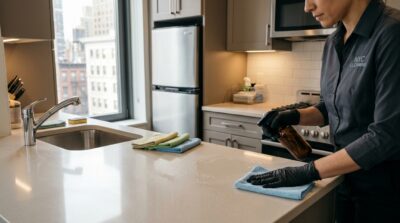
The fix is simple and takes less time than it sounds: keep disinfecting wipes or a spray with a clean cloth accessible in the kitchen and bathroom. A thirty-second wipe-down of the main contact points after school pickup, after dinner, before bed. It’s not glamorous. It works.
Cleaning product safety matters here too. Standard disinfectants work fine on surfaces kids will touch, as long as surfaces are dry before contact. If there’s a concern, EPA-registered hydrogen peroxide-based products or properly diluted hypochlorous acid solutions clean effectively without leaving harsh residue. Read labels. The main rule is that kids shouldn’t be in the room when strong chemicals are being sprayed and shouldn’t touch surfaces that are still wet.
Kitchens With Kids: The Real Situation
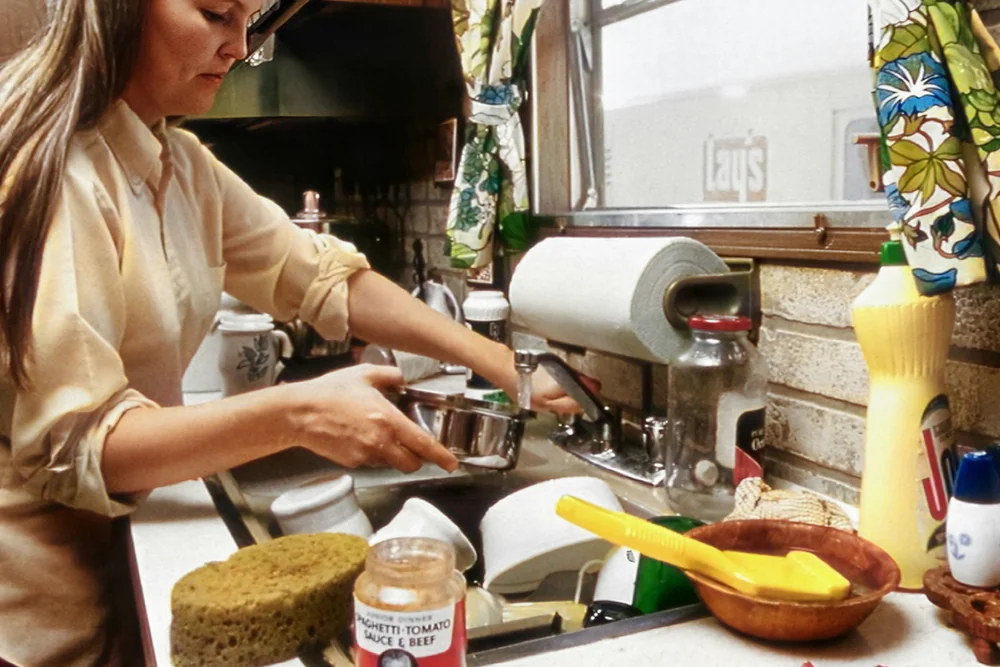
The kitchen is the highest-mess room in most households. With children, it becomes something else entirely.
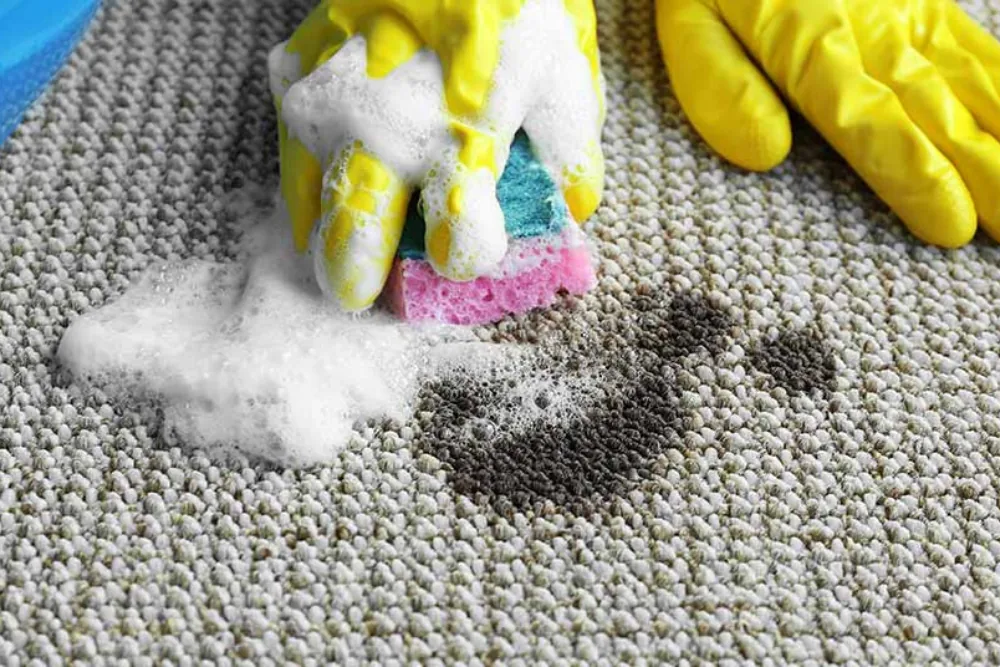
Snack debris is the dominant force. Crackers, fruit peels, cereal that missed the bowl, whatever was being eaten standing up at the counter with no plate involvement — all of it lands on floors and surfaces with impressive frequency. Sticky residue from juice cups and fruit pouches collects on table surfaces and hardens into something that requires real effort to remove if left for more than a day.
The stovetop handles cooking splatter plus whatever gets knocked onto it during the chaos of making dinner while simultaneously negotiating a dispute about screen time. The microwave collects the results of food heated with optimistic time estimates. The floor in front of the sink, the high chair area, and the space around the table are perpetual zones.
The most effective approach for kitchen maintenance with kids is the two-phase system. Daily maintenance — wipe counters after meals, sweep or spot-mop the floor at the end of the day, wipe the table down after every sitting. This takes ten to fifteen minutes total spread across the day and prevents buildup. Then a proper kitchen clean once a week: stovetop, appliance surfaces, inside the microwave, cabinet fronts, floor mopped properly.
The daily maintenance is what makes the weekly clean manageable. Skip the daily maintenance for a few days and the weekly clean becomes a project.
Bathrooms: Keeping Up Without Going Crazy
Family bathrooms take a beating. Bath time generates water on every surface within a three-foot radius. Toothbrushing distributes toothpaste across the sink and mirror with a consistency that suggests it’s intentional. Toilet area surfaces need attention more often than most parents want to think about.
The practical approach: quick wipe-down of sink, counter, and faucet every day or two. Mirror once a week. Toilet — seat, handle, the rim outside the bowl — at least twice a week with a disinfecting product. Floor around the toilet area similarly. Tub or shower scrub once a week, or after bath nights when there’s soap residue and whatever came off the kids sitting on the tub floor.
Grout in family bathrooms ages faster than in adult-only spaces. More frequent moisture from baths, more foot traffic in and out, more soap and shampoo. In NYC apartments where bathrooms tend toward the smaller end and ventilation is variable, mildew finds footholds faster. Running the exhaust fan during and after bath time, keeping towels hung rather than piled, and doing a real scrub of grout lines monthly will keep it manageable.
The bigger point is that bathroom cleaning works best on a frequent, short-session basis rather than occasional major efforts. A bathroom cleaned twice a week for five minutes each time stays cleaner than one cleaned once a week for twenty minutes.
Floors: Frequency Over Intensity
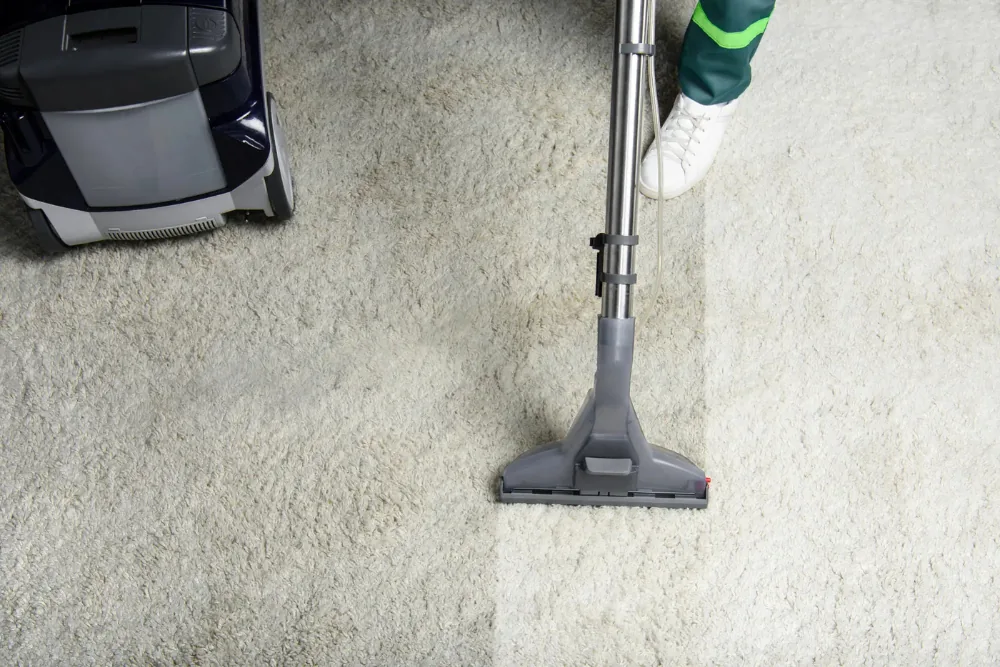
In apartments without kids, floors can generally be vacuumed or swept once a week and mopped every week or two. That schedule doesn’t survive contact with children.
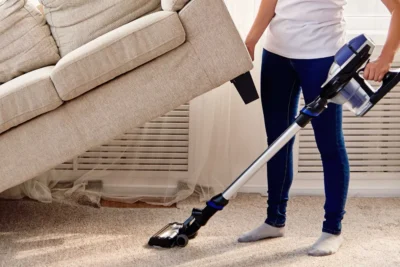
Floors in family apartments — especially kitchens, dining areas, and anywhere kids play — need attention more frequently. Daily sweeping in the kitchen and dining area isn’t excessive; it’s maintenance. A vacuum run through the main living areas every two or three days is realistic and necessary, particularly for homes with rugs or carpets where food particles and dust accumulate out of sight.
In New York City, the outdoor-to-indoor dirt transfer is also more significant than in suburban environments. No mudroom, no garage. Shoes come off in the entryway, if you’re lucky, and everything that accumulated on sidewalks and subway platforms comes with them. Keeping a mat at the door, building a shoes-off habit, and vacuuming the entry area frequently reduces what spreads through the rest of the apartment.
For crawlers and toddlers who spend real time on the floor, cleanliness matters beyond aesthetics. A vacuumed and mopped floor is a safer surface than one that’s collected a week of foot traffic and dropped food. This isn’t alarmist — it’s practical.
Toys, Storage, and the Containment Strategy
The toy situation in a New York City apartment is a specific challenge. Square footage is limited. Toys — especially for younger children — are numerous, small, and designed to be distributed across the maximum possible area.
The most effective system is containment by room and category. Living room toys stay in the living room bin. Bedroom toys stay in the bedroom. Art supplies have a dedicated storage location and come out for designated use, then go back. The kitchen has no toys in it, ever, as a policy.
Bins, baskets, and simple low shelving work better than complex organizational systems for kids under about eight. The test is whether a child can realistically put something away in thirty seconds without help. If the storage requires sorting, labeling reading, or precise placement, it won’t be used. If it requires dropping something into a bin, it will.
A ten-minute tidy at the end of the day — not a deep clean, just a reset of whatever has migrated — keeps the apartment from reaching the state that requires an hour of recovery. Building this into a consistent time, like after dinner or before bath, makes it a routine rather than a negotiation.
One useful rule: before new toys come into the apartment, an equivalent number go out. Donated, gifted to cousins, passed along to a school. This applies especially in the weeks after birthdays and the period between Thanksgiving and January, when the volume of incoming items spikes dramatically.
Getting Kids Involved: What Actually Works by Age
Kids can help clean. The amount and type of help scales with age, and the goal is contribution, not perfection.
Toddlers (2–4): Can put toys in bins when helped and directed. Can wipe surfaces with a damp cloth under supervision. Can carry items to another room. Will generally do this more enthusiastically than you’d expect and less effectively than you’d hope. Both things are fine.
Early elementary (5–7): Can load items into dishwasher with direction. Can sweep with a child-sized broom. Can sort laundry by color. Can wipe down lower cabinet fronts and the table after meals. Can put away folded laundry in their own dresser.
Older elementary (8–11): Can vacuum a room properly. Can clean the bathroom sink and counter. Can mop a floor. Can do a full load of laundry including folding. Can take out recycling. Can wash dishes by hand.
Tweens and up: Full cleaning participation. At this age the issue is usually motivation rather than ability, which is a different problem.
The key principle is consistency over perfection. A child who puts their dishes near the sink every day is building a habit that will last. A child who loads the dishwasher imperfectly is still contributing and learning. Correcting repeatedly and taking over because it’s faster undermines both the habit formation and the willingness.
Making chores a normal part of household life from early on — not a punishment, not an optional favor — is what makes them stick.
The Safety Layer: Cleaning Products and Kids
Two rules worth taking seriously.
First: store cleaning products completely out of reach, in a locked cabinet if possible. This includes products that seem harmless, like dish soap or surface sprays. Child-resistant caps are not child-proof. The under-sink cabinet in kitchen and bathroom should have a safety latch at minimum.
Second: ventilate when cleaning. Open a window or run a fan when using any spray product with a strong scent. Bleach-based cleaners in particular should only be used in ventilated spaces, with kids out of the room until the area is dry and aired.
For everyday surface cleaning in areas where kids will be shortly after — kitchen counters, bathroom surfaces, dining table — non-toxic or food-safe options are worth having available. They’re not necessary for every cleaning task, but they make sense for the surfaces kids touch most.
When the Routine Falls Apart
It will, regularly. That’s not a planning failure — it’s parenting.
Some weeks there’s an illness going through the household and the cleaning falls behind. Some weeks both parents are working at full capacity and the apartment accumulates. Some weeks there’s a holiday, a school event, a birthday party in the apartment, and the aftermath is substantial.
This is normal. A routine that works isn’t one that never breaks — it’s one that’s easy to restart after it does.
Professional cleaning is useful in this context not as a replacement for regular maintenance, but as a reset button. A thorough clean after a hard stretch brings the apartment back to baseline quickly, which makes it easier to maintain from there. Many families in Manhattan, Brooklyn, and Queens use professional cleaning for exactly this: not because they can’t keep the apartment up, but because a reliable monthly or biweekly professional clean means they never fall too far behind.
It’s also straightforwardly useful during transition periods. A new baby changes everything about how an apartment gets used and how much capacity the adults have for cleaning. A move into a new apartment benefits from a deep clean before boxes are unpacked. A stretch of school sickness calls for a proper disinfecting top-to-bottom when everyone is well again.
Cleaning Chief works with families across Manhattan, Brooklyn, Queens, the Bronx, Staten Island, and Jersey City who want consistent, professional results without adding another thing to an already full plate. The checklist is thorough, the teams are vetted, and the booking is straightforward.
Some things in a household with kids genuinely just need to get done. Let the professionals handle the cleaning so you can focus on the rest.
Not Sure What You Need?
Tell us about your space — we'll recommend the right service and give you a free, no-obligation quote.
Get a Free Consultation