
Cleaning is one of those things people treat as obvious. Of course you clean your home. Of course you wipe surfaces, sweep floors, and deal with the bathroom. It barely registers as a decision — it’s just something that gets done, like eating or sleeping.
But cleaning has a history. A long one. And understanding where it came from makes it easier to understand why a clean home still matters in the same fundamental ways it always has — even if the tools, the products, and the people doing it have changed considerably.
Here’s how we got from sand and river water to professional cleaning services in NYC.
It Didn’t Start With Swiffer
Modern cleaning products are a relatively recent invention. The cabinet under the sink — stocked with sprays, scrubs, microfiber cloths, and specialty solutions for every surface type — is a product of the last hundred years or so.
Before that, people cleaned with what they had. And they cleaned seriously.
The earliest evidence of intentional home cleaning goes back thousands of years. Archaeological sites across Mesopotamia, Egypt, and the Indus Valley show drainage systems, designated waste areas, and evidence of organized domestic space — all signs that ancient people understood, at some level, that living conditions affected health and quality of life. They didn’t have germ theory. But they had enough practical experience to know that certain environments felt better and caused fewer problems.
Cleanliness, from the very beginning, was tied to wellbeing. Not in an abstract way. In a direct, observable, daily-life way.
Ancient Civilizations Took This Seriously
The Romans are probably the most famous example of ancient cleaning culture, and they earned the reputation.
Roman cities had sophisticated sewer systems, public baths, and aqueducts that supplied clean water at a scale most European cities wouldn’t match again for over a thousand years. Wealthy Roman households employed staff specifically dedicated to cleaning and maintenance. Floors were swept and mopped. Linens were laundered. The idea of a well-kept domestic space wasn’t a luxury preference — it was a baseline expectation of civilized life.
The Egyptians cleaned with a combination of natron (a naturally occurring salt compound), sand, and ash — early precursors to what we’d now call abrasive cleaners. They also made early versions of soap by combining plant ash with animal fat, a process that remained essentially unchanged for centuries. Egyptian homes, particularly among the elite, were maintained with notable attention to order.
Greek households assigned cleaning duties systematically, often to household staff. Floors were swept and sometimes washed. Walls were whitewashed regularly, both for appearance and as a rudimentary pest deterrent.
What all of these cultures shared was the recognition that a maintained home wasn’t just aesthetically preferable — it made life measurably better. Fewer insects. Fewer infections. Less disease spreading through the household. This was practical reasoning, not philosophy.
The Middle Ages: A More Complicated Picture
Medieval Europe is often characterized, somewhat unfairly, as universally filthy. The reality was more nuanced.
In peasant households with earthen floors and livestock living nearby, keeping things clean was genuinely difficult. The tools were limited, water access was inconsistent, and the volume of dirt generated by daily life — animals, cooking fires, outdoor labor — was substantial.
But wealthier households maintained real standards. Stone floors were strewn with fresh rushes or herbs that could be swept out and replaced. Linens were washed and aired. Servants cleaned regularly, and there are detailed household management manuals from the medieval period that prescribe specific cleaning routines for different rooms and surfaces.
The Black Death in the 14th century had a significant effect on cleaning attitudes. When roughly a third of Europe’s population died from a disease nobody fully understood, cleaning and sanitation became associated with survival in ways they hadn’t been before. Connection between dirt, waste, contaminated water, and disease was still imprecise by modern standards — miasma theory blamed bad air rather than pathogens. But the practical response — clean more, dispose of waste properly, keep living spaces maintained — turned out to be correct even if the underlying theory wasn’t.
Public health, for the first time, started to become a genuine concern of civic authorities. Streets in some cities were required to be swept. Waste disposal became regulated. The connection between cleanliness and community health was beginning to be understood in formal terms.
The Industrial Revolution Changed Everything
The 18th and 19th centuries transformed cleaning more dramatically than any period before or since.
The Industrial Revolution moved large populations from rural settings into dense urban environments. Cities grew faster than the infrastructure to support them. London, New York, Paris — all of them were, at various points in the 19th century, genuinely dangerous places to live, with contaminated water supplies, inadequate waste removal, and disease outbreaks that killed thousands.
The public health reform movement that emerged in response established clean water systems, organized sewage disposal, and set standards for domestic hygiene. This wasn’t idealism — it was response to observable catastrophe. Cholera epidemics in New York and London, attributable largely to contaminated water, killed indiscriminately and forced cities to build the infrastructure that residents of those cities now take entirely for granted.
At the same time, manufactured soap became widely available for the first time. Before industrialization, soap was made at home or purchased from specialized craftspeople at prices that made it a genuine luxury. Factory production changed that. By the mid-19th century, soap was cheap, widely available, and aggressively marketed. Cleaning your home and body with soap shifted from a practice of the wealthy to an expectation of ordinary households.
Synthetic cleaning products followed. Borax, washing soda, bleach — compounds that had existed in various forms appeared in packaged, labeled, ready-to-use formats for the first time. The domestic cleaning supply market was born.
The Vacuum Cleaner and What It Actually Changed
Before the vacuum cleaner, carpets and rugs were beaten.
Literally. Taken outside, hung over a fence or line, and struck repeatedly with a carpet beater until the dust came out. This was standard household practice and significant physical labor. It was also seasonal in many households — spring cleaning, the tradition of thoroughly cleaning a home as winter ended, was in part a response to the dust and soot that accumulated during months of coal fires and closed windows.
The first powered vacuum cleaners appeared in the early 1900s. They were large, expensive, and horse-drawn in some early commercial versions — sent to wealthy homes to clean carpets from the street via long hoses through windows. The portable home vacuum emerged shortly after and, once prices dropped through the 1920s and 1930s, became standard household equipment.
The effect was real. Carpets that had required hours of outdoor beating could now be cleaned in place in minutes. Dust that had settled into fibers and been redistributed through beating was now removed. Indoor air quality, particularly in winter when homes were closed, improved.
The vacuum cleaner also made carpet practical in a new way. Before reliable carpet cleaning was possible, hard floors were often preferred precisely because they were easier to maintain. The vacuum opened the door — if you’ll allow it — to wall-to-wall carpeting, which became a defining feature of mid-century American homes.
The 20th Century: When Cleaning Got Commercial
The 20th century industrialized cleaning in a different sense. It sold it.
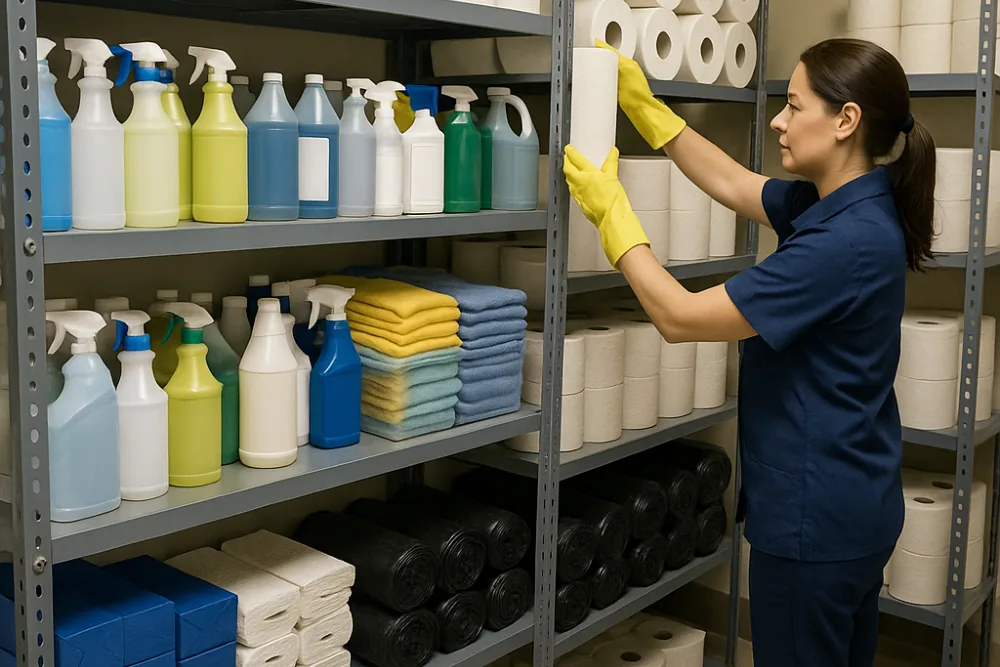
The period between the 1920s and 1960s saw an explosion of branded cleaning products, each marketed directly to the women who were assumed to be responsible for the domestic sphere. Advertisements of the era made cleaning both a domestic duty and a competitive performance — the implication being that a dirty home reflected on the woman running it personally, not just on the state of the floors.
This marketing shaped attitudes toward cleaning that persisted long after the advertising itself became dated. The idea that a home should look immaculate at all times, that cleaning was always a personal responsibility, that visible dust or an unwashed dish was a kind of failure — these are products of a very specific commercial moment, not timeless truths.
Products proliferated. By mid-century, the cleaning aisle contained dedicated solutions for every surface and task: window cleaner, bathroom cleaner, floor cleaner, furniture polish, oven cleaner, drain opener. Each solved a specific problem. Each required purchasing and storing separately. The under-sink cabinet became an archaeological site of specialized products.
Post-war prosperity also meant larger homes, more surfaces, more rooms, and higher expectations for what clean meant. The workload expanded alongside the available tools. In many households, the time spent on cleaning actually increased through the mid-20th century even as products improved — because standards rose in parallel.
New York City’s Particular Relationship With Dirt
New York has always had a specific cleaning challenge.
The density is part of it. Millions of people living and moving through a relatively small area generates a volume of particulate matter, street dust, exhaust, and urban grime that rural or suburban environments simply don’t produce. This gets tracked into buildings, rides elevators, settles on windowsills, and works its way into apartments on shoes, bags, and clothing.
Pre-war buildings — and New York has more of them than almost anywhere in the country — come with their own maintenance character. Cast iron radiators distribute heat and stir dust. High ceilings create more vertical surface area for particles to settle on. Original window casings and crown moldings, beautiful as they are, collect dust in ways that modern construction doesn’t. Older plumbing means bathroom grout and caulk age faster and require more consistent attention.
The city’s pace compounds the problem. Most New Yorkers are simply busy in a way that makes sustained attention to home maintenance difficult. Long commutes, demanding jobs, full social schedules — the hours available for cleaning are genuinely limited. The apartment doesn’t know this. The dust accumulates on its own schedule, indifferent to yours.
This is why professional cleaning services have been part of New York City domestic life for well over a century. Wealthier households employed domestic staff. As that model evolved through the 20th century, cleaning companies developed to provide the same service on a different economic model — regular appointments, professional teams, consistent results, without the full-time employment arrangement.
The logic has always been the same. Maintaining a clean home in a dense, high-traffic urban environment requires consistent effort. When that effort is handled by professionals, the results are more reliable and the time cost to residents is lower.
The Cleaning Product Revolution of the Late 20th Century
The environmental movement that grew through the 1970s and 1980s changed cleaning again.
Awareness of the chemical content of standard cleaning products — the solvents, bleaches, phosphates, and synthetic fragrances that had become industry standard — prompted both regulatory response and consumer preference shifts. Phosphates, which contributed to waterway contamination, were phased out of many products. Biodegradable formulations replaced older chemical bases.
The green cleaning movement formalized this shift. Products certified as non-toxic, plant-derived, and environmentally responsible carved out real market share. Some of this was genuine innovation. Some was marketing. The challenge for consumers — then and now — is telling the difference between a product that’s actually safer and one that uses the vocabulary of safety without the substance.
Microfiber technology was among the genuinely significant developments of this period. Microfiber cloths, which can trap microscopic particles through physical structure rather than chemical action, reduced the need for cleaning solutions on many surfaces. A damp microfiber cloth on a hard surface often cleans more effectively than a spray product applied to a paper towel, with less chemical residue and less waste. Professional cleaning operations adopted microfiber quickly because the results were better and the cost per use was lower.
Where Professional Cleaning Fits Into This History
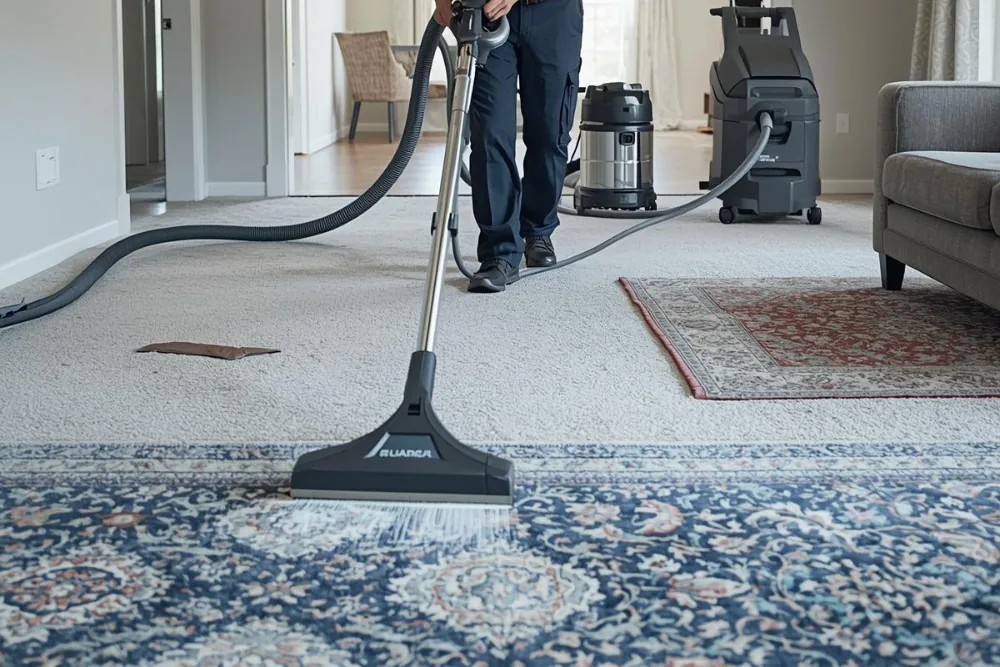
Every era has had people who cleaned professionally. Roman households had domestic staff. Medieval manors employed housekeepers. 19th-century upper-class homes in New York and London maintained large cleaning staffs. The idea that professional cleaning is modern is incorrect — it’s ancient.
What has changed is access. For most of history, professional cleaning help was available only to the wealthy. The professional cleaning service industry that developed through the 20th century, and expanded significantly in recent decades, made reliable, consistent cleaning help available to a much wider range of households. Flat-rate pricing, online booking, vetted and insured teams, standardized checklists — these are innovations in delivery, not in the underlying service.
The fundamental offer has always been the same: a maintained home, handled by people who do this for a living, so the people living there can do other things instead.
In New York City in 2026, that offer lands in the same place it always has. Busy people with limited time and high standards for their living environment want their homes to feel clean, settled, and cared for. The city generates more dirt than most. The schedules leave less time to deal with it. The apartments, many of them genuinely beautiful and worth maintaining well, reward consistent attention.
Cleaning Chief services Manhattan, Brooklyn, Queens, the Bronx, Staten Island, and Jersey City with exactly that in mind. Professional teams, consistent schedules, real results. The tools have changed since ancient Egypt. The goal hasn’t.
Book a cleaning today — and let the people who do this for a living handle it.
Get Your Custom Cleaning Quote — Free
Every NYC apartment is different. Get pricing tailored to your space in minutes.
Get My Free Quote