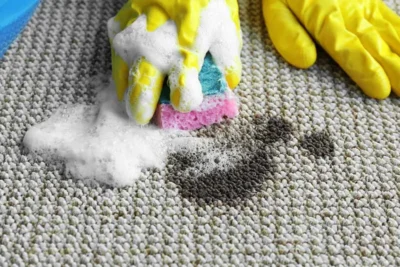
There’s a moment most New Yorkers recognize. You’ve just made it through a full week. Work, commute, errands, that dinner that ran two hours longer than expected. Saturday morning arrives. You look around the apartment. And instead of relief, you feel something closer to a second shift starting.
The counters need wiping. The bathroom is overdue. The floors haven’t been vacuumed in a week and a half, which you know because you stepped on something mysterious near the couch and decided not to investigate.
This is the moment a lot of people start thinking seriously about outsourcing.
Not because they’re lazy. Not because they can’t clean. But because they’ve done the math, even informally, and realized that spending Saturday mornings on chores they’ll have to repeat in seven days is not a great use of a finite resource called time.
Here’s what’s actually happening when people make that call — and why it tends to change things more than they expected.
The Tasks That Sound Small But Aren’t
Nobody sits down and thinks: cleaning is going to consume my life. It happens gradually.
It’s the kitchen counter you wiped Monday morning that somehow needs wiping again by Tuesday afternoon. The bathroom sink that always looks fine from a distance and never looks fine up close. The floors you vacuumed last weekend, now sporting a fresh layer of whatever gets tracked in from the hallway.
These aren’t one-time projects. They’re a cycle. And cycles are exhausting in a way that singular tasks aren’t, because there’s no finish line. You don’t complete them — you maintain them indefinitely, until something changes.
In New York City apartments, the cycle tends to run faster than in most places. Smaller square footage means surfaces are used more intensively. Urban air means dust accumulates faster. Buildings without doormen mean hallway dirt gets tracked directly onto your floors. High foot traffic in a 650-square-foot one-bedroom hits differently than in a suburban house with a mudroom.
The result is that the baseline maintenance load in a NYC apartment is genuinely higher than the national average, even before you factor in the schedules people keep to live here.
The Kitchen: Worst Offender by a Wide Margin
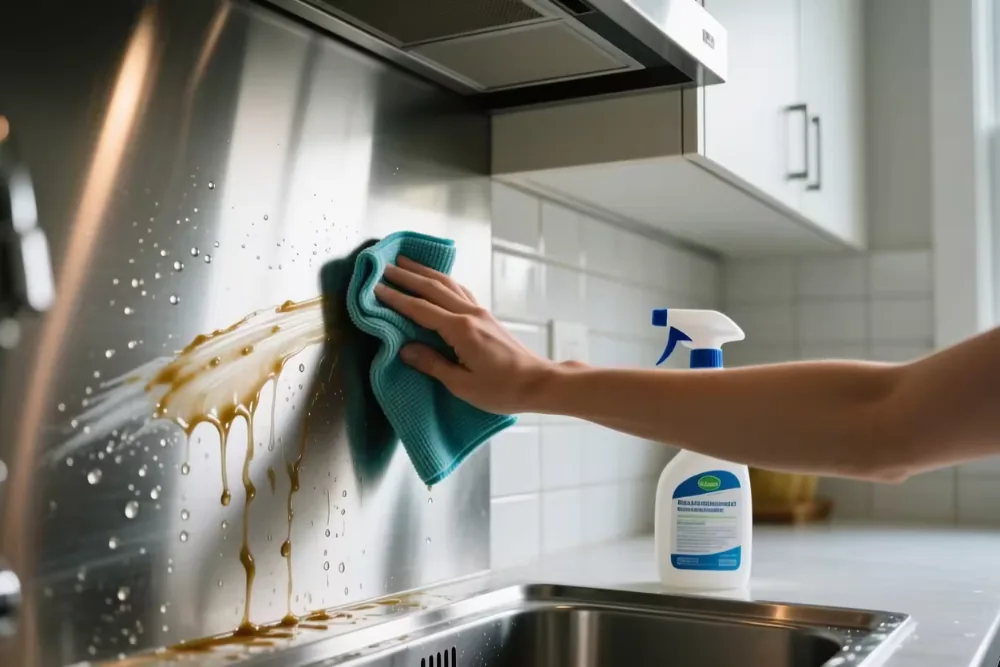
Ask anyone what cleaning task they dread most. The kitchen wins by a significant margin, and it’s not particularly close.
Kitchens in New York apartments are used hard. Counters collect coffee rings, mail, groceries, and whatever landed there during the week and hasn’t found a home yet. Stovetops get splattered. Appliance surfaces develop that particular film that only becomes visible when light hits at the exact wrong angle, usually when a guest is standing right next to it.
Inside the microwave is a whole separate situation that most people prefer not to think about.
The thing about kitchen cleaning is that it compounds. A quick wipe becomes a real scrub when grease has had time to set. Cabinet fronts that get wiped weekly stay manageable; cabinet fronts that get wiped monthly require actual effort. Refrigerator handles, oven knobs, the area around the garbage bin — all of them accumulate steadily and require consistent attention to stay reasonable.
Most people clean the kitchen surfaces they can see without bending down. Professional cleaners clean the ones below that threshold too. That difference, repeated weekly, adds up to a meaningfully cleaner kitchen.
Bathrooms: The Room Nobody Looks Forward To
There are people who enjoy cleaning bathrooms. They exist. This article is not for them.
For everyone else, the bathroom is the task that gets done out of necessity, not enthusiasm. You clean it when it crosses a threshold you’ve decided in advance, often a threshold that involves other people coming over.
The problem is that bathrooms have a lot of surfaces that respond poorly to infrequent attention. Grout especially. New York apartment bathrooms — many of them with original tile from several decades ago, some with pre-war details that look beautiful and clean awkwardly — accumulate mildew and soap scum in ways that surface-level cleaning doesn’t fully address.
Shower doors. The area behind the toilet. The base of the toilet, which no one discusses but everyone is aware of. The floor grout. The caulk lines. The space where the bathroom radiator meets the floor, if you have one of those.
A bathroom cleaned weekly by someone who cleans bathrooms for a living looks different from one cleaned occasionally by someone who finds the whole exercise unpleasant. That’s just true. It’s not a judgment — it’s a description of how skill and consistency produce different outcomes.
Vacuuming, Dusting, and the Physics of Futility
Dust has an almost impressive relationship with gravity. You remove it from a surface. It rises. It travels. It settles somewhere else. Sometimes it settles back where you removed it from. Not immediately, but within a timeframe that makes the whole exercise feel slightly philosophical.
In NYC apartments with forced-air heating, dust moves with particular efficiency. Radiator heat stirs particles and redistributes them across the apartment. Air quality in Manhattan, Brooklyn, and Queens is not the cleanest on the continent, and that air comes through every window and door gap, carrying what it carries.
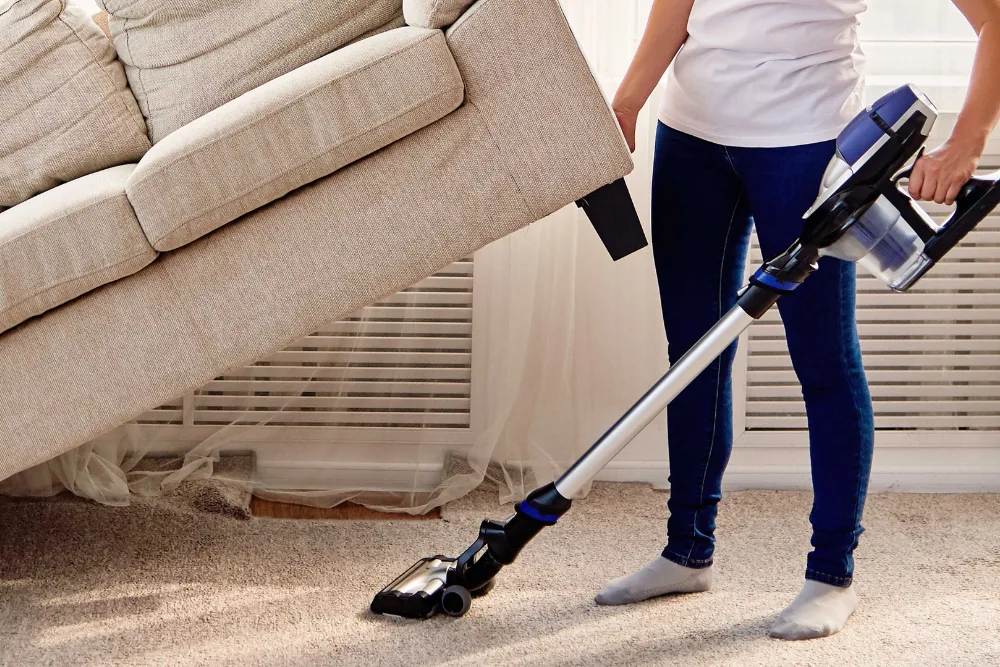
Vacuuming once a week is reasonable maintenance. Vacuuming less than that in a city apartment, especially one with rugs, shows. Pet owners already know this — a household with one dog or cat requires nearly double the floor maintenance to stay at the same baseline level as a pet-free home.
Hard floors collect differently than carpet. They’re easier to see and easier to clean, which is part of why people with hardwood floors often feel like they’re cleaning them constantly. They’re not doing more cleaning — they’re just seeing the dirt that carpet would hide.
The Mental Load Is the Real Cleaning Problem
Here is what nobody talks about enough.
It’s not just the time that cleaning takes. It’s the space it occupies in your head between sessions.
The kitchen catches your eye Tuesday and you note it needs wiping. The bathroom registers Wednesday and gets added to the mental list. Thursday evening you notice the floors and do a quick calculation about whether you can get to them this weekend or whether they have to wait until next. Friday you remember the bedroom hasn’t been dusted in a while. Saturday you wake up with a list already running.
This is the cognitive overhead that people rarely account for when they think about the cost of cleaning. It’s not just the two or three hours spent on a Saturday — it’s the low-level background processing that runs all week, noting what’s fallen behind, tracking what needs attention, weighing what can wait against what can’t.
Psychologists have a term for this: mental load. It’s the invisible management work that sits underneath visible tasks. And in households where one person carries most of it, the weight tends to be underestimated by everyone, including the person carrying it.
When you outsource cleaning, you don’t just free up Saturday morning. You free up the mental bandwidth that was tracking all of it.
That’s the part that surprises people. Not how much time they get back, but how much quieter things feel.
What a Clean Home Actually Does to You
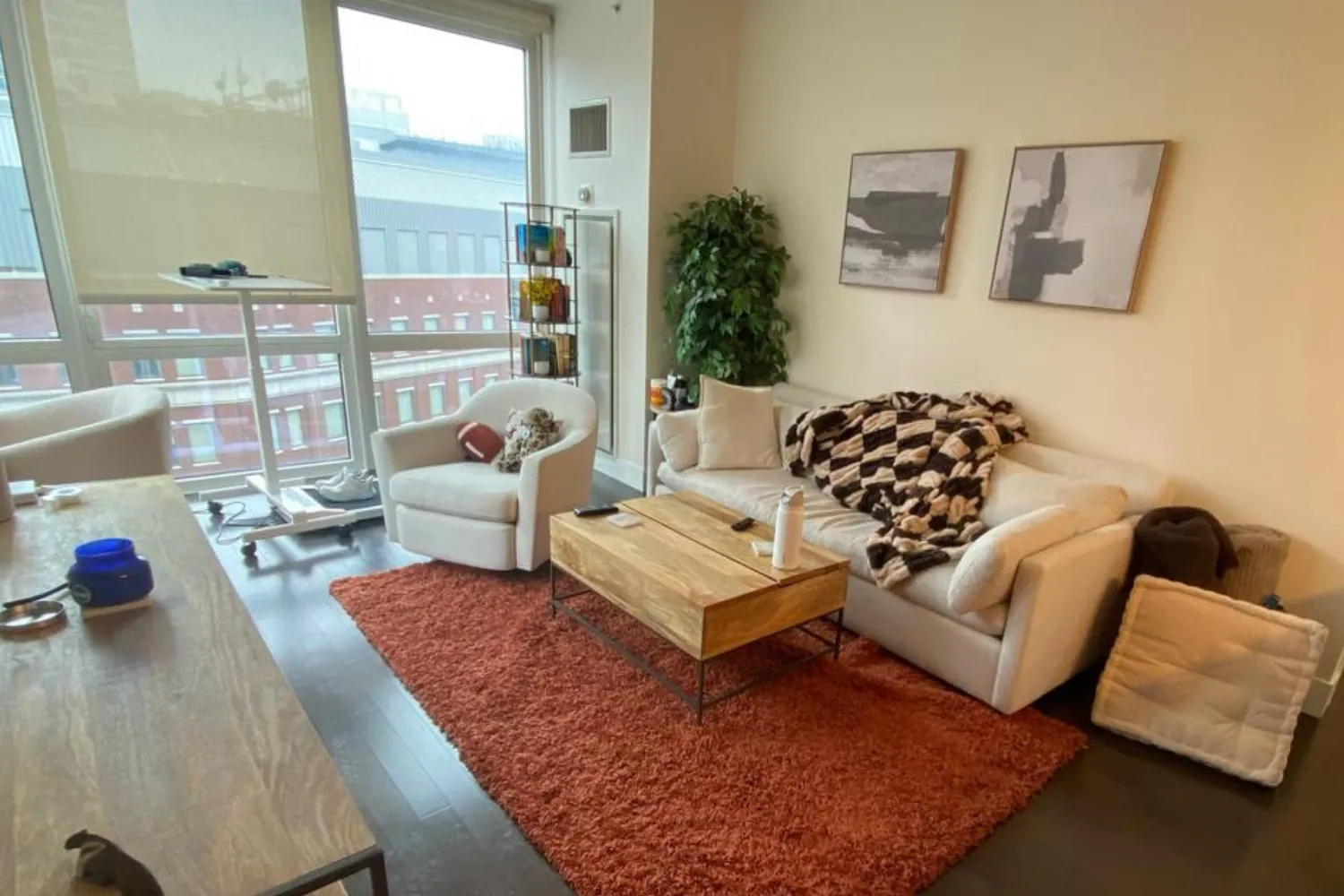
Cleanliness and well-being are connected in ways that go beyond tidiness for its own sake.
Research on the relationship between home environment and mental state consistently finds the same thing: visual disorder creates low-grade stress. It’s not dramatic. You don’t feel a panic attack coming on because there are dishes in the sink. But the background tension of a cluttered or unkempt space has a real effect on how easily people relax, how well they sleep, and how much energy they have for things that actually matter to them.
A clean kitchen is easier to cook in. A clean bedroom is easier to wind down in. A clean bathroom — genuinely clean, not just picked-up — has a different quality in the morning than one that’s been neglected. These are small effects that compound across every day.
In New York, where apartments are often the only space a person controls entirely, this matters more than in other contexts. The city is loud, unpredictable, and demanding. Home is supposed to be the counterweight. When home feels like another source of disorder and uncompleted tasks, the counterweight stops working.
People describe the experience of coming home to a professionally cleaned apartment in similar terms: a physical sense of relief, of being able to actually rest. That’s not incidental — it’s the point.
What Outsourcing Actually Gives You
Time, yes. But let’s be specific about what kind.
You get Saturday mornings back. Not to be productive with — just to do whatever you want. Read, sleep late, go to Prospect Park, eat a long breakfast without the bathroom hovering at the edge of your awareness.
You get evenings back. The late-night vacuuming because it’s been hanging over you all week goes away. So does the Sunday afternoon deep-clean that always takes longer than planned and leaves you going into Monday already depleted.
You get your weekends back in the original sense — as actual rest, not rest contingent on having earned it by completing the chore list first.
And you get the mental space back. The list that runs quietly in the background, tracking dust and soap scum and floor grime, clears out. A professional cleaning team shows up on a regular schedule and handles it. The tracking stops because there’s nothing left to track.
For busy professionals across Manhattan, Brooklyn, and Queens, this tends to be the thing that tips the decision. It’s not a luxury calculation — it’s an efficiency one. Hours spent cleaning are hours not spent on anything else, including rest. When the hourly math works out in favor of outsourcing, people outsource.
When It Makes Sense to Make the Call
There’s no universal threshold, but a few situations come up consistently.
You’re working full-time and your cleaning happens in exhausted bursts that don’t keep up with the apartment. You have a family and the volume of mess generated each week exceeds what one person can reasonably manage. You have guests coming often enough that you’re cleaning reactively rather than consistently. You’ve noticed that cleaning stress is actually affecting your mood in the days leading up to doing it.
Any of those is a reasonable reason. So is simply deciding that your free time is worth something and you’d rather spend it differently.
The apartments Cleaning Chief services across Manhattan, Brooklyn, Queens, the Bronx, Staten Island, and Jersey City tend to share one thing: the people in them are doing a lot and would prefer to do less cleaning. The specific situations vary — busy professionals, families, Airbnb hosts, people who just moved in and want a proper reset — but the underlying logic is the same.
You don’t have to earn rest. And the cleaning can get handled by people whose actual job it is.
What to Expect When You Stop Doing It Yourself
The first visit usually produces a fairly thorough clean. That’s intentional — it establishes the baseline.
From there, regular visits maintain it. The difference between maintenance cleaning and catch-up cleaning is significant in terms of both time and quality. A space that’s consistently maintained stays manageable. A space that’s cleaned every few months requires hours of heavy work to bring back.
Clients who book standard or deep cleaning on a recurring schedule typically find that the apartment holds up much better between visits than it did when they were handling everything themselves. Consistent professional cleaning raises the floor.
You’ll still pick up after yourself in between, of course. But you won’t be the person responsible for whether the bathroom grout is clean, whether the oven surround has been wiped down, or whether the baseboards have been dusted. That part is handled.
What remains is your actual life, which is generally more interesting.
Book a cleaning with Cleaning Chief — and find out what Saturdays are supposed to feel like.
Get Your Custom Cleaning Quote — Free
Every NYC apartment is different. Get pricing tailored to your space in minutes.
Get My Free Quote