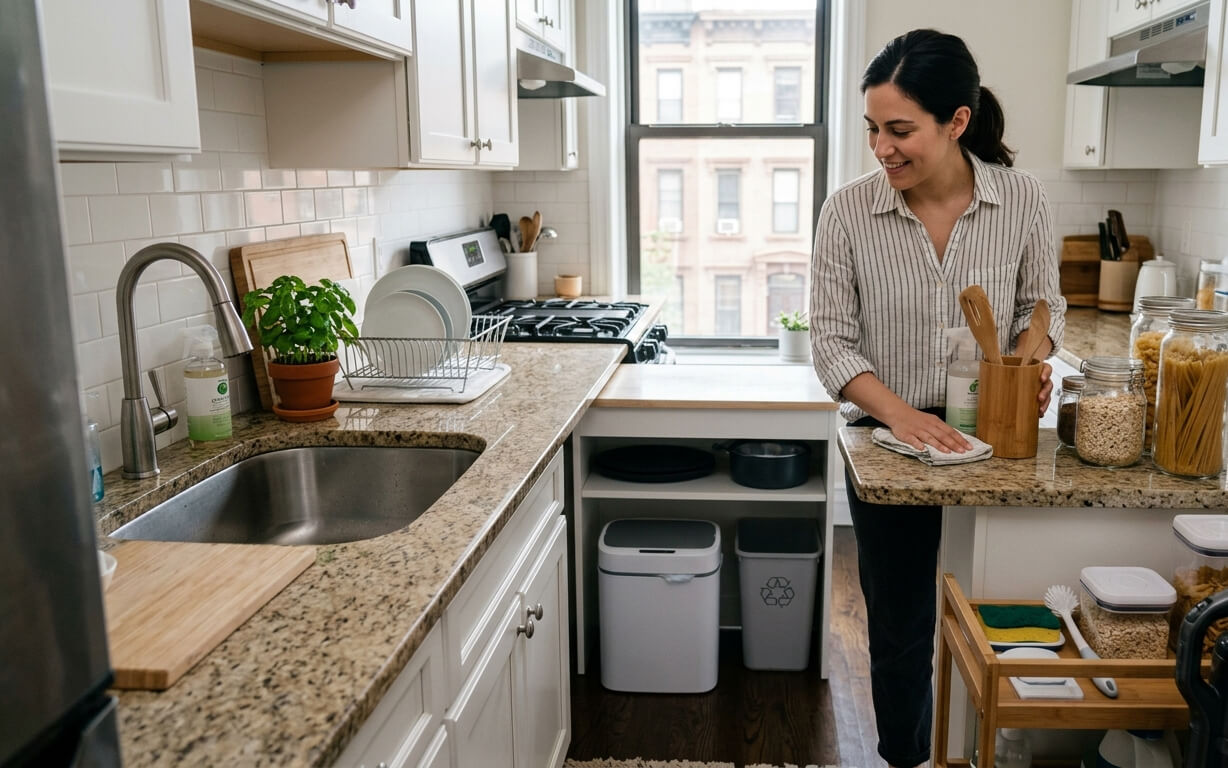
New Yorkers have a complicated relationship with pests. Nobody invites them. Somehow they keep hearing about the party anyway.
You can scrub the countertops until they shine like polished ice, take the trash out every evening, and still spot a roach making an uncomfortably confident walk across the kitchen floor at midnight. Or hear a faint rustle behind the cabinet that instantly transforms you into a detective, a construction engineer, and an amateur wildlife expert — all before you’ve even had your morning coffee.
Apartment living is different. Entirely different.
You’re not just maintaining your own space. You’re sharing walls, ceilings, floors, electrical openings, and tiny structural gaps with dozens, sometimes hundreds, of neighboring apartments. Think of a city building as one enormous organism rather than fifty isolated homes. Air moves through it. Heat moves through it. Water moves through it. Unfortunately, tiny unwanted visitors move through it too.
That reality surprises people who are new to New York. They imagine pests only appear in dirty apartments. It’s an understandable assumption. New Yorkers search “roach prevention NYC apartment” online all the time, though.
Roaches don’t hold committee meetings about housekeeping standards. Mice don’t inspect your vacuum lines before deciding where to explore. They’re following food. Water. Shelter. Opportunity. Sometimes your apartment offers very little of any of those things, yet a neighboring unit accidentally provides enough to attract activity throughout the building. Sometimes a single unsealed pipe opening becomes a tiny interstate highway connecting multiple apartments. It isn’t personal. It’s architecture.
The encouraging news is that cleaning still matters. Immensely. Not because it creates an invisible force field — if only life worked that way — but because consistent cleaning removes the reasons pests decide to stay after they arrive. That’s the important distinction.
You may not control what enters the building. You absolutely influence what feels worth sticking around for.
What Actually Attracts Pests in a NYC Kitchen
People often picture a mountain of dirty plates when they think about pests. Sometimes that’s true.
More often it’s something else.
Tiny Food Crumbs Become Full Meals
A breadcrumb doesn’t look like much. To a cockroach it’s dinner, though. Possibly several dinners. The crumbs hiding beneath the toaster, the rice grain that bounced under the refrigerator three weeks ago, the dried pasta sauce beside the stove nobody noticed because the lighting wasn’t quite right — these tiny leftovers quietly accumulate. One by one. Individually they seem harmless. Together they become a buffet operating twenty-four hours a day.
The strange thing about kitchens is that gravity always wins. Food never falls upward. Everything eventually finds the floor. Usually somewhere inconvenient.
Grease Is More Persistent Than It Looks
Grease doesn’t disappear simply because it becomes invisible. Cooking oils settle onto backsplashes, cabinet doors near the stove, range hood filters, even nearby walls. Over time those thin layers collect dust, creating sticky surfaces that trap even more particles.
The kitchen slowly builds itself a second skin.
Pet Food Stays Out Longer Than Human Food
Cats rarely finish dinner according to anyone else’s schedule. Dogs aren’t always much different. Food bowls sitting overnight provide easy meals not only for pets but occasionally for uninvited guests.
Water bowls create another attraction. Again, there’s nothing wrong with feeding your pets. Just worth paying attention to timing and cleanup.
Cardboard Is Surprisingly Comfortable
This one catches people off guard. Delivery boxes. Cereal cartons. Paper grocery bags stacked neatly in the corner because. Cardboard absorbs moisture. Provides shelter. Creates dark little hiding places.
It’s practically a tiny apartment inside your apartment. Roaches appreciate efficient real estate. New York has taught them well.
Moisture Often Matters More Than Food
A leaky faucet. Condensation beneath the sink. Water pooling around houseplants. The slow drip nobody quite gets around to fixing. Water changes everything.
Roaches can survive surprisingly long without much food. Reliable water? That’s harder for them to ignore. Mice, too. Life follows moisture. Always has.
Clutter Creates Safe Neighborhoods
Not all clutter is equal. A stack of books isn’t particularly interesting. A pile of paper bags beside warm appliances? Different story.
Storage areas packed tightly together create protected pathways where pests travel without feeling exposed. They’re cautious creatures. Makes sense, really.
The Daily and Weekly Habits That Close the Gaps
People often search for one magical trick. There isn’t one. Success usually comes from several very ordinary habits working together.
None feels especially impressive. Together they’re remarkably effective.
Wipe the Counters Every Evening
Not because someone might stop by unexpectedly. Because tiny food residue dries overnight. Sugar. Oil. Coffee. Juice. Crumbs too small to notice while making dinner suddenly become much easier to attract attention after everyone goes to sleep.
Kitchen counters appreciate a thirty-second reset. So does tomorrow morning.
Vacuum Places Nobody Looks At
The obvious floor gets cleaned. Wonderful. Now consider beneath the stove. Behind the trash can. Under the refrigerator. Along cabinet kick plates. Corners where dust quietly negotiates permanent residency. These areas accumulate astonishing amounts of forgotten food.
Vacuuming visible space is maintenance. Vacuuming hidden space is strategy.
Take Out Trash Consistently
Simple advice. Still worth repeating. Overflowing garbage changes the entire kitchen environment. Food waste breaks down. Odors increase. Moisture develops.
The trash bag quietly becomes the busiest restaurant in the neighborhood — especially during humid New York summers.
Store Dry Goods Properly
Flour. Rice. Cereal. Pasta. Pet treats. Leaving opened packages folded loosely inside cabinets works until it doesn’t.
Sealed containers reduce access while helping food stay fresher anyway. Everybody wins. Except perhaps the pantry moths.
Wipe Around the Sink Before Bed
Here’s a tiny habit with surprising value. Dry the sink. Dry the countertop. Empty standing water from dishes waiting to soak overnight if possible. Remove excess moisture. It’s a surprisingly polite way of telling pests the kitchen is officially closed until morning.
Business hours have ended. Please come back never.
Inspect Beneath the Sink Occasionally
Not every day. No need to become obsessive. But every week or two, open the cabinet.
Look around. Feel the plumbing connections. Notice anything damp? Musty? Unusual? Tiny leaks quietly become larger invitations over time.
Water enjoys consistency.
Seal What You Can
Cleaning matters. So does denying entry. Small gaps around plumbing pipes, utility lines, and baseboards often become highways rather than simple openings. Buildings settle. Materials shrink. Tiny cracks appear. Closing those gaps supports all other pest control cleaning habits you adopt.
The apartment begins working with you instead of against you. Nice feeling.
Where Professional Deep Cleaning Supports Pest Prevention
Let’s clear up something important. Professional cleaning isn’t pest control. Different profession. Different expertise.
Still, they overlap more than people realize.
Hidden Food Residue Gets Removed
Daily cleaning focuses on visible life. Professional deep cleaning explores places most people rarely reach. Behind appliances. Inside cabinet corners. Baseboards. Vent covers. Areas beneath heavy furniture. Places where grease and crumbs quietly collect over months despite everyone’s best intentions.
The apartment becomes genuinely cleaner. Not just visibly cleaner. That’s an important difference.
Kitchens Receive a Reset
Even careful homeowners develop buildup. Grease near cooking surfaces. Dust mixed with cooking oils. Residue behind refrigerators. The strange sticky film that somehow appears on top of cabinets despite nobody being tall enough to touch them regularly.
Professional equipment and detailed cleaning remove much of that accumulated material. Pests lose resources. Simple equation.
Bathrooms Matter Too
People focus heavily on kitchens. Bathrooms also deserve attention. Moisture around toilets. Soap residue. Leaky plumbing. Standing water beneath sinks. Professional cleaning identifies areas homeowners occasionally overlook because familiarity makes them almost invisible.
Sometimes we stop seeing what surrounds us every day.
Cleaning Makes Pest Inspections Easier
A thoroughly cleaned apartment makes new pest activity easier to notice. Fresh droppings. New damage. Unexpected grease marks. Without old dirt obscuring everything, changes become more obvious.
Detection happens sooner. Problems stay smaller. Usually.
Deep Cleaning Supports Other Treatments
If professional extermination becomes necessary, deep cleaning beforehand — or shortly afterward depending on recommendations — often improves long-term results. Why? Because treatment addresses the pests. Cleaning addresses many of the conditions encouraging them to linger. They’re partners, not competitors.
Routine Maintenance Keeps Progress Going
One deep cleaning feels wonderful. Life continues. Dust returns. People cook. Children snack. Pets shed. The apartment resumes being lived in. Regular maintenance, whether handled personally or through professional recurring service, helps preserve the progress already made.
Consistency wins surprisingly often. Not only in pest prevention — in almost everything.
Conclusion
Effective roach prevention routines don’t rely on fear — they rely on making your home less appealing than the alternatives. That’s a subtle but meaningful difference. You’re rarely trying to create perfection. You’re removing opportunity.
Good pest control cleaning habits begin with ordinary things that hardly feel remarkable on their own. Wiping counters before bed. Keeping dry food sealed. Cleaning beneath appliances instead of only around them. Drying the sink. Paying attention to tiny plumbing leaks before they become larger stories. They’re quiet habits. Quiet habits tend to produce quiet apartments.
The same thinking applies when trying to keep mice out of your apartment spaces in dense city buildings. Cleaning won’t seal structural openings by itself, just as sealing openings won’t remove food residue hiding beneath the stove. Both matter. Neither replaces the other.
City living has always involved sharing space — not only with neighbors, but with the complicated systems connecting every apartment in the building. Pipes. Walls. Heating lines. Utility shafts. Tiny architectural details that most people never think about until something with whiskers does.
A clean apartment doesn’t promise you’ll never encounter a pest. New York has never made promises quite that generous. It does something more practical — it quietly removes the reasons for unwanted guests to unpack their tiny imaginary suitcases and decide they’ve found a permanent address.
That’s a battle worth winning. One wiped countertop at a time.
Tired of Dealing With This Yourself?
Let our NYC pros handle it — fast, thorough, done right the first time.
Book a Cleaning