
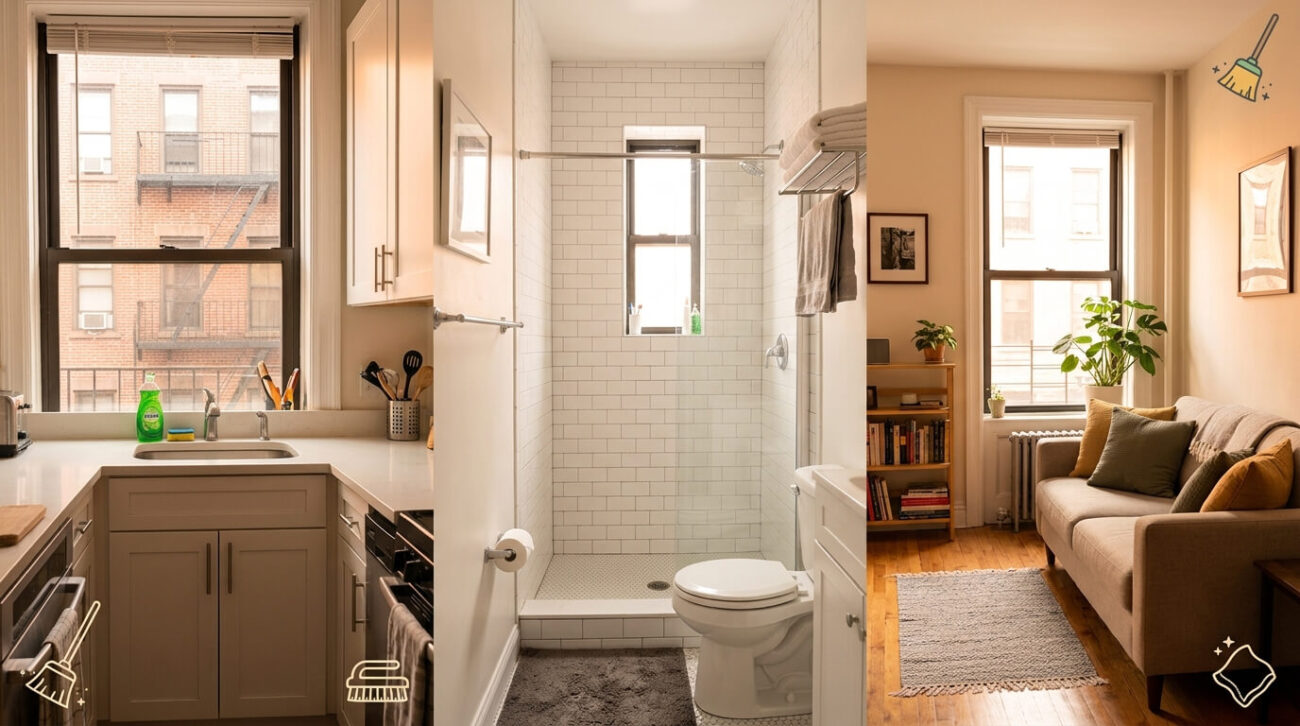
Everyone has a cleaning philosophy. Some people wipe the kitchen counter before the coffee has even finished brewing. Others wait until they can no longer remember the original color of the stovetop. Most of us live somewhere in between, negotiating little compromises with dust and laundry while insisting we’ll “get to it this weekend”. Weekends have heard that promise before.
The internet doesn’t make things easier. One article insists you should vacuum every day. Another says once a week is perfectly fine. Someone on social media apparently deep-cleans their refrigerator every Tuesday before sunrise while smiling the entire time. Wonderful for them. The rest of humanity has jobs, though.
The truth is pleasantly less complicated — there isn’t one universal cleaning schedule because there isn’t one universal apartment. A fifth-floor walk-up studio occupied by one person behaves differently than a two-bedroom apartment housing a couple, two children, a golden retriever, and a cat who sheds with the commitment of a small wool factory.
The apartment adapts. So should the routine.
When people ask how often clean apartment spaces in New York, they’re usually hoping for a magic number. Once a week? Twice? Every day? It depends. Not the most exciting phrase — often the most accurate one.
Think of cleaning like watering plants. A cactus and a fern don’t appreciate identical treatment. Your bathroom doesn’t collect dirt the same way your bedroom does. Kitchens work overtime. Hallways somehow gather dust despite nobody understanding exactly how. Windows stay perfectly clean for weeks until pollen season arrives and politely changes everyone’s expectations.
Apartments have personalities. Cleaning schedules eventually learn them. That’s the goal. Not rigid perfection. Rhythm.
Daily, Weekly and Monthly Tasks by Room
Here’s where people often overcomplicate things. Daily cleaning isn’t supposed to feel like launching a military operation. It’s mostly tiny resets.
Five minutes here. Ten there. Little nudges that stop ordinary mess from quietly becoming weekend projects.
The Kitchen Lives Fast
If apartments had personalities, kitchens would probably drink too much coffee. They’re busy. Constantly. Food appears. Food disappears. Crumbs travel surprising distances. Coffee somehow lands on cabinet handles despite nobody touching them with sticky fingers. Or so everyone claims.
Daily attention goes a long way here. Wash dishes. Wipe countertops. Clean obvious spills. Take out trash before it begins holding conversations of its own. None of these tasks require much time. Ignoring them for four days, however, means living through an entirely different experience.
Once each week, spend a little longer. Vacuum or mop thoroughly. Wipe appliance fronts. Clean the microwave before tomato sauce becomes a permanent interior decoration. Monthly? Look higher. Cabinet tops. Range hood filters. Behind smaller appliances. Grease enjoys climbing where people rarely think to look.
Bathrooms Reward Consistency
Bathrooms operate on accumulation. Soap. Steam. Toothpaste. Water spots. Nothing arrives dramatically — everything arrives repeatedly. Daily maintenance can be astonishingly simple.
Hang towels properly. Quick wipe around the sink if needed. Encourage moisture to leave instead of settling in for an extended visit. Weekly cleaning usually handles the important work. Toilet. Shower. Mirror. Floor. Countertops. Replace towels. Refresh bath mats.
Monthly, give attention to grout lines, exhaust fans, cabinet interiors, and those mysterious little corners behind the toilet that somehow collect dust despite existing in one of the smallest rooms in the apartment.
Bathrooms are strangely talented at hiding grime in plain sight.
Living Rooms
The living room rarely gets dirty all at once. It gathers evidence. Blankets. Books. Coffee cups. Tiny snack crumbs. The occasional sock whose owner remains unidentified. Daily tidying makes the room feel consistently pleasant. Nothing elaborate. Just restoring order.
Weekly vacuuming and dusting usually cover most needs. Don’t forget beneath the sofa cushions. Interesting things happen down there. Coins, remote controls. Half a pretzel. The laws of apartment physics remain under investigation. Monthly cleaning reaches bookshelves, electronics, lampshades, baseboards, and furniture moved just enough to vacuum beneath.
Bedrooms Quietly Gather Dust
People imagine bedrooms stay cleaner because nobody cooks there. Fair assumption. Dust politely disagrees.
Fabric creates lint. Clothing sheds fibers. Open windows invite pollen. Beds themselves become tiny ecosystems requiring regular attention. Weekly tasks matter more. Change sheets. Vacuum. Dust nightstands. Empty small trash bins before yesterday’s tissues become next week’s archaeology.
Monthly, rotate the mattress if appropriate, vacuum beneath the bed, and wipe closet shelves. Under-bed storage boxes appreciate occasional attention too — mostly because they quietly collect dust while pretending not to exist.
Entryways Work Harder Than They Look
Every trip outside brings something back inside. Rain. Dust. Winter salt. Tiny gravel. Leaves. Mysterious black marks from sidewalks nobody fully understands.
Sweep or vacuum regularly. Shake out entry mats. Wipe shoe trays during wet seasons. The entry quietly protects the rest of the apartment. Give it a little appreciation.
How Household Size, Pets and Square Footage Shift the Schedule
Here’s where every article promising one perfect schedule quietly falls apart.
Life refuses standardization.
Living Alone Changes Things
One person generally creates one person’s worth of mess. Makes sense. You know exactly who left the coffee mug on the table. Spoiler: it was you.
Studios and one-bedroom apartments occupied by one person often stay manageable with modest daily tidying and consistent weekly cleaning. Miss one week? Recoverable. Usually. Life remains forgiving.
Couples Multiply Some Things
Not by two. Laundry increases. Dishes certainly increase. Two people somehow create more kitchen activity than twice the actual cooking would suggest. Scientists should probably investigate.
Still, the difference usually isn’t enormous. Mostly it requires consistency. And agreeing whose turn it is to empty the dishwasher. Good luck with that.
Families Rewrite the Rules
Children possess astonishing creative abilities. Some apply those talents toward artwork. Others toward discovering how crackers can apparently exist in every room simultaneously. Family apartments benefit from shorter, more frequent resets.
Waiting an entire week sometimes feels like too much. Toys migrate. Laundry expands. Bathrooms experience unusually heavy traffic. Routine becomes less about perfection and more about maintaining basic order before the next day begins.
Pets Quietly Rearrange the Schedule
Dogs don’t care that you vacuumed yesterday. Cats certainly don’t. Hair appears. Paw prints arrive after rainy walks. Food bowls need attention. Water splashes. Fur somehow reaches the bookshelf despite the bookshelf never having physically interacted with the dog.
Pet owners often discover that vacuuming and wiping floors more frequently saves considerable effort later. Little maintenance. Less accumulation. Simple trade.
Apartment Size Can Be Misleading
Larger apartments don’t always feel harder to clean — they often feel easier because clutter spreads out. Studios have the opposite problem. Everything happens in one shared space. Cook dinner? The entire apartment knows. One dusty corner quietly influences the whole room because there aren’t many corners available.
Small apartments reward frequent tiny resets. Large apartments reward systematic room-by-room attention. Different strategies, same objective.
Work-From-Home Changes Everything
People working remotely spend far more time inside the apartment. Coffee cups multiply. Bathrooms receive more use. Floors experience constant foot traffic. Dust becomes strangely noticeable during video meetings. You begin observing your own bookshelf with unsettling intensity.
Home offices become part of the cleaning schedule too.
Where a Recurring Service Replaces the Guesswork
Cleaning isn’t difficult because people don’t know how. Usually. It’s difficult because schedules drift. Monday becomes Wednesday. Wednesday somehow becomes Saturday.
Life develops opinions.
Decision Fatigue Is Real
One underrated benefit of recurring service? You stop asking yourself when it’s time. It’s already scheduled. No internal debate, no mental negotiation. No standing in the kitchen wondering if next weekend would be more convenient.
Convenient weekends possess mythical status anyway.
The Apartment Never Gets Too Far Behind
Interesting thing about dirt — it compounds. Dust becomes layers. Soap scum hardens. Kitchen grease quietly establishes long-term residency.
Regular professional cleaning interrupts that cycle before ordinary buildup transforms into marathon cleaning sessions requiring snacks, playlists, and motivational speeches. Maintenance almost always feels easier than recovery.
Deep Cleaning Happens Naturally
Many homeowners skip monthly tasks. Not intentionally — life simply becomes busy. Baseboards wait. Cabinet tops wait. Light fixtures continue waiting with admirable patience.
Recurring professional cleaning often includes detailed attention that prevents those overlooked areas from quietly aging into larger projects.
The apartment stays balanced.
You Still Do Daily Living
People sometimes misunderstand recurring cleaning. Professionals don’t eliminate ordinary life. You’ll still wash dishes. Pick up laundry. Wipe obvious spills. Life continues. Professional visits simply remove much of the heavier maintenance from your personal schedule.
Think partnership, not replacement.
Different Frequencies Fit Different Lives
Weekly. Every two weeks. Monthly. Each rhythm suits different households. Busy families often appreciate more frequent visits. Someone traveling regularly may need fewer. The schedule adapts. Not the other way around.
That’s important, because routines only survive if they fit real life. Imaginary routines perform wonderfully inside planners. Reality occasionally requests revisions, though.
Conclusion
When people search “how often clean apartment” online they’re usually searching for certainty. A fixed calendar. One correct answer.
Apartments don’t really work that way.
A useful cleaning frequency by room depends on what actually happens inside that room. Kitchens ask for steady attention because meals never stop arriving. Bathrooms appreciate regular maintenance because moisture has impressive persistence. Bedrooms stay happier with fresh bedding and occasional dusting. Living rooms mostly collect the ordinary evidence of people actually enjoying their homes.
The same goes for deciding between weekly vs monthly cleaning tasks. Weekly work keeps everyday life comfortably under control. Monthly work reaches the places quietly waiting above eye level, beneath furniture, inside cabinets, and around the edges where dust tends to settle once it realizes nobody has looked there for a while. Neither schedule replaces the other. They cooperate — much like good neighbors.
And if remembering all of that begins feeling suspiciously like another part-time job, recurring professional cleaning removes a surprising amount of the guesswork. Suddenly the apartment follows a rhythm instead of a rescue mission. Small tasks stay small. Bigger tasks stop becoming intimidating.
That’s probably the nicest thing about a realistic cleaning routine — eventually, you stop thinking about it quite so much. The apartment simply stays ready for whatever ordinary Tuesday decides to bring through the front door.
Skip the Cleaning. Keep the Weekend.
Book your cleaning in 60 seconds — we handle the rest.
Book Now