People use the terms interchangeably all the time. Janitorial service, office cleaning, commercial cleaning, facility maintenance — sometimes they all appear in the same conversation, occasionally in the same sentence, and everyone nods as though they describe exactly the same thing. They don’t. It’s a little like calling a building engineer, an electrician, and an architect identical because all three work with buildings. There’s overlap. Plenty of it. But the jobs are different once you step closer.
And businesses often discover that difference a little too late. Usually after hiring a service expecting one thing and receiving something entirely different.
Picture a Manhattan office on a rainy Wednesday. The lobby floor has already welcomed half the city. Coffee has escaped at least two cups. The restroom needs another supply refill before lunch. Someone accidentally tracked construction dust through the reception area. The break room sink is collecting coffee mugs with suspicious speed.
Now imagine another office. Same building. Different floor. Nobody needs hourly attention. What they need is a carefully planned evening service that vacuums carpets, disinfects workstations, cleans glass partitions, polishes conference rooms, and quietly resets the entire office before tomorrow begins.
Those are two different jobs. Related, but different. Understanding the distinction helps businesses spend money where it actually improves operations instead of paying for services they don’t need — or worse, forgetting the ones they absolutely do.
The conversation around janitorial vs office cleaning comparison isn’t really about choosing one winner. It’s about understanding what problem you’re actually trying to solve. Many offices don’t need an either-or answer — they need the right combination. Certainly not the most expensive one. Just the one that fits the way the building actually lives.
What Janitorial Service Actually Covers Day to Day
Janitorial work is about rhythm. Routine. Consistency. Showing up before yesterday’s little problems quietly become tomorrow’s larger ones.
Think of janitorial service as the steady heartbeat of a building. Most people barely notice it while everything is working.
Keeping Shared Spaces Functional
Walk through a busy office for a single afternoon. Reception fills with visitors. Conference rooms rotate through meetings. The kitchen hosts breakfast, lunch, and at least three conversations that could have been emails. Restrooms never really get a break. Janitorial teams help keep these spaces usable throughout the day or during scheduled service periods.
Emptying trash. Replacing paper products. Refilling soap dispensers. Spot-mopping unexpected spills. Wiping counters. Straightening common areas. All of those jobs matter. An overflowing trash bin somehow makes an entire office feel neglected, even if every other corner is spotless.
Restrooms Require Constant Attention
Bathrooms don’t operate on weekly schedules. They operate on traffic. A quiet office with fifteen employees behaves differently than a coworking space welcoming hundreds of visitors every day.
Janitorial services often include regular restroom checks, supply replenishment, sanitation, and quick touch-ups throughout business hours when needed. It’s preventive work. Tiny interventions stopping larger problems before they introduce themselves.
Floors Tell the Story of the Day
Rain. Snow. Street salt. Coffee. Delivery boxes. New York sidewalks generously contribute to office flooring every single day. Entrances, elevators, hallways, and reception areas often require repeated attention simply because people keep using them.
Floors quietly document everything that happened inside the building — janitorial crews spend much of their time helping erase that diary.
Small Problems Stay Small
One of the least appreciated benefits of ongoing janitorial service? Speed. Paper towels run out. They’re replaced. Someone spills coffee. It’s cleaned. Soap dispensers empty. They’re refilled before employees begin searching neighboring restrooms.
Tiny maintenance prevents surprisingly large frustration. People rarely compliment this. They certainly complain when it’s missing.
Every Building Develops Its Own Personality
A medical office doesn’t function like a design agency. A law firm behaves differently than a fitness center. A busy retail showroom creates mess unlike anything found inside an accounting office. Experienced janitorial teams gradually learn these rhythms.
Where traffic increases. Which entrances become busiest after lunch. Which conference room somehow hosts every client meeting. Buildings speak quietly. Good janitorial crews eventually become fluent.
Where Office Cleaning Is a Separate, Scheduled Service
Office cleaning usually steps back. Looks at the entire environment instead of the next immediate task. Less reacting, more restoring.
The objective shifts from maintaining today’s operations to preparing tomorrow’s workplace. Different mindset.
Evening Resets Create Fresh Starts
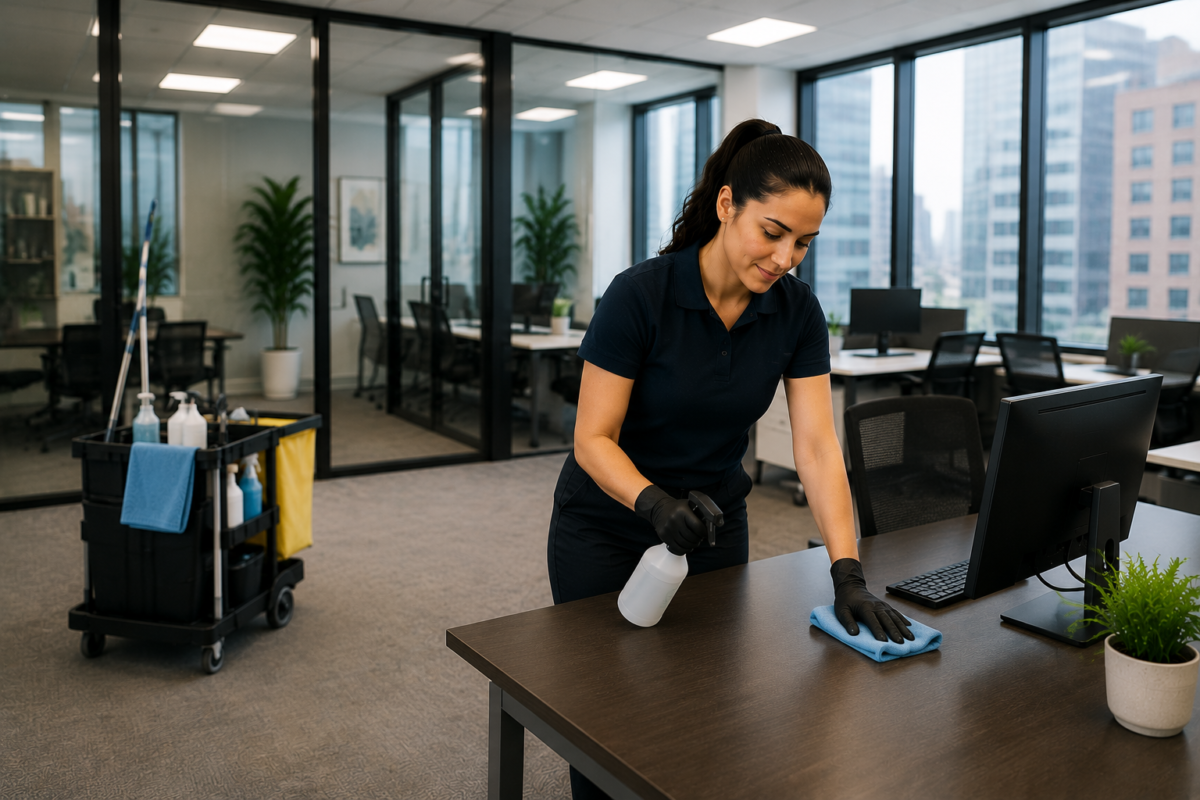
Many businesses schedule office cleaning after employees leave. The building becomes quiet. Vacuums replace conversations. Conference tables regain their original appearance. Glass loses fingerprints. Workstations become orderly.
Morning arrives. Employees walk into an office that feels like yesterday politely disappeared overnight. That’s the goal. Not magic — just consistency.
Deeper Attention to Workspaces
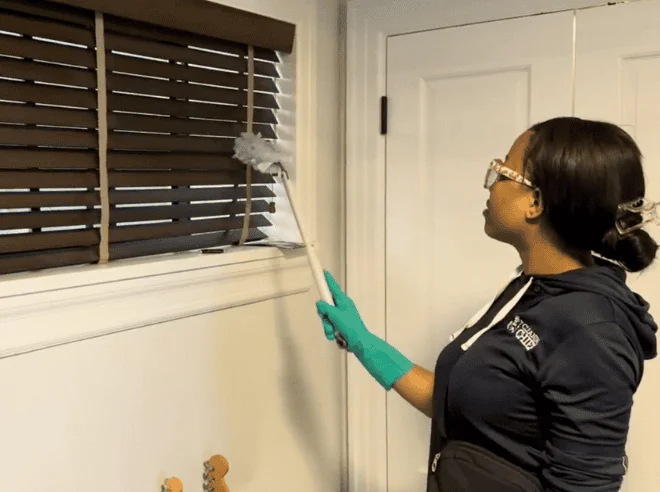
Janitorial work often focuses on common areas. Office cleaning spends more time throughout the workspace itself. Dusting desks where appropriate. Vacuuming beneath furniture. Cleaning conference rooms. Sanitizing shared equipment. Polishing glass partitions. Wiping baseboards. Cleaning interior windows.
The pace changes. More detail, less urgency.
Periodic Deep Cleaning Fits Here Too
Some surfaces don’t need daily attention. Ignoring them for six months is no good either.
Office cleaning schedules often include periodic deep-clean tasks. Chair upholstery. High shelves. Air vents. Light fixtures. Inside refrigerators. Cabinet fronts. Behind movable furniture. These aren’t emergency jobs — they’re maintenance investments.
Buildings quietly age better because someone remembers them.
Appearance Becomes Part of the Brand
Clients notice offices. Job candidates notice offices. Employees notice offices too, although they sometimes stop realizing it.
A polished workspace subtly communicates competence. Not because shiny floors automatically create successful businesses — because people naturally associate organized environments with organized operations. Fair? Maybe. Real? No doubt.
Office Cleaning Works Best With Planning
Unlike reactive janitorial work, scheduled office cleaning follows structured routines. Monday. Wednesday. Friday. Nightly. Weekly. Whatever best fits the business. Planning creates consistency. Consistency builds expectations.
People stop wondering if the office will be clean tomorrow — they simply assume it will. That’s a valuable kind of confidence.
How to Decide Which One Your Business Needs
Here’s where the conversation usually becomes simpler. Forget industry terminology for a moment. Ask a different question: “What happens inside our building every day?”
The answer points toward the right solution surprisingly often.
Smaller Offices May Need Only Scheduled Cleaning
A twenty-person accounting firm operating traditional office hours may not require someone constantly walking the building. Evening office cleaning several times each week might handle everything comfortably.
The office stays clean. Costs remain sensible. Nobody complicates matters unnecessarily.
High-Traffic Buildings Need Ongoing Support
Now picture a coworking space. A busy showroom. A property management office with constant visitor traffic. Mess doesn’t politely wait until 7 p.m. It arrives continuously.
These businesses often benefit from janitorial service throughout the day alongside scheduled office cleaning after hours. One maintains, the other restores. Together they cover the full rhythm of the building.
Consider Employee Experience Too
Employees adapt quickly to their surroundings. If trash bins overflow regularly, people begin assuming that’s normal. If restrooms occasionally run out of supplies, they quietly accept inconvenience. That doesn’t mean those experiences aren’t influencing workplace satisfaction.
Clean environments reduce countless tiny annoyances people eventually stop mentioning. They simply feel better working there. Sometimes the best improvements are almost invisible.
Budget Should Follow Need, Not Assumptions
Businesses occasionally purchase extensive cleaning packages simply because they sound comprehensive. Others choose the cheapest option available and spend the following year wondering why nothing ever quite feels clean. Neither approach begins with reality.
Start with traffic. Square footage. Operating hours. Visitor volume. Special cleaning requirements. Then build the service around those facts — not around marketing language.
Flexibility Matters More Than Labels
Here’s a thought worth keeping. You aren’t really buying “janitorial service”. You aren’t really buying “office cleaning”. You’re buying consistency. Reliability. Professional presentation. Healthier workspaces. Lower maintenance.
The labels simply describe how those outcomes happen. The outcomes themselves are what matter.
Top Providers Don’t Force You Into One Box
Experienced commercial cleaning companies rarely insist every client needs identical service. They ask questions first. How many employees? How many visitors? Any public-facing areas? Medical environment? Retail? Multiple floors? After-hours access?
The conversation shapes the plan. Not the other way around. That’s usually a good sign.
Conclusion
The discussion around janitorial vs office cleaning comparison often sounds more confusing than it really is. Janitorial work keeps the building functioning throughout the rhythm of everyday business. It responds to constant use, replenishes supplies, manages shared spaces, and handles the small details that prevent ordinary workdays from becoming unnecessarily frustrating.
Scheduled office cleaning looks at the workplace differently. Instead of following today’s activity, it prepares the office for tomorrow. It restores workspaces, tackles deeper cleaning tasks, improves appearance, and protects the building over the long term.
Understanding the commercial cleaning services difference helps businesses avoid buying the wrong solution for the right problem. A quiet professional office may thrive with scheduled evening cleaning. A busy healthcare clinic, coworking space, school, or customer-facing business often benefits from both ongoing janitorial support and structured office cleaning working together.
Among all the available NYC business cleaning options, the smartest choice usually isn’t the biggest package or the cheapest proposal — it’s the one that quietly fits the building because every office develops habits. People arrive at different times. Elevators become crowded before lunch. Conference rooms fill up on Tuesdays. Rain somehow finds its way across the lobby every single time the forecast gets ignored.
Good cleaning doesn’t fight those patterns. It studies them. Learns them. Then works so naturally alongside them that employees stop thinking about cleaning altogether. Which is usually the clearest sign that everything is working exactly as it should.
Tired of Dealing With This Yourself?
Let our NYC pros handle it — fast, thorough, done right the first time.
Book a Cleaning