Restaurants and retail stores have something in common that office buildings don’t. The public sees almost everything. Maybe not the kitchen. Maybe not the storage room. But customers notice enough.
They notice sticky floors before they notice your new menu. They notice fingerprints on the entrance glass before they notice the seasonal display. They notice overflowing trash, dusty shelves, cloudy windows, restroom conditions, crumbs tucked into booth corners, mysterious stains near the condiment station — people absorb an incredible amount of information without consciously trying. It’s almost automatic.
Now add health inspections to the picture. Suddenly cleanliness isn’t only about creating a pleasant customer experience. It becomes part of the business itself. One inspection can influence customer confidence for months. One overlooked grease trap, poorly maintained restroom, dirty prep surface, or neglected floor drain can create problems that are much more expensive than the cleaning that could have prevented them in the first place.
Restaurants live under particularly close observation, but retailers aren’t exempt from high standards either. Grocery stores, boutiques, bakeries, salons, convenience stores, specialty food shops — each faces its own expectations for cleanliness, safety, and presentation. That’s why conversations about restaurant cleaning NYC businesses really need aren’t about making things sparkle.
Sparkle is nice. Compliance keeps the doors open. There’s a difference.
Most inspections aren’t failed because one spectacular disaster happened overnight. More often, little things quietly collected over time. Dust became buildup. Grease became residue. Residue became a pattern. Buildings rarely surprise us — they simply remember every shortcut we hoped they’d forget.
What Health Inspectors Actually Check in Kitchens and Dining Areas
Ask ten restaurant owners what inspectors focus on and you’ll probably hear ten different answers. Some mention refrigerators. Others immediately think about temperatures. Someone always brings up handwashing stations. They’re all partly right.
Health inspections don’t revolve around one dramatic issue. They’re built around consistency. The overall condition of the facility tells a story. Inspectors learn to read it remarkably quickly.
Clean Food Contact Surfaces Matter Constantly
Preparation counters. Cutting stations. Equipment surfaces. Shelving. Storage containers. These areas require regular cleaning because they interact directly with food throughout the day.
Tiny amounts of residue don’t stay tiny forever. They accumulate. Quietly. The kitchen may not notice because it sees the same surfaces every shift. Customers and inspectors usually do.
Floors Reveal More Than People Expect
The floor becomes a map. Grease splatter. Dropped ingredients. Moisture around sinks. Dust beneath equipment. Tiny scraps beneath shelving. Inspectors frequently look down because floors reveal how consistently a kitchen is maintained beyond the obvious surfaces everyone remembers to wipe.
Corners become especially honest. Corners never learned how to pretend.
Restrooms Influence Overall Perception
Customers judge restrooms. Inspectors do too. Soap dispensers. Paper products. Fixtures. Floors. Trash. Odors. General cleanliness. People often separate bathrooms from kitchens in their minds. Health standards don’t really make that distinction.
A neglected restroom quietly suggests other routines may also be slipping. Fair or not, first impressions rarely negotiate.
Storage Areas Matter
Walk-in coolers. Dry storage. Employee areas. Receiving spaces. These aren’t hidden from inspections simply because customers never enter them. Storage organization, cleanliness, proper shelving, and pest prevention all contribute to the bigger picture.
A spotless dining room paired with a neglected storage room tells two conflicting stories. Inspectors tend to believe the second one.
Dining Areas Count Too
Restaurants occasionally focus so intensely on kitchen operations that the dining room becomes an afterthought. Tables. Booths. Menus. Condiment stations. Floors beneath seating. Windows. Entryways. Guests experience these spaces directly.
Inspectors recognize that customer-facing cleanliness reflects operational discipline behind the scenes. One usually follows the other. Not always. Often enough.
Retail Has Its Own Priorities
Retail environments don’t operate like restaurants, but cleanliness still plays a major operational role. Shelves. Checkout counters. Fitting rooms. Shopping baskets. Restrooms. Break rooms. Storage areas.
Dust builds surprisingly fast in stores welcoming hundreds of shoppers every day. Especially in New York. The city contributes its own layer to almost everything.
Daily Closing Routines That Protect Your Rating
Closing time isn’t really the end of the day. It’s the beginning of tomorrow. Restaurants understand this instinctively. Retail stores eventually do too.
What happens after the last customer leaves often determines how the building feels when the first customer arrives the next morning.
Kitchens Need a Full Reset
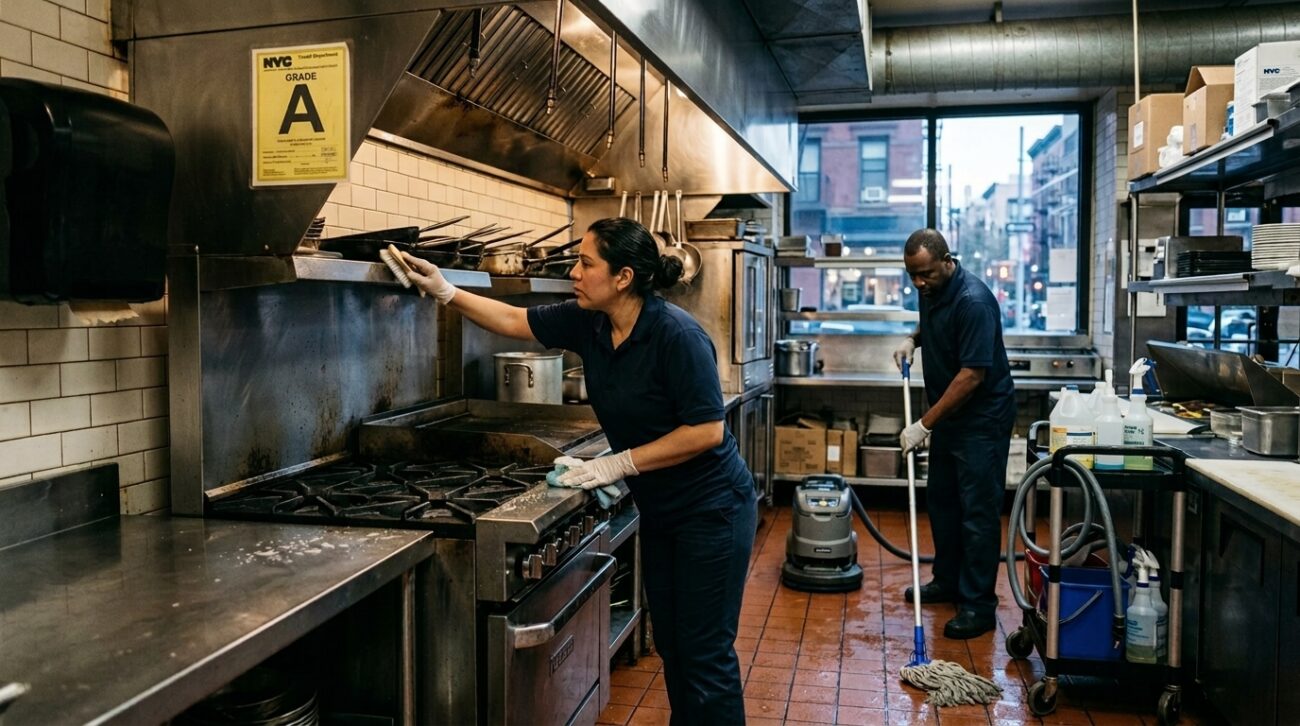
Not a quick wipe. A reset. Cooking equipment should be cleaned according to manufacturer recommendations and operational procedures.
Preparation surfaces sanitized. Floors swept and mopped. Trash removed. Food stored properly. Grease managed before it hardens into tomorrow’s project. Grease has remarkable patience — ignore it one evening and it quietly recruits more grease overnight.
Drain and Moisture Control
Water seems harmless. Standing moisture tells a different story.
Floor drains, sink areas, dishwashing stations, and utility spaces benefit from regular cleaning because damp environments encourage odors, buildup, and unwanted visitors with considerably more legs than customers typically prefer.
Dry spaces age better and look cleaner too.
Dining Rooms Deserve Equal Attention
Tables wiped. Chairs straightened. Booths inspected. Floors vacuumed or mopped. Windows checked. Entrance glass cleaned. Menus sanitized where appropriate. People often remember the meal — they also remember the table where they ate it.
The experience begins before the first bite.
Retail Closing Looks Different
Retail stores face another kind of reset. Dust displays. Vacuum sales floors. Sanitize fitting rooms. Clean mirrors. Wipe checkout counters. Empty trash. Straighten merchandise after cleaning rather than around it.
Products deserve clean surroundings. They seem to sell better there.
Restrooms Never Skip the List
No shortcuts. Not tonight. Not tomorrow. Not because business was unusually busy. Restrooms should receive consistent attention every closing shift because tomorrow’s first customer shouldn’t inherit yesterday’s final rush.
Simple principle. A surprisingly useful one.
Small Habits Prevent Large Problems
One overlooked spill. One neglected shelf. One week of postponing detailed floor cleaning. None seem significant individually — together they become the exact sort of gradual buildup inspectors notice almost immediately.
Consistency beats intensity nearly every time. Buildings appreciate routine.
Where a Professional Partner Reduces Inspection Risk
Owning a restaurant already demands constant attention. Recipes, inventory, staffing, scheduling, suppliers, equipment, customer service, marketing — now add cleaning. Not impossible, just extensive.
Professional support often provides something owners quietly run out of. Time.
Expertise Goes Beyond Appearance
Commercial cleaning specialists don’t simply polish visible surfaces. Experienced teams understand how restaurants, cafes, bakeries, grocery stores, and retail environments actually operate. They recognize grease accumulation before it becomes obvious. They notice floor wear near kitchen entrances. They see dust collecting on high shelving long before customers ever glance upward.
Experience quietly changes what people notice.
Deep Cleaning Reaches Daily Blind Spots
Even excellent employees develop habits. Certain shelves receive constant attention. Others become almost invisible through familiarity. Professional deep cleaning interrupts that routine. Behind equipment. Under shelving. Air vents. Baseboards. High fixtures. Window tracks. The places everyone intends to clean eventually.
“Eventually” has curious timing.
Flexible Scheduling Protects Business Hours
Restaurants often need overnight cleaning. Retail stores frequently prefer early mornings. Professional crews adapt around operations instead of interrupting them.
Customers never witness the work — they simply experience the result. That’s generally preferable.
Documentation Supports Accountability
Commercial cleaning plans often include written schedules, completed task records, inspection checklists, and communication between managers and cleaning teams.
Documentation won’t replace good cleaning. It certainly supports consistency, though. Consistency becomes reliability. Reliability earns trust.
Staff Can Focus on Their Actual Jobs
Chefs should spend their attention cooking. Servers should focus on guests. Retail associates should help customers. Managers should manage. Professional cleaners allow employees to concentrate on the work they were actually hired to perform while specialized cleaning receives equally professional attention.
Everyone works closer to their strengths. That’s efficient.
Prevention Costs Less Than Recovery
An emergency deep clean before an inspection usually costs more — in stress if nothing else — than maintaining high standards every week. Cleaning works a little like maintenance on a delivery vehicle. Ignore small issues for long enough and eventually they introduce themselves all at once.
Usually on inconvenient days. They have impeccable timing.
Conclusion
Strong restaurant cleaning NYC programs aren’t built around inspection day. They’re built around every ordinary Tuesday, every hectic Friday night, every quiet Monday morning, and every closing shift when tired employees still choose to leave the building ready for tomorrow instead of simply locking the doors.
Reliable health code compliance cleaning comes from consistency rather than panic. Daily routines keep kitchens, dining rooms, restrooms, and customer-facing spaces under control. Scheduled deep cleaning reaches the places ordinary service naturally misses. Together they create an environment that’s easier to maintain because problems rarely have the opportunity to grow unnoticed.
The same philosophy applies to a retail store cleaning service. Customers may arrive looking for clothing, gifts, electronics, groceries, or coffee, but they’re also forming opinions about the business itself. Clean floors, organized displays, polished windows, fresh fitting rooms, and well-maintained restrooms quietly communicate something important before a single employee says hello.
The funny thing about inspections is that people often imagine them as isolated events. One morning. One clipboard. One score. In reality, inspections usually reflect hundreds of ordinary decisions made long before the inspector ever stepped through the front door.
The floor that got cleaned after closing. The grease that didn’t get postponed until next week. The restroom that stayed stocked. The storage room someone bothered to organize instead of promising they’d “handle it later”.
Buildings remember routines. Health inspectors simply happen to read the story those routines leave behind.
Get Your Custom Cleaning Quote — Free
Every NYC apartment is different. Get pricing tailored to your space in minutes.
Get My Free Quote