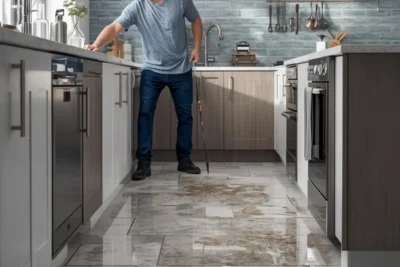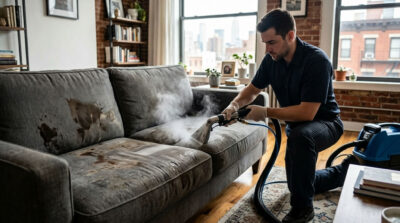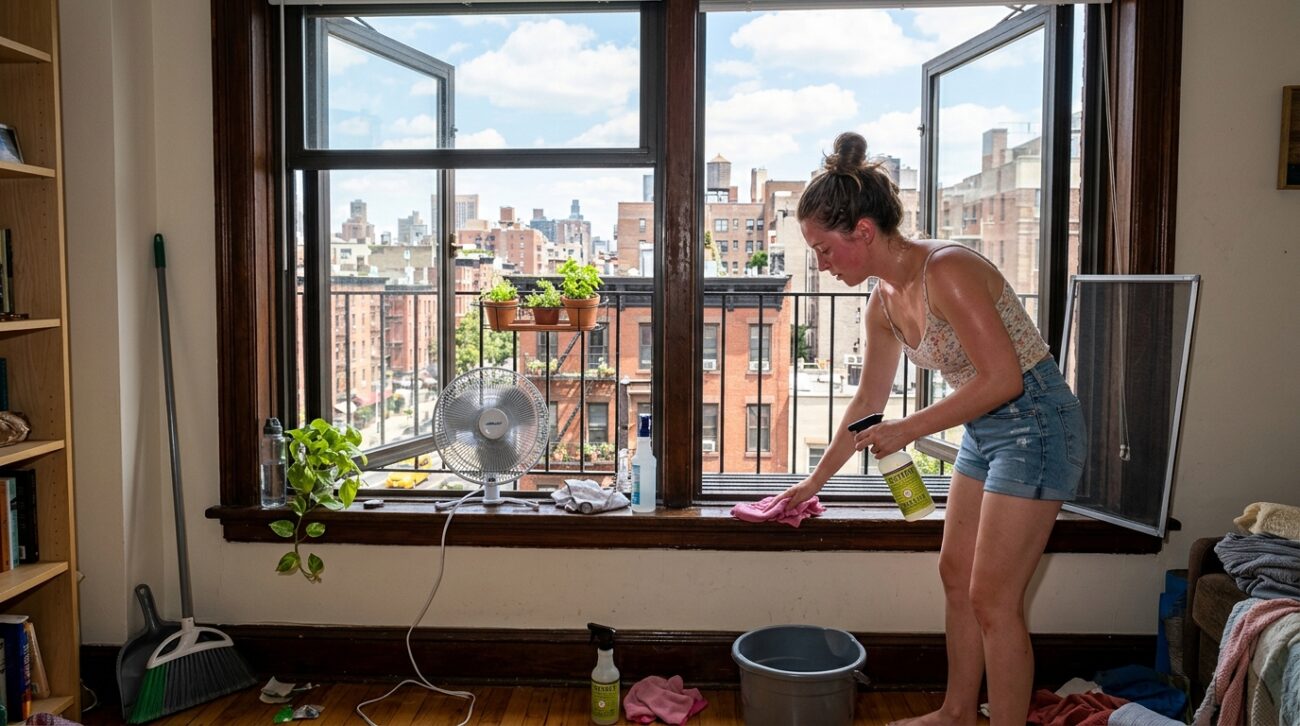
The first truly warm week in New York has a particular feeling. Stoops fill up, rooftops reopen, and everyone is suddenly outside. And while you’re out there enjoying it, your apartment is having a very different reaction to the same weather.
You come home after a long Saturday and something is off. The kitchen smells a little stronger than it did last week. The bathroom feels heavy. There’s a fine film on the coffee table that wasn’t there on Wednesday. Nothing is dirtier than it was in March. It just behaves differently now.
Winter cleaning and summer cleaning are not the same job at a different temperature. Heat changes what smells, what grows, what flies, and what lands on your furniture. That means the routine that worked in February (a monthly deep scrub, a weekly tidy) starts to leak around the edges by June.
This isn’t a spring cleaning checklist, which is a one-time reset. It’s about the rhythm: what gets more frequent in summer, what stays the same, which problems show up only when it’s hot, and a few NYC specifics, including what to do on the days the air quality turns bad.
Why the same apartment behaves differently in July
Three things shift when the weather turns, and almost everything else follows from them.
Heat gives smells more energy. Odor compounds evaporate faster as temperature rises, so the same trash bin, the same drain, and the same fridge gasket release more into the room than they did in January. Nothing got dirtier overnight. It got warmer. This is the main reason people think their apartment “got dirty” in the first warm week when it mostly didn’t.
Humidity matters more than temperature. What you feel as “muggy” is high dew point, meaning there’s a lot of moisture in the air. Moisture doesn’t leave surfaces quickly when the air is already full of it. A shower at 7 a.m. is still present in the bathroom at noon. Wet towels stay damp. Grout stays wet long enough for mildew to take hold. The EPA’s guidance is to keep indoor relative humidity below 60 percent, and ideally between 30 and 50 percent, which is harder to do in a small New York apartment in August than in February.
Windows open, and the city comes in. Winter dust is mostly you: skin, fibers, pet hair. Summer dust is mostly the street: brake dust, construction particles, pollen, diesel residue. Once the windows open, it settles on sills, shelves, and anything near the glass within days.
The summer rhythm: what changes, what doesn’t
You don’t need a bigger routine in summer. You need a different one. Here’s how the frequencies tend to shift.
| Task | Winter rhythm | Summer rhythm |
| Kitchen trash | Every few days | Daily to every other day |
| Sink and tub drains | When they slow down | Weekly rinse and brush |
| Sheets and pillowcases | Every two weeks | Weekly |
| Towels and bath mats | Weekly | Every few days, dried between uses |
| Window sills and shelves near windows | Monthly | Every one to two weeks |
| Bathroom surfaces | Weekly | Wipe dry after use, scrub weekly |
| Fridge gasket and door seals | Occasionally | Monthly wipe |
| Floors | Weekly | Weekly, with extra attention at the door |
The floors, the general dusting, and the deep tasks stay roughly where they were. What changes is the pace at which the damp, organic, and street-borne stuff accumulates.
The kitchen in heat
The kitchen is the first room to tell on you.
Trash is the main event. In summer, a small bin of food waste starts to smell within a day. The fixes are boring and they work: take it out daily, wash the bin itself every couple of weeks (a tub of hot soapy water, or a rinse in the bathtub, then dry it fully), and double-bag anything wet. If you can’t get to the trash chute or the curb often, keep scraps like meat trimmings and fish in the freezer until pickup day.
Produce turns fast. A lemon that would last a week in February is soft by Thursday. Keep fruit in the fridge, or buy smaller amounts more often.
The fridge works harder. The door gasket (the rubber seal) collects spills and condensation, and in summer it can grow a faint dark line of mildew. A damp cloth with a drop of dish soap, monthly, takes care of it. Make sure the fridge isn’t packed so tight that air can’t circulate.
Dishes can’t sit. Standing water, food residue, and a hot room are exactly what bacteria and insects like. Do them the same day.
Small flies: figure out which one you have
A cloud of tiny flies appearing from nowhere is a summer rite in New York apartments. They’re not all the same insect, and the fix depends on which you have.
Fruit flies are small, with a tan body and often red eyes. They hang around fruit, trash, recycling bins, and sometimes drains. Remove the source: ripe fruit, open bottles in recycling, a sticky bin. Put out a small trap (a cup with a little apple cider vinegar and a drop of dish soap) near where they gather.
Drain flies are fuzzy, gray, and moth-like, with a dark border on the wings. They breed in the slimy film inside drains, and you’ll usually see them resting on the wall near the bathroom or kitchen sink. To confirm the source, tape a piece of clear plastic wrap or tape over a suspect drain overnight. If flies are stuck to it in the morning, you’ve found the nursery. Then scrub the drain with a brush, flush with hot water, and use an enzyme or gel drain cleaner made for the job, following the label.
Fungus gnats are tiny, dark, and slow, and they hover around houseplants. They breed in constantly wet potting soil. Let the top inch or two of soil dry between waterings, empty the saucers, and use yellow sticky traps for the adults.
Most small-fly problems are less about a dirty apartment than about a single wet or sweet spot. Find it, deal with it, and they disappear. If you’re also seeing roaches or mice, the same rules apply: no food left out, dry sinks overnight, and sealed trash.
Bathrooms and humidity
Moisture is the entire story here.
- Run the exhaust fan during every shower and for 15 to 20 minutes afterward. If you don’t have one, open the window or door.
- Squeegee the walls and glass after showering. It takes thirty seconds and removes most of the water that mildew would otherwise use.
- Hang towels so they dry. A towel on a hook folded in half stays damp for a day. Spread it across a bar.
- Keep the shower curtain liner open and spread after use, and wash it every month or two.
- Dry the edges. The caulk line, the base of the faucet, and the bottom of shampoo bottles are where mildew rings start.
- Watch the grout. A gray or dark bloom along the lower grout lines is early mildew. Scrub it early, with a stiff brush and a mild cleaner, before it works into the grout.
If your apartment stays above 60 percent humidity even with all this, a small dehumidifier is worth considering. Empty the tank daily and clean it weekly, because a dehumidifier with stale water in the tank becomes the smell problem it was meant to fix. For the signs that humidity has tipped into a mold problem, our article on mold and mildew in NYC apartments is the one to read.
Dust, pollen, and the open-window trade-off
You should open the windows in nice weather. You should also expect more dust.
- Wipe sills and shelves near windows every week or two with a damp microfiber cloth. A dry duster just moves the particles around.
- Vacuum, don’t sweep, the floor near the window and by the door.
- Wash or vacuum curtains and blinds more often, since they filter the air coming in.
- Don’t leave the windows open during storms. Rain raises humidity and brings water onto sills, and old frames in pre-war buildings don’t always shed it well.
Pollen follows the calendar. Tree pollen peaks in spring, grasses in late spring and early summer, and weeds like ragweed in late summer and early fall. If you’re sensitive, wiping surfaces and washing bedding more often during those stretches helps, and our guide to cleaning allergens out of a NYC apartment goes much deeper on what to do about it.
On bad air days
New York has had summer days when wildfire smoke drifted in from hundreds of miles away and the sky turned orange. When the city issues an air quality advisory, the Health Department’s guidance is practical:
- Keep windows closed when outdoor temperatures allow. The exception: if you have no AC and your apartment is hotter than outside, very hot indoor air can be more dangerous than poor air quality, so don’t bake yourself.
- Run the AC on recirculate so it doesn’t pull in outside air, and use a MERV-13 or better filter if your system can handle it.
- Use a portable air cleaner sized for the room, one that doesn’t produce ozone.
- Skip things that add indoor pollution: frying, smoking, burning candles.
After a smoke event, wipe sills and surfaces with a damp cloth, since fine particles settle, and wash or vacuum the filter on your AC.
Skin, sweat, and sunscreen
Summer adds a layer of human residue that winter doesn’t.
Bedding. You sweat more in summer, even with the AC on. Body oils and moisture collect in sheets and pillowcases quickly. Weekly washing is the practical standard, and a washable mattress protector keeps sweat from reaching the mattress.
Sunscreen. Sunscreen rubs off on sheets, towels, couch arms, and shirts. Some formulas, particularly those with avobenzone, can leave yellow or orange marks on fabric, and the stain gets worse when it’s washed in water and dried with heat before it’s treated. Pretreat visible spots with a bit of dish soap or a stain remover and wash before drying.
Feet and floors. People go barefoot and wear sandals in summer. Floors collect foot oils, sticky spills, and tracked-in grit. A damp mop on hard floors every week or two clears the film that makes floors feel tacky. If you’ve been to the beach, sweep or shake out sandy items outside first, because sand clogs vacuums and scratches hardwood.
Upholstery. The couch takes more skin contact in shorts and tank tops than it does when everyone is in sweatpants. A weekly vacuum and an occasional baking soda sprinkle (leave it a few hours, then vacuum) keeps it fresh.
Your outdoor space (if you have one)
A balcony, terrace, or roof deck is an extension of the apartment, and it gets dirty fast.
- Sweep and rinse with a bucket of water, not a hose, so runoff doesn’t land on the neighbors below.
- Wipe furniture before sitting, since pollen, bird droppings, and soot settle quickly.
- Empty plant saucers so they don’t pool water.
- If you have a fire escape, keep in mind that the city treats it as an emergency exit. It isn’t storage, a planter shelf, or an extra balcony.
AC and fans, briefly
An AC filter clogged with winter dust makes the unit work harder and can push a musty smell into the room the first time it runs. Clean or replace the filter at the start of the season, then every few weeks while it runs. If you have fans, wipe the blades. Dust builds up and gets blown around the room otherwise. Window units have more to them than this, and it’s worth giving the unit itself a closer look, including the front grille, the coils behind the filter, and the sleeve where the unit meets the window frame. Dust and moisture collect in all three, and gaps around the sleeve let in hot air, bugs, and street noise. If you notice a musty smell the first time the AC runs each season, that’s usually damp dust in the filter or the coil, and cleaning it fixes the smell more reliably than any air freshener will.
Cooking in a hot apartment
Summer cooking has its own mess. Frying with the windows shut and the AC on means grease and steam have nowhere to go, and a small galley kitchen collects both on the cabinets, the wall behind the stove, and the top of the fridge.
- Use the range hood fan, even if it only recirculates. If your hood vents outside, it’s worth running during and for a few minutes after cooking.
- Open a window across from the kitchen while you cook if the weather allows, to give steam a path out.
- Wipe the stove and the surfaces around it the same night. Fresh grease wipes off with a damp cloth. Grease that sits for a week in a warm kitchen turns tacky and gathers dust.
- Cook outside the apartment when you can. A grill on a rooftop or a no-cook dinner on a 95-degree night keeps heat and smell out of the place.
A realistic twenty-minute weekly routine
None of this has to become a project. Here’s a version that fits into a normal week.
- Daily (five minutes): trash out, dishes done, counters wiped, bathroom surfaces dried.
- Twice a week (ten minutes): rinse the sink and tub drains with hot water, hang or wash towels, wipe the bathroom floor.
- Weekly (twenty minutes): wash the sheets, wipe sills and shelves near windows, vacuum or mop the floors, wipe the fridge door and seal if it needs it.
- Monthly (thirty minutes): wash the trash bin, check grout for dark spots, clean the AC filter, wipe the exhaust fan cover, and look under the sink for damp.
It’s a rhythm, not a campaign. Miss a week and nothing falls apart. Miss a month in July and you’ll know about it.
When to bring in help
A warm-weather routine isn’t extra work for its own sake. It’s a handful of small habits that stop things from compounding. For most people, that’s enough.
There are situations where a professional reset makes sense: you’ve been busy and the apartment hasn’t had a real clean in six months, you’re dealing with recurring small flies or a musty bathroom, or you simply don’t want your summer weekends spent on window tracks and fridge gaskets. A standard cleaning every couple of weeks handles the weekly rhythm, and a deep cleaning resets the spots a regular tidy skips, like under the fridge, behind the stove, the bathroom vent cover, and the inside of the dishwasher door.
The short version
Heat makes smells stronger, humidity keeps things damp, and open windows bring the street indoors. Take out the trash daily, keep drains clear, dry the bathroom, wash bedding weekly, wipe sills every week or two, and know which small fly you’re dealing with. On smoky days, close up and run a filter. The rest of the routine can stay as it was.