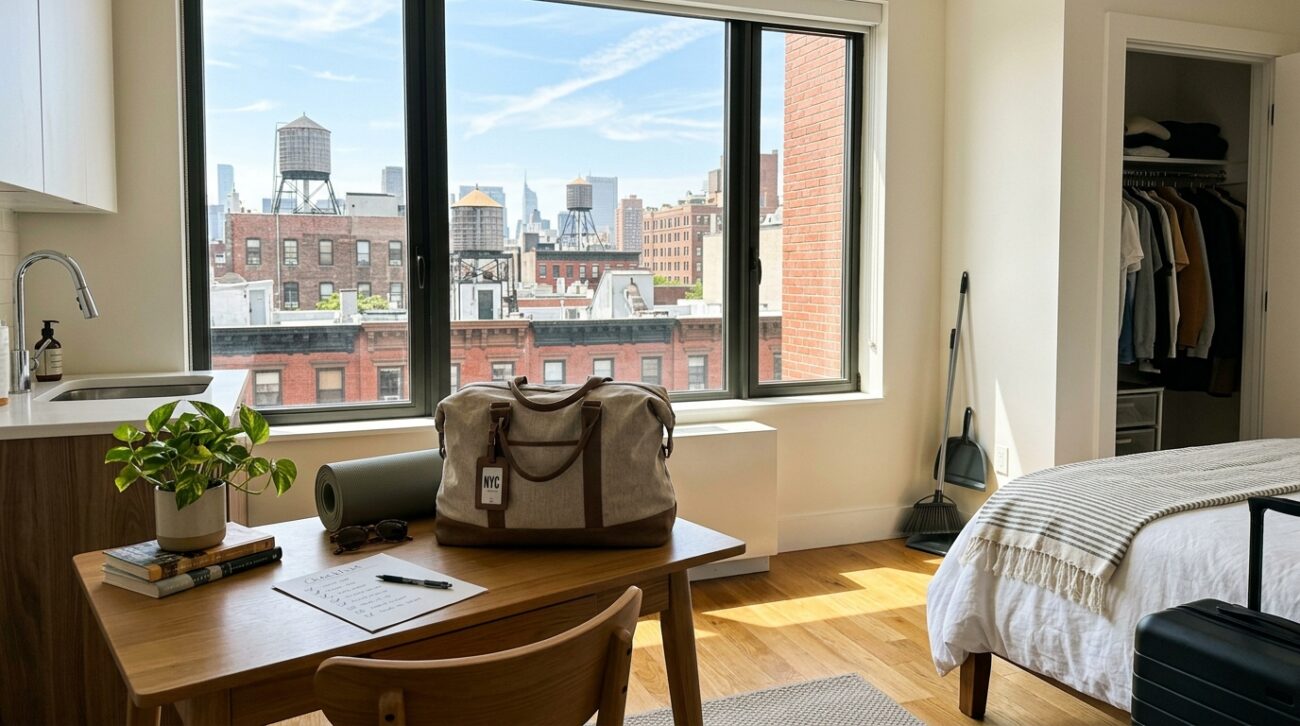
You know the feeling. The suitcase is open on the bed, the car service is twenty minutes out, and you’re deciding whether to rinse that one coffee mug or leave it. You leave it. You are, after all, going away for two weeks and deserve a break from dishes.
Two weeks later you push open the door and the apartment greets you with a smell that wasn’t there when you left. Warm, a little sour, hard to name. The fridge hums over a puddle you hadn’t known about. The bathroom has a faint gray bloom along the grout. The sheets you slept on the night before departure are three weeks old.
Summer in New York makes everything left behind work faster. Heat speeds up bacteria and mold, humidity keeps moisture from drying, and a closed-up apartment has no airflow to carry any of it away. The good news is that the fix is mostly small jobs done in the right order, and they take far less time than the cleanup after the fact.
This guide covers what to do in the days before a trip, how long an absence changes the plan, what to do about the fridge, the AC and the drains (the three biggest surprises), and a short return routine so you can reset the place in under an hour.
How long you’re gone changes the list
Not every trip needs the same prep.
A long weekend (up to four days). A quick reset is enough: take out the trash, do the dishes, clear the fridge of anything that’ll turn, and close the windows. You don’t need to do much more.
One to three weeks. This is where the whole checklist applies. Organic material left behind has time to ferment, mold, and spread in summer heat. Do everything below.
A month or more. Add a few steps: ask someone to check in, decide about the fridge (see below), shut the water valves to the washing machine and dishwasher if you have them, and consider a professional clean before you leave and a short reset when you return.
The fridge: your biggest variable
More post-vacation smells come from the kitchen than from anywhere else, and the fridge is the usual culprit. Start there.
- Eat down the perishables a week before you go. Plan meals around what you have. It’s easier than dealing with a full fridge on departure day.
- Toss anything that won’t last. Milk, cut produce, leftovers, open jars, anything with a date in the next three weeks. If you’re unsure, throw it out. A container of berries costs less than a week of smell.
- Wipe the shelves and drawers. Warm water with a splash of white vinegar or a little dish soap works. Dry them afterward, because standing moisture grows mold.
- Check the freezer. Frozen food is fine, but a power outage during a heat wave can thaw everything. A common trick: freeze a cup of water, set a coin on top, and leave it in the freezer. If you come back and the coin has sunk to the bottom, the freezer thawed at some point and the food isn’t safe.
- Look for the drain pan. Many refrigerators have a shallow pan underneath that collects condensation and evaporates it. In some compact or older units, it can collect stagnant water and develop a smell over a hot summer. Check your owner’s manual or look behind the bottom front grille. If you can reach it, empty and dry it.
Leave it running or turn it off? For absences of a few weeks, leave the fridge on at its normal setting. A fridge that’s off and shut tight turns into a warm, damp box, and mold loves it. If you’re leaving for a month or more, you can empty it completely, wipe it dry, unplug it, and prop the door open so air circulates. Either way, don’t leave a partially stocked fridge off.
You don’t need a full oven-and-hood scrub for a trip. For pre-vacation prep, emptying and wiping is what matters.
The window AC: leave it off, or set it smart
Window air conditioners are common in New York apartments, and what you do with yours while you’re gone depends on your building and your situation.
- If you turn it off, clean the filter first (slide it out, rinse it, let it dry). Wipe the visible dust off the front, and leave the unit’s seal and window closed against the weather.
- If you leave it on, set it to a higher temperature, around 78 to 80 degrees, with the fan on auto. That keeps indoor humidity in check without running the compressor constantly. This matters most if you have a pet or plants, or live on a top floor where an unventilated apartment can climb past 90 degrees.
- Check the drain. The condensate drip from a window unit leaves through a small opening at the back. If it’s clogged with dust, water can back up and overflow. Look for a pooled film of water inside the pan, and clear any debris with a thin brush or pipe cleaner.
The goal is to keep indoor relative humidity below 60 percent, and ideally in the 30 to 50 percent range the EPA recommends. A sealed, unventilated apartment during a humid week can end up much higher, which is when mold starts. Our piece on mold and mildew in NYC apartments explains the early signs.
Drains: the opposite problem from what you’d expect
A lot of advice says to pour boiling water and vinegar down the drains before you leave, on the theory that buildup will ferment while you’re away. Most of the time, that isn’t the real risk. The real risk is the opposite: the drains dry out.
Every sink, tub, and shower drain has a curved pipe called a P-trap, which holds a small amount of water. That water forms a seal that stops sewer gases from coming up into your apartment. Run a fixture daily and the trap stays full. Leave a fixture unused for weeks in a warm apartment and the water slowly evaporates. Once the seal is gone, sewer smells can rise into the room. The fixtures most at risk are the ones you rarely use anyway: a guest bathroom, a second sink, a floor drain.
Before you leave:
- Run water in every drain for a few seconds to fill the trap.
- Add a spoonful of cooking oil to the less-used drains. It floats on the water and slows evaporation. (A common plumber’s trick for traps that will sit for weeks.)
- Run a little water down the kitchen drain and clear any visible food from the strainer.
If you do have a garbage disposal, run it briefly with cold water and a few ice cubes. Many small New York apartments don’t have one, so skip this if yours doesn’t.
The bathroom: prep for humidity, not just dirt
New York bathrooms are often small, windowless or nearly so, and poorly ventilated. Humidity from a final shower, plus a summer of closed doors, is a recipe for mildew.
- Scrub any visible mildew from grout lines and caulk. Fresh mold spreads while you’re gone.
- Dry every surface. Wipe down the tub, the sink, the faucet base, and the shower walls. Squeegee glass doors.
- Take out damp items. Towels, bath mats, loofahs, and shower curtains should be washed or hung to dry elsewhere.
- Wipe or spray the grout with diluted hydrogen peroxide (3 percent) and let it dry. Don’t mix it with vinegar in the same container, because the combination creates a corrosive acid.
- Leave the door open and the cabinet under the sink slightly ajar so air can move.
- Empty and wipe the wastebasket, and put in a fresh bag or leave it empty.
If the exhaust fan works, run it for a few minutes after the last shower.
Linens and laundry
Fabric holds odor and moisture, and a hot sealed apartment makes both worse.
- Wash everything dirty. Hamper contents, gym clothes, towels, and kitchen cloths. Do not leave damp or sweaty fabric in a closed room.
- Strip the bed and put on clean sheets. Sleeping in them the night before you leave defeats the point, so make the bed fresh on the morning you go, or sleep on spare sheets the night before.
- Cover the mattress lightly if dust concerns you, with a clean cotton sheet.
- If you have a front-load washer or a dishwasher, leave the door cracked open so the seal dries out. Closed rubber gaskets grow mold quickly in summer.
Trash, food, and pests
An empty apartment with a little leftover food is an invitation to roaches and mice. Both look for food and water, and a quiet kitchen offers plenty of both.
- Take every trash bag out, including the small ones in the bathroom and bedroom. Don’t forget the recycling.
- Clear the counters of food, crumbs, and fruit bowls. Put anything not in the fridge in sealed containers.
- Wipe down the stove and the area around it. Grease and crumbs are the main attractants.
- Run the dishwasher or wash the dishes, and leave the sink empty and dry.
- Dry the sink basin so there’s no standing water.
Pests in New York apartments are less about cleanliness than about building-wide pressures, but a clean, dry, empty kitchen gives them no reason to visit. Our guide to keeping roaches and mice out of a NYC apartment goes through the habits that matter most.
Surfaces, windows, and dust
Humid summer air turns dust into a film. When a storm raises indoor humidity, dust on windowsills and blinds becomes damp and cakes, and that’s harder to clean than dry dust.
Do a quick pass before you leave:
- Wipe the windowsills and the tops of surfaces near windows.
- Run a duster or vacuum brush over the blinds.
- Close and lock the windows. Leave blinds or curtains drawn against direct sun if you have a south-facing apartment, which keeps heat down and protects floors and furniture from fading.
- Vacuum floors so there’s no food debris for pests.
Other prep that protects your apartment
A few non-cleaning steps prevent bigger problems.
- Water. If your apartment has shutoff valves for the washer, dishwasher, or sinks, closing them reduces the risk of a leak while you’re away. Ask your super where the main valve is.
- Electronics. Unplug what you don’t need. It saves a small amount of energy and protects against surges during storms.
- Plants. Water them before you go, move them away from direct sun, and arrange for someone to check them if you’ll be gone more than two weeks.
- A key to a neighbor, friend, or the super. Someone should be able to get in if there’s a leak or an alarm.
- Mail and packages. Pause delivery or ask someone to collect them. A stack of packages signals an empty apartment.
If someone is staying or checking in
Plenty of trips come with a house sitter, a friend who stops by, or a pet that stays home. That changes the list a little.
- Leave a short note. Where the trash goes, which days it’s collected, how the AC works, which drain is slow, and what to do if something leaks. People help more when they aren’t guessing.
- Pet areas get their own pass. Wash the water bowl and food dish, wipe the feeding mat, and change or wash any bedding. A litter box that’s skipped for a week in July is the quickest way to ruin a clean apartment, so arrange for someone to scoop it.
- Plants need a plan. Group them away from direct sun, water thoroughly the day you leave, and leave instructions for anyone checking in. Drain the saucers. Standing water attracts fungus gnats and, in a closed room, adds humidity you don’t want.
- Ask them to open a window. Even a few minutes of fresh air every few days keeps the apartment from going stale.
What if the power goes out while you’re away?
Summer heat waves strain the grid, and a blackout while you’re away is a real possibility in New York. You can’t prevent it, but you can limit the damage.
- Keep the freezer full or at least well stocked, because a full freezer holds its temperature longer than a half empty one.
- Use the coin trick described above so you can tell whether food thawed.
- Know who to call. A friend nearby with a key can open the fridge, check for leaks, and throw out spoiled food before it spreads.
- If you come home to a thawed freezer and strong odors, toss the food, wipe the freezer with a baking soda solution, and air it out before turning it back on.
Do it in this order
If you’re short on time (and before a trip, you are), work in this sequence so you never undo something you’ve finished.
- A week before: eat down the fridge and plan meals around it.
- Two days before: wash all laundry and bedding. Clean the AC filter. Scrub the bathroom grout.
- The day before: empty and wipe the fridge, clean the kitchen, and wipe the bathroom.
- The morning you leave: take out all trash and recycling, run water in the drains, make the bed with clean sheets, dry the bathroom surfaces, set the AC, and close the windows.
Most of this takes ninety minutes to two hours in a one-bedroom. Larger apartments, homes with pets, or places that were a little behind on cleaning before the trip take longer. In those cases, a standard cleaning timed for the days before departure leaves you starting from a clean baseline instead of cleaning on top of whatever has built up.
When you get back
Resist the urge to unpack and collapse. Spend the first twenty minutes resetting the apartment, and the whole week goes better.
- Open the windows and let fresh air in for at least fifteen minutes before anything else.
- Run every faucet and flush every toilet. Let the cold tap run for a minute or two to clear water that sat in the pipes.
- Check the fridge and freezer. If the coin sank or anything smells off, throw out the questionable food.
- Look under sinks and around the bathroom for any moisture or signs of a leak.
- Check for pests: droppings, chewed packaging, or a stray roach in the kitchen. Report anything to your super right away.
- Do a fast reset clean. Wipe the counters, vacuum, and take a damp cloth across the surfaces that collected dust.
- Restart the AC or turn it up if you had it off, and let the apartment come back to temperature.
- Do a load of laundry with the bags you just unpacked.
If you walked into something worse than a reset (strong smells, visible mold, signs of pests), that’s the moment for a proper deep clean, not another round of air freshener.
The short version
Most of what ruins a summer homecoming is organic material left in warm, humid, closed air. Take out the trash, empty and wipe the fridge, fill the drains, dry the bathroom, wash the fabric, and keep the humidity down. Do it in that order, and your biggest task on arrival is unpacking.
Get Your Custom Cleaning Quote — Free
Every NYC apartment is different. Get pricing tailored to your space in minutes.
Get My Free Quote