Every spring, a certain kind of New Yorker starts doing the math. An internship in another city, a long trip, a work stint abroad, a family house with a porch and no commute. The apartment will sit empty for ten weeks while the rent keeps coming. Meanwhile, someone else (a grad student, a visiting colleague, a friend of a friend) needs a place for the summer. A sublet solves both problems.
Then comes the part nobody plans for. You’re about to hand your home, with your couch, your stove, and your bathroom, to a person you may have met twice. And you want it back in the same condition in September.
That makes a sublet clean different from the cleaning you do for yourself. It isn’t just about how the place looks. It’s about setting a baseline, proving what that baseline was, and keeping the apartment in decent shape while you’re not there to watch it. This guide walks through the whole cycle: the quick legal basics, what to clean before the handover, how to document the condition, what to agree on for the summer, and what to do when you come back.
The short legal background, so the cleaning has a reason
This isn’t legal advice, and your lease or building rules come first. But a few facts shape how seriously to treat the handover.
- Most renters in buildings with four or more units have a right to sublet, and the landlord can’t unreasonably refuse. Under New York’s Real Property Law, you’re expected to request consent by certified mail with return receipt, and include details like the term, the subtenant’s name and address, and a copy of the proposed sublease. The landlord has 10 days to ask for more information and 30 days to respond after that. If they don’t respond, consent is generally treated as given. Co-ops, condos, and rent-stabilized apartments have their own rules, so check before you commit.
- The city treats rentals shorter than 30 days very differently from longer ones. A summer sublet of two or three months sits comfortably on the right side of that line, but a few weeks does not.
- You remain responsible. A sublet doesn’t transfer your lease. If the subletter leaves a mess, the landlord looks to you.
That last point is why documentation matters. A clean, photographed, signed-off apartment on day one is what protects you on day ninety.
Why a sublet clean is a different job
A normal deep clean makes a home pleasant to live in. A sublet clean sets a standard.
New tenants form their first impression in the doorway, fast, and mostly through three things: the smell, the kitchen counter, and the bathroom. If any of them is off, the whole stay starts on the wrong foot, and you end up negotiating over cleanliness from another time zone. If all three are right, the subletter tends to match the standard they walked into. People keep a clean place clean more often than they clean a dirty one.
It’s also not a move-out clean. A move-out clean strips a place bare for a landlord’s inspection. A sublet clean leaves your furniture and your life in place, just tidied for a stranger. Think of it the way a good Airbnb host resets a unit between guests, except you’re doing it once, thoroughly, and for a much longer stay. (If you’re after the end-of-lease version, our NYC move-out cleaning checklist covers it.)
Start with what has to leave the apartment
Before any scrubbing, clear the place. Cleaning around your own stuff doubles the effort and leaves gaps.
- Valuables and documents. Passports, tax papers, jewelry, backup drives, anything you wouldn’t want a stranger to handle. Take them with you or lock them away.
- Half the closet and some drawers. A subletter with nowhere to put their clothes will put them on the floor. Clear a section of the closet and a couple of drawers, wipe them down, and leave them empty.
- Perishable food. The fridge, the freezer, and the pantry all need a full pass. Toss anything open or past its date. Leave sealed staples if you want, but not a half-used jar of anything.
- Personal items in the bathroom. Empty the medicine cabinet or at least the shelf you use. Nobody wants to share a shower with your toiletries.
- Mail and packages. Forward what you can and set up a plan for the rest.
Once the apartment is lighter, the cleaning is faster and the results are better.
Room by room: what to actually clean
The kitchen
The kitchen takes the most time, and it’s where small apartments give themselves away. Cooking in a tiny New York kitchen with weak ventilation means grease doesn’t stay on the stove. It settles on cabinet fronts, the top of the fridge, the wall behind the range, and anything within a few feet. You only see it when you wipe a damp cloth across it and the cloth comes up yellow.
- Cabinet fronts and the hood, especially above the stove. A degreasing cleaner or a few drops of dish soap in hot water, then a rinse.
- The oven. If it’s been months, run the clean cycle or scrub it by hand before you leave, and air the place out afterward. A subletter shouldn’t open it to find a charred pizza.
- The fridge and freezer. Empty, wiped, shelves washed, and the gasket along the door wiped down. Pull the shelves and drawers out and wash them in the sink, because crumbs and spills collect underneath where a wipe never reaches.
- Counters, sink, and the drain. A bit of baking soda and hot water, then run the disposal or flush the drain.
- Trash and recycling. Take it out the day you leave, wash the bin, and put in a fresh bag.
The bathroom
Subletters look at the bathroom closely, and they know what they’re looking at: the grout, the caulk line, the toilet base, the drain cover, and the showerhead.
- Soap scum on the tub and shower. A non-abrasive scrub and a good rinse.
- Fixtures. Chrome and porcelain clean up well with a diluted citric acid solution or white vinegar for any cloudiness. (New York’s tap water is actually quite soft, so the film on fixtures is more often soap residue than heavy mineral buildup, but a cloudy faucet is still worth descaling.)
- Grout and caulk. In June, humidity arrives before most people notice it, and mildew starts creeping along grout lines near the showerhead. A stiff brush and a mild cleaner clears early spots.
- The exhaust fan. In older buildings it’s often more decorative than useful, but if yours works, wipe the cover and run it for a few minutes to make sure it still pulls air.
- Toilet base and under the seat hinge. Almost always neglected, always noticed.
The bedroom and closets
This is where the apartment’s hidden dust lives, in the corners people skip.
- Baseboards and the floor behind the door.
- Radiator fins and the floor beneath them. Radiators are off in summer, which makes it the right time to vacuum between the fins.
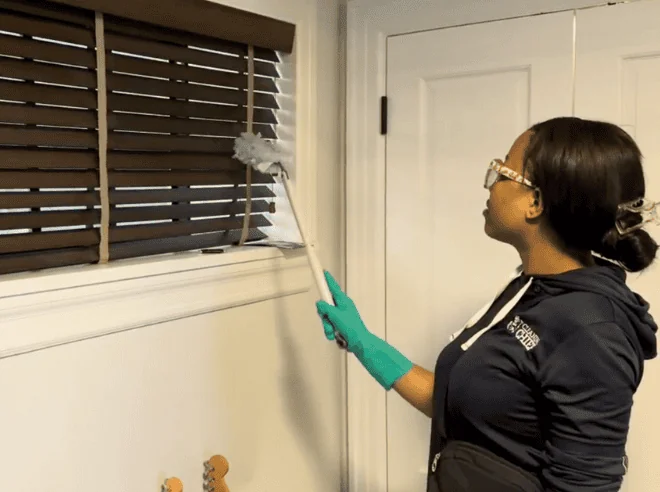
- Window tracks and sills. Pre-war windows hold years of debris.
- Under the bed. Pull everything out, vacuum, and leave it clear.
- Bedding. Fresh sheets, a washed mattress protector, and a spare set in the closet if you can. Sleeping in a stranger’s sheets is the quickest way for a subletter to feel unwelcome.
The living area
In a furnished sublet, your upholstery and rugs come with the apartment.
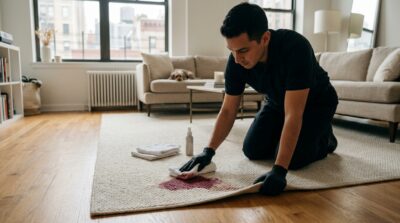
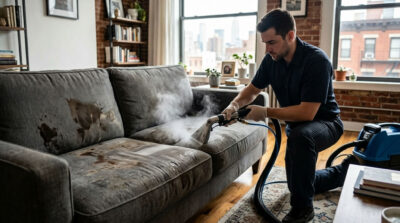
- Vacuum the couch, including under the cushions, and spot clean any stains. If the sofa has absorbed odors, sprinkle baking soda on it, leave it for a few hours, and vacuum it up before you try anything wetter.
- Lift the area rugs, sweep and mop beneath them, and vacuum the rugs themselves.
- Wipe all hard surfaces: TV stand, shelves, window sills, coffee table.
- Light switches, door handles, and remote controls. They’re the most touched objects in any apartment and the least often cleaned.
- The window AC unit. Clean the filter before it gets a summer of heavy use. It will run constantly, and a clogged filter makes the unit work harder and can start to smell.
Plants, mail and the odds and ends
The small stuff is where a good handover quietly falls apart, so settle it ahead of time.
- Plants. Decide whether the subletter waters them. If they do, leave a note with how much and how often, and move anything fragile or sentimental to a friend’s place. A plant left in a hot, dry apartment for ten weeks comes back as a stick.
- Pets. If you have a cat or dog that stays with a friend, vacuum thoroughly and wash the pet’s bedding, because dander and hair trigger allergies fast. Tell the subletter if the apartment has been home to animals.
- Mail and packages. Pick one place for them to go and tell the doorman or super if you have one.
- Spare keys and fobs. Count them out and count them back in.
- A welcome note. The wifi password, the garbage and recycling days, how the radiators and AC work, and the quirks of the apartment (the stove burner that needs a second try, the door that sticks in humidity). Ten minutes of writing saves many texts.
Air and smell: the 60-second test
The first thing a subletter notices is the smell of the place. Aim for none.
Open the windows for a few hours before the handover, take the trash out, and clear anything that holds odor: the fridge, the drains, the garbage can, a gym bag in the closet. Skip heavy air fresheners and scented candles. A strong fragrance reads as covering something up, and it bothers people with sensitivities. If the apartment still smells off after cleaning, the cause is usually something specific, like a dry drain trap, a damp sponge, or a fridge gasket, and not the room in general.
Document everything
This step takes twenty minutes and is worth more than the rest of the cleaning combined.
- Take dated photos of every room, close-ups of the floors, the appliances inside and out, the bathroom fixtures, and any existing damage (scuffs, scratches, a cracked tile). Walk through the apartment systematically, left to right, so nothing is missed.
- Write a short condition checklist that lists the rooms, the major items, and a note on any wear or problems.
- Have the subletter sign it, ideally at the handover, and give them a copy. Even a text message that says “Reviewed the photos, all looks right” is better than nothing.
- Keep a copy of everything in a cloud folder you can reach from anywhere.
This record is your leverage if there’s ever a dispute. It’s the difference between “the oven was clean when you arrived” and being able to show it.
Agree on the summer, in writing
A sublet clean only lasts if the summer goes well. Before the keys change hands, put a few expectations in the sublease or in a short note:
- Trash and recycling go out on the building’s schedule. A bag left in a hot apartment in July becomes a problem quickly.
- Air conditioning should run on hot days, with windows closed while it does. High humidity inside a closed apartment is how mold gets started. The EPA suggests keeping indoor humidity between 30 and 50 percent and below 60 percent at most. Fuzzy dark patches on grout, window frames, or the ceiling corner are the first signs to ask your subletter to report.
- Food storage and dishes. Don’t leave open food or dirty dishes sitting. A summer apartment attracts pests quickly, and our piece on keeping roaches and mice out of a NYC apartment covers the habits that matter.
- The bathroom fan runs during and after showers.
- A mid-stay check-in. A quick video call or a short message around the halfway mark lets small issues come up before they grow.
- Who to call if something breaks, and that includes your landlord’s contact.
You don’t need to be strict. You need to be clear.
When the subletter leaves
When the summer ends, you’ll want to look at the apartment before you start unpacking.
- Walk through it with your original photos, room by room. Compare condition, not perfection. A summer of normal living leaves some wear.
- Note anything that’s changed and raise it promptly, ideally the same day, while the details are fresh.
- Open the windows and air the place out. Even a tidy sublet leaves the apartment smelling like someone else.
- Do a reset clean before you settle back in. This is the same kind of clean you’d do after any gap in occupancy: kitchen, bathroom, floors, and the surfaces someone else has been touching for ten weeks. Our article on move-in cleaning in NYC is a good model for what to hit first.
- Restock the basics and replace anything that needs it: sponges, a fridge filter, a shower curtain liner.
If anything is damaged or broken, your photos and the signed checklist back you up. If the subletter put down a deposit, now’s the time to return it, with an explanation for any deductions.
DIY or hire someone
You can do all of this yourself, and plenty of people do. The deciding factors are time, energy, and how much you’re packing at the same time. The week before a long trip is rarely a calm one, and the cleaning tends to get squeezed between packing, paperwork, and goodbyes.
A deep cleaning before the subletter arrives handles the heavy work: oven, fridge, bathroom, baseboards, and the corners most people skip. If you go that route, book two to three days before the handover, not the night before, and give yourself room to fix anything you don’t like. In peak season (May and June especially), schedules fill up, so booking a few weeks ahead is wise.
Either way, the standard is the same. You want the apartment to look like it belongs to someone who cares.
The sublet clean checklist
Before you leave
- Clear valuables, documents, and personal items
- Empty half the closet and a few drawers
- Purge the fridge, freezer, and pantry
- Deep clean the kitchen, including the oven and cabinet fronts
- Scrub the bathroom, grout, and fixtures
- Wash the bedding and make the bed
- Vacuum, mop, and clean under rugs and furniture
- Clean the AC filter
- Air out the apartment and take out all the trash
At the handover
- Take dated photos of every room
- Complete and sign the condition checklist
- Share building rules, trash schedule, and contact numbers
When you return
- Walk through with your photos
- Air out and reset-clean before unpacking
- Settle any deposit and note any issues right away
A summer sublet works best when it feels boring: no surprises on arrival, no surprises on return. The cleaning is what makes that possible.
Tired of Dealing With This Yourself?
Let our NYC pros handle it — fast, thorough, done right the first time.
Book a Cleaning