You signed the lease, survived the broker, and finally have the keys. The apartment looked great at the showing. Then you open the kitchen cabinets and find someone else’s crumbs, a sticky ring where a bottle of olive oil used to live, and something small and dark in the corner that you’d rather not identify.
Welcome to New York, where “move-in ready” is a real estate phrase, not a cleaning standard.
A move-in clean is the one cleaning job you’ll never have a better chance to do. The apartment is empty. Every shelf, corner and floorboard is exposed. In a week, all of it will be hidden behind your furniture, your boxes and your life. This guide covers what to check before you clean, what actually needs attention in a freshly vacated NYC apartment, the order that saves the most time, and which problems aren’t yours to fix at all.
Why “Broom Clean” Doesn’t Mean Clean
Most NYC leases ask the outgoing tenant to leave the apartment “broom clean.” That phrase means exactly what it sounds like: the floors have been swept and the place is free of trash and belongings. It says nothing about the inside of the oven, the grease on the range hood or the hair in the bathroom drain.
Between tenants, landlords typically do what’s called a turnover. That often means patching and painting the walls, fixing anything obviously broken and sometimes a quick pass by the super or a cleaning crew. How thorough that pass is varies enormously. A large management company with a dedicated turnover team may deliver a genuinely clean unit. A smaller landlord with three buildings and a tight schedule may deliver an apartment that’s been swept, painted and nothing else.
And the previous tenant’s own move-out cleaning? That depends entirely on how badly they wanted their deposit back and how much time they had between the movers and the key handoff. Most people leave an apartment cleaner than they lived in it, but “cleaner than before” and “clean enough to put your toothbrush in the medicine cabinet” are two different standards.
The short version: assume nothing. Even an apartment that looks clean from the doorway usually has a layer of someone else’s life in the places you can’t see from the doorway.
Before You Clean Anything: Document and Inspect
This is the step most people skip, and it’s the one that can matter most a year or two from now. Before you wipe a single surface, walk through the apartment with your phone.
Photograph everything as you received it
Take timestamped photos and a slow video of every room. Get close-ups of existing scratches on floors, chips in countertops, stains in the tub, marks on walls, damaged blinds and anything else that isn’t perfect. Open appliances and photograph the inside. This record shows the exact condition the apartment was delivered in, and it’s much harder to argue with a dated photo than with your memory of what the oven looked like two years ago. When you eventually move out, those photos will pair nicely with a solid move-out cleaning checklist.
Ask for a move-in inspection
Under New York’s 2019 tenant protection law, you have the right to request an inspection of the apartment before you move in. If you do, the landlord is required to put any existing damage in writing, in an agreement you both sign. Many tenants don’t know this right exists, so landlords rarely volunteer it. Ask. A written record of pre-existing damage, combined with your own photos, protects your security deposit far better than any amount of cleaning.
Check the paperwork you should have received
In New York City, landlords must give new tenants a disclosure of the apartment’s bedbug history for the previous year. If you didn’t get one with your lease, ask for it. It’s a two-minute read that tells you whether to pay extra attention to mattress seams and baseboards in the months ahead.
Test before you settle
While the apartment is empty, run every faucet on hot and cold and check the water pressure. Flush the toilet and watch it refill. Turn on every burner and the oven. Open the refrigerator and make sure it’s actually cold. Test the smoke and carbon monoxide detectors. Flip every light switch and try every outlet with a phone charger. It’s much easier to report a problem on day one, when nobody can suggest you caused it, than in month three.
Look for signs of pests
Check under the kitchen sink, behind and under the stove, inside the lowest cabinets and along the baseboards for droppings, egg casings or dead insects. Gaps around pipes where they enter the wall are the usual entry points. Finding signs of past activity doesn’t necessarily mean you have a problem, but it tells you where to focus both your cleaning and your prevention. Our guide to keeping roaches and mice out of a NYC apartment covers the habits that keep them from moving in with you.
Timing: The Empty-Apartment Window
In a perfect world, you’d get the keys a few days early and clean at your own pace before the movers arrive. In New York, where leases often start on the first of the month and the previous tenant may have moved out the day before, you’re more likely to get a window of a few hours. Sometimes you get no window at all.
A few ways to make the most of it:
Ask for early access. Some landlords will let you in a day or two before the lease starts, especially if the apartment is already vacant and turned over. It never hurts to ask when you sign.
Split the move if you can. If you’re not hiring movers until later in the day, spend the morning cleaning the kitchen and bathroom. Those two rooms take the longest and matter most, and they’re the hardest to clean once they’re full of stuff.
Let fresh paint cure first. If the landlord just painted, the walls may still be soft for a day or more. Don’t scrub them. Focus on the floors, windows and outlet covers instead, where paint splatter and patching dust tend to end up.
Prioritize if time is short. If you only have two hours, do the inside of the kitchen cabinets, the refrigerator and the bathroom. Everything else can be cleaned around furniture later. Those three can’t, at least not easily.
What a Proper Move-In Clean Covers
A move-in clean is different from your regular weekly routine. You’re not maintaining your own mess. You’re removing someone else’s, from places that almost never get cleaned while an apartment is lived in. Here’s where to focus.
Kitchen
The kitchen holds the most leftover grime of any room, and most of it is hidden.
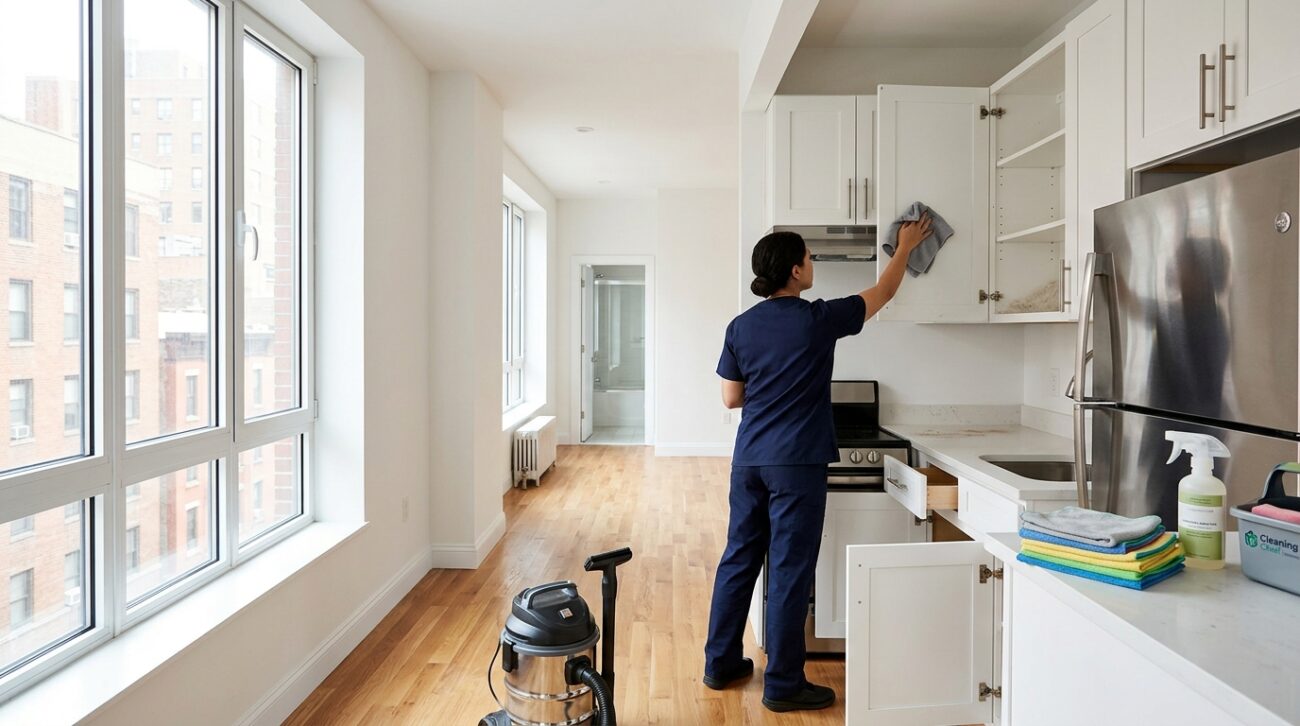
Inside every cabinet and drawer. Vacuum out crumbs first, then wipe the shelves with warm water and dish soap. Pay extra attention to corners, where crumbs pack in, and to the cabinet under the sink, where leaks and pests leave their marks. If the shelves are sticky or stained, a fresh shelf liner is a cheap and effective reset.
The refrigerator. Remove all shelves and drawers and wash them in the sink. Wipe the interior with a solution of warm water and baking soda, which cleans without leaving a chemical smell near food. Don’t forget the rubber door gaskets, where spills collect in the folds. If the freezer has ice buildup or smells stale, this is the time to defrost it.
The oven and stovetop. Remove the grates and burner caps and soak them in hot soapy water. Clean the inside of the oven thoroughly, because the first time you preheat it, whatever the last tenant left in there will make itself known. Check the drawer below the oven, which is often full of crumbs or forgotten pans.
The range hood. The metal filter above the stove collects years of grease in many NYC apartments. Most filters pop out easily and come clean with a soak in very hot water, dish soap and a little baking soda.
The dishwasher and microwave. Clean the dishwasher filter, which is usually at the bottom of the tub and twists out. For the microwave, heat a bowl of water with a slice of lemon for a few minutes, let it steam, then wipe the interior.
Bathroom
Even when a bathroom looks clean, it’s the room where someone else’s presence lingers longest.
The toilet, including the parts nobody cleans. Clean the bowl, then the seat hinges, the base and the floor behind the toilet. Plenty of New Yorkers simply replace the toilet seat when they move in. It costs very little, takes about ten minutes and eliminates a whole category of thoughts.
The tub and shower. Scrub the tub or shower pan and walls. Pull hair from the drain with a drain snake. Soak the showerhead in vinegar to clear out mineral buildup. If there’s a shower curtain liner, throw it out and buy a new one.
The medicine cabinet and vanity. Empty, wipe and dry every shelf. Clean the inside of the vanity cabinet, especially around the pipes.
The exhaust fan. Remove the cover and wash it, and vacuum the dust from the fan housing. A clogged fan barely moves air, and a bathroom that doesn’t dry properly will develop mildew within months.
The grout and caulk. Check for discoloration, gaps or mold under the surface. Clean what’s cleanable, and report caulk that’s cracked or moldy underneath, because that’s a maintenance issue rather than a cleaning one.
Bedrooms, living areas and closets
Closets. Wipe down shelves and hanging rods, then vacuum the floor, especially the back corners. Closets are often skipped during turnover because nobody sees them at a showing.
Baseboards and corners. An empty apartment is the only time you’ll have clear access to every baseboard in the place. Vacuum them with a brush attachment, then wipe with a damp cloth.
Floors. Vacuum everything, including under radiators and along the edges of rooms. For hardwood, follow with a cleaner made for wood floors, not a wet mop. Check for leftover tape residue from the previous tenant’s movers.
Light switches, door handles and outlet covers. These high-touch surfaces are easy to overlook and quick to clean. A cloth with a little all-purpose cleaner handles all of them.
Windows, radiators and air conditioning
This is where NYC apartments differ most from anywhere else.
Windows and sills. City soot builds up on sills and in window tracks as a fine black grime. Vacuum the tracks first, then wipe with a damp cloth. Clean the glass inside and, where you can do so safely, the outside of the lower sash.
Radiators. Radiators and radiator covers collect dust, hair and debris over years. Before heating season starts, get as much out as you can with a vacuum and a long, narrow brush. Dust that sits on a hot radiator all winter bakes on and circulates through the room.
Air conditioners. If the apartment comes with a window unit or a through-the-wall sleeve unit, it probably also comes with the previous tenant’s dust, pollen and possibly mold in the filter. Remove the front panel, wash the filter in warm soapy water and let it dry completely before reinstalling it. If there’s visible mold inside the unit beyond the filter, report it to the landlord rather than trying to clean it yourself.
Vents and returns
Heating and ventilation vents collect dust that blows straight back into the room once the system is running. Remove the covers if they come off easily, wash them, and vacuum inside the ducts as far as you can reach.
The Order That Saves the Most Time
Cleaning an empty apartment in the wrong order means cleaning some things twice. The logic professionals use is simple.
Start with the kitchen and bathroom. These rooms take the longest and involve products that need time to work. Apply cleaner inside the oven or on the showerhead first, then move on to something else while it does its job.
Work top to bottom. Clean shelves, cabinet tops, light fixtures and window frames before you touch counters, and counters before floors. Dust and crumbs always fall down.
Work dry before wet. Vacuum and dust before you wipe or mop. Wet cleaning on top of loose dust just turns it into mud.
Finish at the door. Clean each room from the far corner toward the exit, and do the floors last, room by room, backing out as you go. The last thing you clean should be the entryway, right before the movers start carrying things in.
What’s Not Your Job to Fix
A move-in clean deals with dirt. It doesn’t deal with problems the landlord is responsible for, and it’s worth knowing the difference before you spend a weekend fixing something for free.
Under the NYC Housing Maintenance Code, landlords are required to keep apartments in good repair and free of vermin, among other obligations. That means issues like these belong on a list for your landlord, not on your cleaning to-do list:
- Active pest infestations, as opposed to a few old droppings
- Mold that keeps coming back, grows on walls or ceilings, or appears inside walls or cabinets
- Leaks under sinks, around toilets or from ceilings
- Appliances that don’t work properly
- Windows that don’t open, close or lock correctly
- Broken tiles, cracked caulk or damaged flooring
Report these in writing, by email or through your building’s maintenance portal, so there’s a dated record. Take photos. Cleaning around a problem is fine. Cleaning it up and never mentioning it means you may have trouble proving it existed when you arrived.
The Day-One Supply Kit
You don’t need to buy a full arsenal before you’ve even unpacked your coffee maker. A basic kit covers almost everything above:
- All-purpose cleaner and dish soap
- White vinegar and baking soda
- A bathroom cleaner that disinfects
- Microfiber cloths, sponges and a non-scratch scrub pad
- A toilet brush and a new shower curtain liner
- Rubber gloves and trash bags
- Paper towels for the grimiest jobs
- A vacuum with a brush and crevice attachment, borrowed or your own
Pack these in a clearly labeled box and move it yourself, not with the movers. You’ll want it within the first hour, and it’s always the box that ends up at the bottom of the pile.
Should You Do It Yourself or Hire Help?
Plenty of people handle a move-in clean on their own, especially in a studio or one-bedroom where the whole job takes an afternoon. If you have early access to the apartment and a free day before the movers come, DIY is perfectly realistic.
It gets harder when the timing is tight. Moving day in New York already involves elevator reservations, building rules about move hours, double-parked trucks and three trips to the hardware store for things you forgot. Adding four to six hours of deep cleaning to that day is ambitious, particularly in a larger apartment or one that was left in rough shape.
That’s where a professional move-in cleaning service earns its place. A crew can clean an empty two-bedroom in a few hours while you’re coordinating movers, updating your address and figuring out which key opens the mailbox. The advantage of an empty apartment works in their favor too: with nothing in the way, they can reach every surface that will be hidden for the rest of your lease.
Whichever way you go, the goal is the same. The first night in a new apartment should feel like the first night in your home, not a stay in someone else’s. A few hours of cleaning before the boxes come in is what makes the difference.
Not Sure What You Need?
Tell us about your space — we'll recommend the right service and give you a free, no-obligation quote.
Get a Free Consultation