Deciding to hire a cleaner is the easy part. Most New Yorkers reach that conclusion somewhere around the third Sunday in a row spent scrubbing a bathtub instead of doing literally anything else. The harder question comes right after: how often?
Weekly sounds luxurious. Biweekly sounds sensible. Monthly sounds cheap, until you see what four weeks of city life does to a kitchen. Most people pick a frequency based on a gut feeling about their budget, then spend months wondering whether they got it right.
This guide breaks the decision down properly. It covers what actually happens to an apartment between visits, how cost really scales with frequency, which households suit each schedule, and the signs that tell you it’s time to switch.
What Really Happens Between Visits
To choose a frequency, it helps to understand how an apartment gets dirty. It doesn’t happen evenly. Different parts of your home run on different clocks.
Days one to three. The apartment still feels freshly cleaned. Floors are clear, the bathroom is bright, counters are clean. Small things start to appear: a few crumbs near the toaster, toothpaste spots on the mirror, a light film on the stovetop after a couple of dinners.
Days four to seven. Dust becomes visible on dark surfaces and in sunlight. The bathroom sink develops a ring of soap and toothpaste. Hair collects in shower corners and bathroom floors. Kitchen floors near the stove and sink start feeling a little sticky. If you have a pet, the fur tumbleweeds are back.
Week two. The shower glass loses its clarity. The toilet needs more than a quick swish. Grease on the stovetop has cooked on a couple of times. Floors in high-traffic areas look noticeably dull. The apartment isn’t dirty in a way guests would comment on, but you notice it.
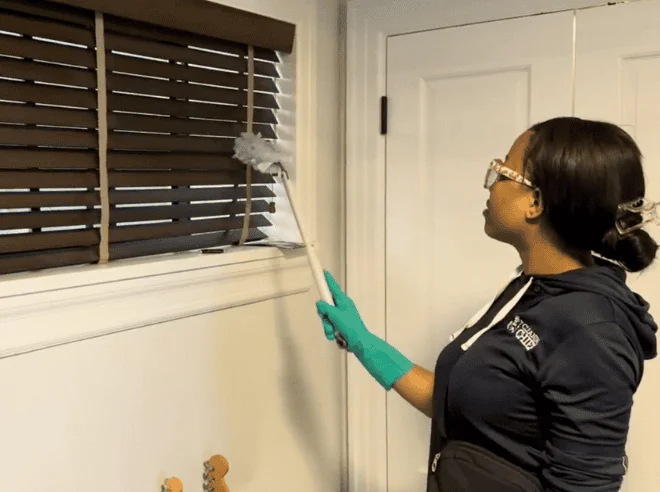
Weeks three and four. Soap scum and mineral film build up. Dust settles on baseboards, blinds and the top of the refrigerator. The kitchen needs real scrubbing, not wiping.
Here’s why this matters. A weekly cleaning visit mostly deals with the first two stages. It’s maintenance: the work is light, fast and thorough. A biweekly visit has to deal with stage three before it can do anything else. Part of the visit goes toward undoing two weeks of accumulation. A monthly visit spends much of its time doing something closer to a deep clean every single time.
Neither approach is wrong. They just produce different experiences of living in your apartment. Weekly means it almost never feels dirty. Biweekly means a good week followed by a slightly less good week. Monthly means a great few days, followed by a slow slide.
How Cost Actually Scales With Frequency
The most common assumption is that weekly cleaning costs twice as much per month as biweekly. In practice, that’s rarely how the math works out.
Because a biweekly visit starts with more buildup, it usually takes longer than a weekly one. Cleaners need more time in the bathroom and kitchen, where the grime is heaviest. So you’re paying for more hours per visit, but half as many visits. Many cleaning companies also price recurring visits differently from one-time cleanings, often rewarding more frequent schedules with a lower per-visit rate. The result is that weekly service tends to cost noticeably more per month than biweekly, but usually less than double.
The size of your apartment affects this math too. In a studio or small one-bedroom, the difference in time between a weekly and a biweekly visit is small, so the monthly cost gap is larger in relative terms. In a two- or three-bedroom apartment with a family, the extra buildup in two weeks can add a significant amount of time to each biweekly visit, which narrows the gap.
If you want a sense of what cleaning costs by apartment size before you choose, our NYC house cleaning price guide breaks it down by layout.
One more thing worth factoring in: time is also a cost. If a biweekly schedule means you spend an hour every weekend keeping things presentable between visits, that hour has value. Some people discover that the extra spent on weekly service buys back more weekend time than they expected.
What Each Schedule Looks Like in Real Life
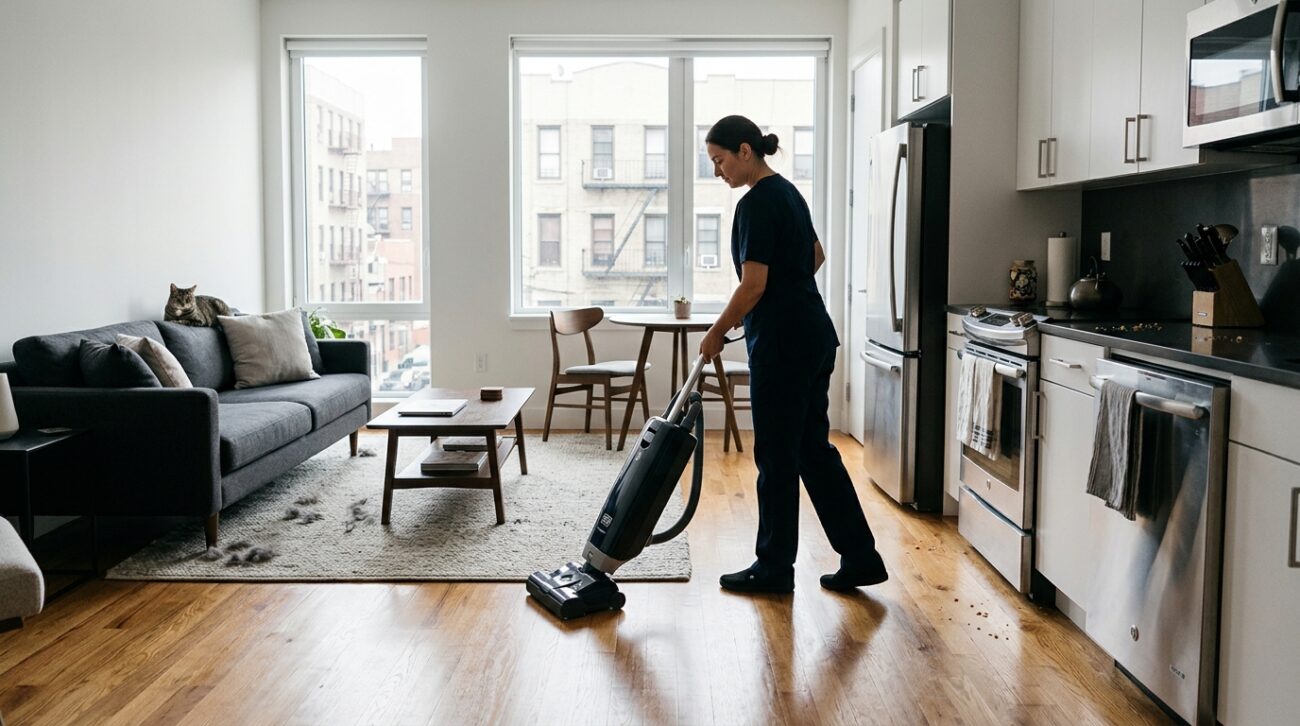
Numbers and timelines are useful, but it’s easier to picture the difference with an actual apartment. Take a one-bedroom in Astoria shared by a couple who both commute to offices, cook a few nights a week and have one cat.
On a weekly schedule, the cleaner arrives to an apartment that’s lived in but not dirty. The bathroom needs a routine clean, not a rescue. The stovetop has a couple of dinners’ worth of splatter that wipes off easily. The cat fur is noticeable but hasn’t worked its way into the rug yet. Because the basics go quickly, there’s time left over for the things that usually get skipped: wiping the cabinet fronts, dusting the tops of picture frames, getting under the bed. The couple comes home every Friday to an apartment that looks the way it did the week before.
On a biweekly schedule, the cleaner arrives to an apartment where the shower glass has clouded, the toilet needs real attention, and cat fur has drifted into corners and under the couch. The kitchen floor near the stove is slightly tacky. The visit takes longer, and most of that extra time goes into the bathroom and kitchen. The apartment still looks great when the cleaner leaves. The difference shows up in the second week, when the couple starts noticing the bathroom around day nine and the cat fur around day six.
Neither version is a problem. The question is which second week you’re willing to live with.
Who Weekly Cleaning Makes Sense For
Weekly service isn’t a luxury for certain households. It’s the schedule that actually matches how fast their apartments get dirty.
Families with kids. Children generate mess at a rate that makes a two-week gap feel very long. Sticky surfaces, crumbs under the table and a bathroom shared by several people all push toward weekly.
Pet owners. Dogs and cats, especially ones that shed, put fur on floors, furniture and clothing every day. After a week, it’s visible. After two weeks, it’s everywhere, and it gets tracked into places it’s harder to remove.
People who work from home. When you’re home all day, you use the apartment more. You cook lunch, make more coffee, use the bathroom more and walk the same paths across the floor. A remote worker’s apartment gets dirty faster than an office worker’s, even if they live the same way in every other respect.
Frequent home cooks. Kitchen grease is cumulative. A stovetop that’s cleaned weekly stays easy to clean. One that gets cleaned every two weeks after daily cooking needs more effort each time.
Anyone with allergies or asthma. Dust and pet dander build up steadily. More frequent removal keeps the indoor load down, which can make a real difference to how people with sensitivities feel at home.
Larger apartments with several people. More people means more of everything: more showers, more meals, more laundry, more foot traffic. Two roommates in a two-bedroom generate roughly twice the mess of one person in a studio, and a weekly schedule keeps each visit manageable.
Frequent hosts. If you have people over most weekends, weekly service means your apartment is always ready without a Friday night cleaning scramble.
Who Biweekly Cleaning Makes Sense For
Biweekly is the most popular recurring schedule for good reason. It fits a large share of city households well.
Singles and couples in studios and one-bedrooms. Smaller apartments with fewer people accumulate mess slowly enough that two weeks is comfortable, especially if both people are out during the day.
People who travel regularly. If you’re away for work every other week, your apartment barely gets used half the time. Weekly service would clean a place that didn’t need it.
People who eat out often. A kitchen used mostly for coffee and the occasional takeout container stays clean far longer than one used for daily meals.
Naturally tidy people. If you already do dishes right away, hang up your towels and wipe the counter after cooking, biweekly service handles the deeper work while your habits handle the rest.
Budget-conscious households. Biweekly offers most of the benefit of professional cleaning at a lower monthly cost. For many people, it’s the right balance between a clean home and a sensible budget.
Options Beyond Weekly and Biweekly
Weekly and biweekly aren’t the only choices. Most cleaning companies, including us, also offer visits every three weeks or once a month.
Every three weeks works well for people who find biweekly slightly more than they need but notice the difference with monthly service. It’s a good fit for a single person in a small apartment who travels occasionally.
Monthly can work for very tidy people in small spaces, people who are away a lot, or anyone who handles regular cleaning themselves and wants professionals to take care of the bigger tasks. But be honest with yourself about what monthly means. If you aren’t cleaning in between, each monthly visit becomes a partial deep clean, which takes longer and costs more per visit. At that point, you’re paying almost as much as biweekly and living with a dirtier apartment for most of the month.
The NYC Factors That Change the Math
The general rules above apply anywhere. A few things about New York specifically push many households toward more frequent cleaning than they’d need elsewhere.
Small spaces show mess faster. In a 500-square-foot apartment, there’s nowhere for clutter or dust to hide. The same amount of mess that would go unnoticed in a suburban house is right in front of you in a studio.
City dust is relentless. Traffic, construction and open windows bring fine black soot into apartments, especially on lower floors and along busy avenues. It settles on windowsills, floors and furniture within days.
Heating season changes everything. When the radiators come on in the fall, dust circulates through the air, and dry heat makes it more noticeable. Many people find their apartment needs more attention from October to April than it does in summer.
Food and pests are connected. In a building with shared walls and pipes, crumbs and food residue attract roaches and mice from neighboring units. Regular kitchen cleaning is one of the most effective ways to keep them out.
Seasonal adjustments make sense. You don’t have to pick one frequency forever. Plenty of New Yorkers go weekly in the winter and during the holiday season, then switch to biweekly in summer when they’re traveling or spending weekends out of the city.
What You Still Handle Between Visits
No recurring schedule means you never touch a sponge. What it does mean is that your part of the job shrinks to small, quick habits that keep the apartment livable between visits. These matter more on a biweekly schedule than a weekly one.
- Wash dishes or run the dishwasher daily, and wipe the counters after cooking.
- Take out the trash and recycling before they overflow, especially in summer.
- Squeegee the shower glass and hang up towels to dry.
- Do a quick sweep or vacuum of the kitchen floor and entryway when crumbs or dirt build up.
- Keep clutter under control, so cleaners can spend their time cleaning rather than picking things up.
Fifteen minutes a day of this kind of upkeep is usually the difference between a biweekly schedule that feels great and one that feels like it’s always one week too long.
A Quick Way to Decide
If you’re still unsure, a few honest questions usually settle it.
How many people and pets live in the apartment? Three or more people, or any shedding pet, points toward weekly.
How much do you cook? Daily cooking points toward weekly. Mostly takeout and restaurants points toward biweekly.
Are you home during the day? Remote workers usually benefit from weekly. People in an office most days usually do fine with biweekly.
How long before the bathroom starts to bother you? If it’s around day five, you already know the answer.
What’s your realistic budget? Choose the frequency you can keep up without stress. A consistent biweekly schedule beats a weekly one you cancel half the time.
Getting Started the Right Way
Whichever frequency you choose, a few steps make the first months go smoothly.
Start with a deep clean. Recurring visits are designed to maintain a clean home, not to create one. If your apartment hasn’t been professionally cleaned in a while, the first visit should reset everything: baseboards, inside appliances, built-up soap scum. After that, regular visits can focus on keeping it that way. Most recurring plans are built on this principle.
Give it two months before judging. The first couple of visits reveal how your apartment behaves on a given schedule. After two months, you’ll know whether the gap feels right or whether it should be shorter or longer.
Ask for consistency. A cleaner who comes to your apartment regularly learns where things go, which areas need extra attention and how you like things done. That familiarity makes each visit more efficient and the results more consistent.
Communicate your priorities. If the kitchen matters more to you than the closets, or if one bathroom gets far more use than the other, say so. A recurring visit is a routine, but it should be your routine.
If you’re weighing a formal recurring plan against booking visits one at a time, our breakdown of whether a recurring cleaning membership is worth it walks through the numbers and who benefits most. And if you just want to know what a regular visit includes, the details are on our standard cleaning page.
Signs Your Schedule Isn’t Working
Even a carefully chosen frequency can turn out to be wrong. These are the signals worth paying attention to.
Your cleaners spend the whole visit on the kitchen and bathroom. If there’s never enough time left for dusting, floors or anything else, the gap between visits is too long for how you use the apartment.
You clean before the cleaners come. This is a remarkably common New York habit, and a clear sign something’s off. If the apartment feels too messy to let anyone see, the schedule isn’t keeping up.
The same areas are always skipped. Baseboards, blinds and the top of the refrigerator that never get reached suggest the regular visits are just barely covering the basics.
Visits feel pointless. On the other hand, if your cleaners regularly finish early and the apartment looks nearly the same before and after, you may be cleaning more often than you need to. That’s a good time to try a longer interval.
Your life changed. A new job, a new pet, a new roommate, a baby or a switch to working from home all change how fast your apartment gets dirty. The frequency that worked last year may not be the right one now.
The Bottom Line
There’s no universally correct answer to weekly versus biweekly. There’s only the right answer for the way you live. Weekly suits busy households where a lot happens at home. Biweekly suits smaller, quieter apartments where people are out most of the day. Three weeks and monthly have their place, as long as you’re clear about what they can and can’t do.
The best schedule is the one that means you come home to an apartment that feels clean most of the time, without spending your weekends making it that way. If you get that balance right, you’ll stop thinking about cleaning altogether, which was the point of hiring someone in the first place.
Tired of Dealing With This Yourself?
Let our NYC pros handle it — fast, thorough, done right the first time.
Book a Cleaning