Read the fine print of a New York lease and there’s a good chance you’ll find a line about rugs. Many NYC leases, and most co-op and condo house rules, require that roughly 80 percent of the floor be covered with carpet or rugs. The reason isn’t style. It’s the neighbors downstairs, who would rather not hear every footstep, dropped fork and late-night trip to the refrigerator.
The result is that New Yorkers own a lot of rugs. Area rugs over hardwood, runners in narrow hallways, a vintage piece from a Brooklyn flea market, a machine-made rug from a big-box store that was never meant to survive a dinner party. And sooner or later, every one of them meets a glass of red wine, a coffee cup, a dog with an upset stomach or a boot covered in January slush.
This guide covers how to remove the most common stains from carpets and rugs without making them worse, why some stains come back after you thought they were gone, and when a stain is better left to a professional.
Why Stains Behave Differently in NYC Apartments
The basics of stain removal are the same everywhere, but city living adds a few complications.
Rugs over hardwood. Most NYC apartments have wood floors, which means most rugs sit directly on top of them. When you treat a stain with a lot of liquid, it soaks through the rug and onto the floor below. Wood doesn’t like standing moisture. It can warp, stain or lose its finish, and the damp rug on top keeps it from drying.
Street dirt comes inside. City sidewalks carry a mix of grime, oil, and, in winter, road salt. Even with a shoes-off policy, some of it makes its way onto entryway rugs and runners.
Small spaces mean more traffic per square foot. In a one-bedroom apartment, the same rug might get walked on hundreds of times a day, which grinds dirt deeper into the fibers.
Limited drying conditions. Without a yard, balcony or reliable sunshine, it’s hard to dry a rug properly after cleaning. Damp rugs develop musty smells quickly.
Know What Your Rug Is Made Of
Before treating any stain, it helps to know what you’re working with. The same method that rescues a synthetic rug can ruin a wool one. Check the label on the back, usually near a corner, or look up the product if you remember where you bought it.
Synthetic fibers (nylon, polyester, polypropylene). These are the most forgiving. Most wall-to-wall carpet and many affordable area rugs are synthetic. They tolerate water, mild cleaners and even diluted hydrogen peroxide reasonably well, though you should still test first.
Wool. Wool is durable and naturally resistant to soiling, but it’s a protein fiber, similar to hair. Harsh alkaline cleaners, chlorine bleach and oxygen bleach products can damage it. Hot water and aggressive scrubbing can cause the fibers to felt or fuzz. Wool responds best to cool water and gentle, pH-neutral cleaners.
Cotton. Cotton flatweaves and dhurries are common in apartments because they’re inexpensive and easy to move. They absorb liquid quickly, can shrink when they get too wet, and their dyes may bleed.
Jute and sisal. These natural plant fibers have a great texture but a difficult relationship with water. Too much moisture can leave brown water marks that are sometimes worse than the original stain. Use as little liquid as possible, and consider a dry cleaning method.
Viscose, rayon and “art silk.” Rugs sold as “bamboo silk” or “art silk” are usually made of viscose. They look beautiful and are very sensitive. Viscose fibers lose strength when wet, can yellow, and are easily damaged by rubbing. Stains on viscose rugs are best left to a professional.
Handmade and vintage rugs. Many older and handmade rugs use dyes that aren’t colorfast. A little water in the wrong spot can make one color bleed into another. Always test in an inconspicuous area first.
The Rules That Apply to Every Stain
Every stain is different, but a handful of principles apply to all of them. Following these will prevent most of the damage that happens during stain removal.
Act quickly. A fresh stain sits on the surface of the fibers. Given time, it soaks down into the base of the pile and the backing, and it may chemically bond to the fibers. The first few minutes matter more than any product.
Blot, never rub. Rubbing spreads the stain, pushes it deeper and damages the fibers. Press a clean white cloth or paper towel firmly onto the stain, lift, and repeat with a clean section.
Remove solids first. Scrape up anything solid with a spoon or the edge of a dull knife before adding any liquid.
Work from the outside in. Start at the edge of the stain and work toward the center. Working outward spreads it.
Use cool water by default. Hot water helps with some greasy stains, but it sets protein-based stains like blood, dairy and egg. When in doubt, use cool water.
Use as little moisture as possible. Overwetting is the most common cause of stains that come back, rugs that smell musty and damaged floors underneath. Apply cleaning solution to a cloth instead of pouring it on the rug.
Test first. Before using any cleaning solution, dab a little on a hidden area, such as a corner that sits under the couch. Wait a few minutes and blot with a white cloth. If color transfers to the cloth or the fibers look different, don’t use it.
Rinse out the cleaner. Soap residue left in the fibers attracts dirt, so a spot you cleaned can turn gray within weeks. After treating a stain, blot with a cloth dampened with plain water, then blot dry.
Protect the floor. If the rug is on hardwood, fold back the rug or slip a folded towel or piece of plastic beneath the stained area before you start.
Dry it properly. When you’re finished, lay a thick stack of paper towels or a folded towel over the spot and place something heavy on top, such as a stack of books. Leave it for several hours. The weight draws moisture up out of the rug. Then let it air dry completely, with a fan if possible.
Your Stain Removal Kit
You don’t need a lot of products, but it helps to have them ready before you need them. Stains never happen at convenient times.
- Clean white cloths or plain white paper towels (colored cloths can transfer dye)
- Clear, dye-free dish soap
- White vinegar
- An enzyme cleaner made for pet stains
- 3 percent hydrogen peroxide, for synthetic and light-colored rugs only
- Rubbing alcohol
- Baking soda or cornstarch
- A spray bottle
- A spoon or dull knife for scraping
The most useful all-purpose solution is simple: mix about a quarter teaspoon of clear dish soap into a cup of cool water. Use this as your starting point for most stains before trying anything stronger.
How to Remove Common Stains
Red wine
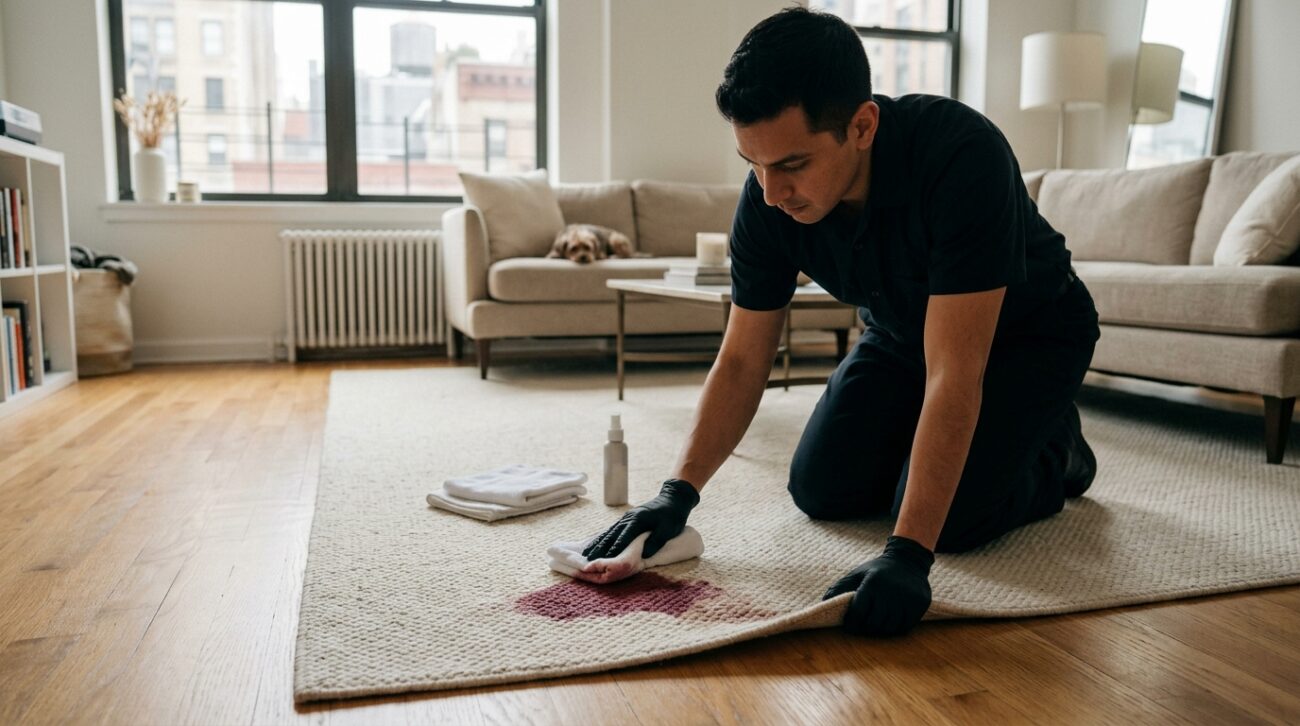
Blot immediately to absorb as much as possible. Dampen the stain with cool water and blot again, repeating several times. Then apply the dish soap solution with a white cloth and blot until the color stops transferring.
For a stubborn wine stain on a synthetic, light-colored rug, a mixture of one part dish soap to two parts 3 percent hydrogen peroxide can lift the remaining color. Test it first, because peroxide can lighten dyes. Don’t use peroxide on wool or on dark or brightly colored rugs.
Forget the old advice about pouring white wine on red wine. It only dilutes the stain and adds more liquid to the rug. Plain cold water does the same job without the sugar.
Coffee and tea
Blot, then treat with the dish soap solution. For lingering brown marks, follow up with a mixture of one part white vinegar to two parts cool water, which helps break down tannins. Blot with plain water to rinse, then dry.
If there was milk or cream in the coffee, start with cool water only. Dairy is a protein, and heat will set it.
Pet urine
Pet urine is one of the hardest stains to remove completely, because it soaks through the rug quickly and into the pad or floor below. Blot up as much as you can, pressing firmly. Then saturate the area with an enzyme cleaner, following the product’s directions. Enzyme cleaners break down the proteins and compounds that cause the odor, rather than masking them.
Let the enzyme cleaner sit for the full recommended time, often 10 to 15 minutes or longer, then blot dry. Old urine stains may need several treatments.
Avoid two common mistakes. Don’t use steam or hot water, which can permanently set the odor. And don’t use ammonia-based cleaners, which smell similar to urine to pets and can encourage them to go in the same spot again. If you share your apartment with pets, our guide to pet hair removal in NYC apartments covers the other half of the challenge.
Pet vomit and accidents
Scrape up solids gently, working from the edges inward. Blot the remaining residue, then treat with an enzyme cleaner. Vomit contains stomach acid, which can discolor some dyes if it sits too long, so speed matters here.
Blood
Always use cold water on blood. Hot water cooks the proteins into the fibers. Blot with cold water, then with the dish soap solution. On synthetic, light-colored carpet, a small amount of 3 percent hydrogen peroxide can help with remaining traces. It will foam as it works. Test it first and blot away any residue.
Grease and oil
Food grease, butter, salad dressing, cosmetics and lotion all fall into this category. Start by sprinkling cornstarch or baking soda over the stain and leaving it for 15 to 30 minutes to absorb as much oil as possible. Vacuum it up. Then treat what’s left with the dish soap solution, which is designed to break down grease. For makeup and lotion, dabbing with a cloth dampened with rubbing alcohol can help, but test it first.
Mud and street dirt
This one goes against instinct: let mud dry completely before you touch it. Wet mud smears and spreads. Dried mud breaks up and can be vacuumed away. Once you’ve vacuumed it, treat any remaining discoloration with the dish soap solution.
Winter salt
Every New Yorker knows the white, crusty lines that appear on entryway rugs after a snowstorm. That’s road salt, carried in on boots. Vacuum up any loose crystals first. Then dab the area with a mixture of equal parts white vinegar and warm water, which dissolves the salt residue. Blot with plain water and dry thoroughly. A washable doormat outside your door and a boot tray inside will save your rugs a lot of trouble from December through March.
Chocolate
Chocolate combines fat and protein, so it needs a two-step approach. Scrape up as much as possible, especially if it has melted and then hardened. Blot with cool water, then treat with the dish soap solution. For remaining brown marks on synthetic fibers, the vinegar solution used for coffee can help.
Ink
Dab ink stains with a white cloth dampened with rubbing alcohol, blotting from the outside in and switching to a clean section of cloth as the ink transfers. Don’t pour alcohol directly onto the rug. Permanent marker is much harder to remove and may need several rounds, or professional help.
Candle wax and chewing gum
For gum, hold an ice cube or a bag of ice against it until it hardens, then scrape it off with a dull knife. For candle wax, you can do the same, or place a paper bag or several paper towels over the wax and press with a warm iron on a low setting. The wax melts into the paper. Move to a clean area of paper and repeat. Use this method carefully on synthetic rugs, which can melt, and never on a rug with a rubber backing.
Nail polish
Blot away as much wet polish as possible. Then dab carefully with a cloth dampened in non-acetone nail polish remover. Acetone can dissolve some synthetic fibers, so check the rug’s label and test first. Nail polish often needs professional attention on light-colored rugs.
Unknown stains
If you have no idea what caused a stain, start with the mildest approach and work up. Begin with cool water, then the dish soap solution, then the vinegar solution. Test each step. Stronger solvents come last, and only if you know the fiber can handle them.
Dealing With Odors
Sometimes a rug looks clean but still smells. Common causes include pets, food spills, spilled drinks and dampness that never dried properly.
For general freshening, sprinkle baking soda evenly over the rug, let it sit for several hours or overnight, then vacuum it up thoroughly. Improve airflow in the room if you can, especially in apartments with limited windows.
If the smell returns quickly, the problem is likely in the rug pad or the floor underneath, where liquids have soaked in. In that case, surface treatments won’t help much, and a professional cleaning that reaches the backing is the real fix.
Why Some Stains Come Back
Few things are more frustrating than cleaning a stain, watching it disappear, and finding it back the next morning. There are two main reasons this happens.
Wicking. When a stain soaks deep into the base of the fibers or the backing, surface cleaning removes what you can see but leaves the rest below. As the rug dries, moisture travels upward and carries the remaining stain with it. The fix is to use less liquid in the first place and to dry the area with weight on top, so moisture moves into the towel rather than back into the fibers.
Resoiling. If cleaning solution is left in the fibers, the residue is sticky. Over the following days and weeks, it attracts dirt from shoes and feet, and a gray spot appears where the stain used to be. Thorough rinsing with plain water after cleaning prevents it.
Making Your Rugs Last Longer
A good rug can last for many years, and a cheap one can wear out quickly. How long either lasts depends a lot on care.
Vacuum regularly. Dirt and grit act like sandpaper, wearing down fibers with every step. High-traffic rugs benefit from vacuuming at least once a week, more often with pets.
Use a rug pad. A good pad keeps the rug from slipping on hardwood, cushions the fibers so they wear more slowly, and protects the floor underneath. It also reduces noise, which your downstairs neighbors will appreciate.
Rotate your rugs. Turn area rugs 180 degrees every six months or so. This evens out wear from foot traffic and fading from sunlight, which is especially noticeable in bright apartments with south-facing windows.
Take your shoes off. A shoes-off rule does more to protect your rugs than any cleaning product. It keeps street dirt, oil and salt where they belong.
Clean professionally on a schedule. Most carpet and rug manufacturers recommend professional cleaning every 12 to 18 months, more often in homes with pets, kids or heavy traffic. Regular deep cleaning removes the dirt that vacuuming can’t reach.
When to Call a Professional
Many stains can be handled at home, but some situations call for professional help.
- The rug is wool, silk, viscose, antique or handmade, and the stain is anything more than a small, fresh spill.
- The stain is large or has soaked through to the pad or floor.
- Pet urine has been absorbed repeatedly in the same spot.
- The colors have started bleeding, or you’re worried they might.
- The rug has been through a leak or flood.
- You’ve tried home methods, and the stain is still there or has spread.
Professional cleaners use equipment and solutions matched to the fiber type, along with extraction machines that remove dirt and moisture from deep in the pile, where household methods can’t reach. If you’re dealing with stains on both rugs and furniture, our carpet and couch cleaning service handles both. Upholstery follows many of the same principles but has its own rules, which we cover in our guide to couch and upholstery cleaning in NYC.
The Short Version
Most stains are removable if you act fast, blot instead of rubbing, use cool water and gentle cleaners, and don’t soak the rug. Know your fiber before you reach for anything stronger than dish soap, test every product in a hidden spot, and rinse and dry thoroughly when you’re done. Your rugs are doing a lot of work in a New York apartment. They keep the floors quiet, the rooms warm and the neighbors happy. A little care keeps them doing that for years.