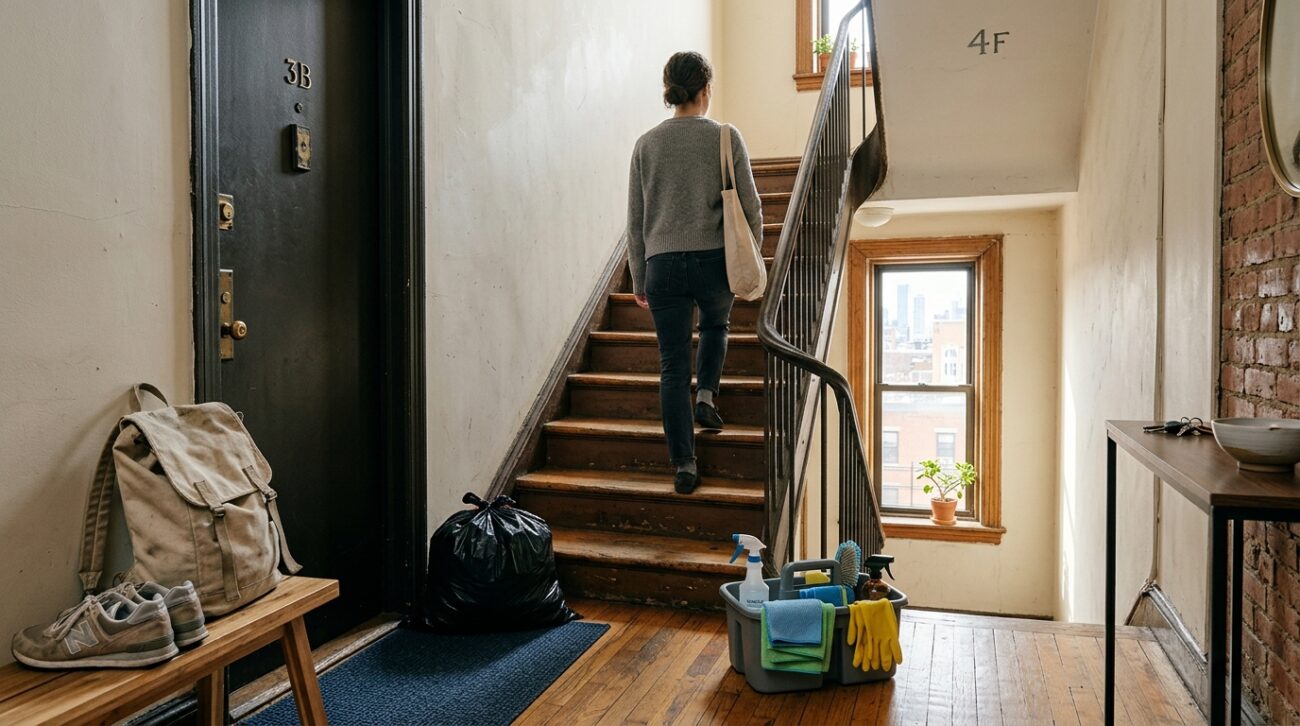
Every walk-up tenant in New York knows the moment. You’re at the top of the fourth flight with a bag of groceries in each hand, and you realize the trash you meant to take down is still sitting by the door. Upstairs. Where you now are.
Walk-ups are a big part of what makes New York housing feel like New York. They’re the brick tenements of the East Village, the brownstones of Park Slope and Harlem, the three- and four-story buildings along side streets in Astoria, Bushwick and Washington Heights. They often have more character, lower rents and better light than their elevator neighbors. They also turn every household chore into a small logistics exercise.
Cleaning is where that shows up most. When every supply, every bag of trash and every load of laundry has to go up or down several flights by hand, the usual cleaning advice stops fitting. This guide is about cleaning a walk-up in a way that works with the stairs instead of against them.
Why Walk-Ups Need a Different Approach
The basics of cleaning don’t change when you lose the elevator. Dust is still dust, and a bathroom still needs scrubbing. What changes is everything around the cleaning: how you get supplies in, how you get trash out, how dirt gets in, and how much time and energy each of those things costs.
Most NYC walk-ups are older buildings, usually somewhere between three and six stories. Many were built long before modern expectations about storage, laundry and trash. That means a few things are common across most of them:
- No laundry in the building, or a single machine in a cramped basement
- Little or no storage beyond the apartment itself
- Narrow stairwells that make carrying anything bulky awkward
- Layouts shaped by older building styles, like railroad and floor-through apartments
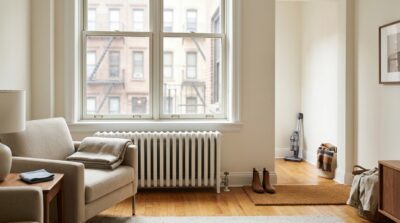
- Original features such as radiators, older windows and well-worn wood floors
Put together, this means the most important question in a walk-up isn’t “how do I clean this?” It’s “how do I keep the number of trips up and down the stairs to a minimum?” Nearly every tip below comes back to that idea.
Build a Cleaning Kit That Lives Upstairs
In a building with an elevator, it doesn’t matter much if your cleaning supplies are scattered. In a walk-up, a forgotten sponge or an empty spray bottle can mean an extra trip to the store and two more trips up the stairs. The solution is a complete, compact kit that stays in the apartment and is easy to restock.
Choose lightweight tools. A heavy upright vacuum and a mop with a bucket are a lot to store and even more to carry if you ever move. A cordless stick vacuum and a spray mop with washable pads handle most apartment floors, take up very little space and weigh a fraction as much.
Buy concentrates. Many all-purpose cleaners, floor cleaners and dish soaps come in concentrated form. A small bottle makes many refills when mixed with tap water, which means less weight to carry home and fewer empty bottles to take down.
Use reusable cloths. A stack of microfiber cloths replaces rolls of paper towels, which are bulky to carry up and fill trash bags quickly. Wash them with your regular laundry.
Keep backups. When you’re down to your last trash bag, sponge or bottle of dish soap, it’s already time to buy more. Keep one spare of the essentials so you’re never forced into an unplanned run.
Store it where you use it. A small caddy under the bathroom sink and another under the kitchen sink mean you’re not carrying supplies back and forth across the apartment. An over-the-door organizer adds storage without taking up floor space.
If you’re setting up a kit from scratch, our guide to the cleaning supplies and routine you actually need for a first NYC apartment covers the essentials without the clutter.
Trash and Recycling Without the Daily Trek
In a walk-up, trash is where good intentions go to die. It’s easy to let bags pile up by the door because nobody wants to make a special trip down four flights for one bag. But a pile of trash in a small apartment quickly becomes a smell, and in an older building, it can become a pest problem.
Piggyback every trip. The simplest habit is never to go downstairs empty-handed. Leaving for work, heading to the gym, going out for coffee: take something with you. If you make it automatic, the trash never accumulates.
Use smaller bags. A large kitchen bag gets heavy and awkward on narrow stairs, and it sits around long enough to smell before it’s full. Smaller bags taken out more often are easier to carry and keep the apartment fresher.
Rinse recyclables. Food residue in cans, jars and takeout containers attracts insects and smells, especially in summer. A quick rinse means your recycling can wait a few extra days without becoming a problem.
Keep a lidded bin. Store trash in a bin with a tight-fitting lid, not in an open bag by the door. It controls odors and makes the apartment less appealing to roaches and mice, which in older buildings with shared walls can come from neighboring units.
Plan for summer. Top-floor apartments in walk-ups get hot, and heat speeds up everything unpleasant about trash. In July and August, take it out more often, even if the bag isn’t full.
Laundry Strategy for a Walk-Up
Most walk-ups don’t have in-unit washers, and many don’t have laundry in the building at all. That usually means carrying heavy bags to a laundromat and back up the stairs.
Keep a hamper near the door. A hamper by the entrance, rather than in the bedroom, makes it easier to grab laundry on your way out and reduces the chance of forgetting it.
Use a bag with shoulder straps. A large laundry backpack or duffel with shoulder straps is far easier on stairs than a basket or a bag you carry in your hands.
Consider wash-and-fold. Many NYC laundromats offer drop-off wash-and-fold service, and some pick up and deliver. For walk-up tenants, the time and energy saved can be worth the cost, especially for bulky items like towels and bedding.
Be careful with drying racks. Drying clothes inside the apartment saves trips, but it adds a lot of moisture to the air. In a small walk-up with limited ventilation, this can lead to condensation on windows and mildew in bathrooms and closets. If you air dry, open a window or run a fan, and don’t leave damp laundry out for days.
Keep the Stairwell Outside
Walk-up stairwells see a lot of traffic, and whatever is on the stairs tends to come into your apartment on your shoes, bags and bike tires. Stopping dirt at the door saves more cleaning than any product.
Use two mats. A coarse mat outside your door, if your building allows it, scrapes off grit. An absorbent mat just inside catches moisture and whatever made it past the first one. In winter, this is your main defense against road salt and slush.
Take your shoes off. A shoes-off rule is the single most effective way to keep floors clean in any NYC apartment, and it matters even more when you’re climbing stairs that dozens of other people use every day. A small bench or shelf by the door makes it easy.
Wipe bikes and strollers. Walk-up tenants often carry bikes, strollers and scooters up to their apartments because there’s nowhere else to put them. Keep an old towel by the door and wipe the tires before bringing them inside, especially on wet days.
Know what’s your responsibility. In most buildings, the stairs and hallways are maintained by the landlord or super. If the common areas are consistently dirty, it’s reasonable to raise it with them. It affects how much dirt ends up in your apartment.
Which Floor You Live On Matters
In a walk-up, your floor changes more than your cardio routine. Each level comes with its own cleaning challenges.
Ground floor and garden level. These apartments are closest to the street, so they get more sidewalk dust and window grime, especially if the windows face the sidewalk. Being close to the basement and ground can mean more humidity and a higher chance of pests. Keep an eye on damp areas, and don’t leave food out.
Middle floors. Middle floors often have the easiest time. They’re insulated from street dust by distance and from roof heat by the floors above. The main challenge is simply the stairs themselves.
Top floor. Top-floor apartments usually get the best light and the most heat. Warm air rises, and in summer, the space under the roof can get very hot. Heat makes trash smell faster, dries out wood floors and furniture, and can encourage dust to circulate. If there’s a skylight or roof hatch, check around it for leaks, which can lead to water stains and mildew.
Cleaning Around Classic Walk-Up Layouts
The shape of a walk-up apartment affects how dust and dirt move through it, and cleaning in the right direction saves time.
Railroad apartments
In a railroad apartment, the rooms are arranged in a line, one leading into the next, often with windows only at the front and back. The layout means foot traffic follows one path through the entire apartment, and dust tends to travel the same way.
Clean from the back of the apartment toward the front door. Start in the room furthest from the entrance, work your way forward room by room, and finish at the door. That way, you’re never walking back through a room you’ve already cleaned. The central path also gets more wear than anywhere else, so a runner rug along it can protect the floor and make cleaning easier.
Floor-through apartments
A floor-through takes up an entire floor of a narrow building, with windows at both the front and the back. This is a great layout for cross-ventilation. Opening windows at both ends on a dry day moves a lot of air through the apartment, which is ideal after cleaning with strong products, or simply to freshen things up.
Small galley kitchens
Many walk-up kitchens are narrow galley setups along one wall. With so little counter space, clutter piles up quickly, and grease from cooking lands on everything nearby. Keeping counters clear and wiping the stovetop after every use makes a bigger difference here than in a larger kitchen.
Older Building Features to Watch
Most walk-ups are older buildings, and older buildings come with features that need particular attention.
Radiators. Cast-iron radiators collect dust, hair and debris in places that are hard to reach. Clean them before the heat comes on in the fall with a vacuum and a long, narrow brush. Dust that sits on a hot radiator all winter bakes on and circulates through the room.
Old windows. Older windows often have gaps that let in soot and dust. Sills and tracks need more frequent cleaning than in newer buildings. For advice on which windows are safe to clean yourself, and which aren’t, see our guide to window cleaning in a NYC high-rise or walk-up.
Wood floors with gaps. Many walk-ups have original wood floors, sometimes with gaps between the boards. Dust and crumbs collect in these gaps. A vacuum with a crevice attachment works better than a broom, which tends to push debris deeper.
Shared walls and old pipes. In older buildings, pests can travel between apartments through gaps around pipes and in walls. Keeping food sealed, crumbs cleaned up and trash taken out regularly is the best defense. If you notice gaps where pipes enter walls, report them to the landlord so they can be sealed.
A Realistic Routine for Walk-Up Living
The trick with a walk-up is to rely on small, regular habits rather than big, occasional cleaning sessions. Big sessions produce big piles of trash, dirty laundry and empty bottles, all of which have to go down the stairs at once.
Every day:
- Take something down whenever you leave.
- Wipe kitchen counters and the stovetop after cooking.
- Do dishes or run the dishwasher.
- Keep shoes at the door.
Every week:
- Vacuum and mop the floors.
- Clean the bathroom.
- Dust surfaces, including windowsills.
- Wash towels and bedding.
- Check your supply kit and add anything running low to your shopping list.
Every month:
- Clean radiators and window tracks.
- Wipe down doors, door frames and light switches.
- Clean inside the refrigerator and microwave.
- Vacuum under the bed and other furniture.
Every season:
- Deep clean the kitchen and bathroom.
- Prepare radiators for heating season in the fall.
- Wash or replace doormats.
- Declutter, so you’re not carrying things up that you’ll eventually just carry back down.
Moving Into or Out of a Walk-Up
Moving day in a walk-up is hard enough without cleaning to worry about. If you can, clean the apartment while it’s empty, before the movers arrive or after they’ve taken everything away. It’s much easier to clean every surface when there’s nothing in the way.
Movers also bring in a lot of dirt from the stairs and street. If you’re moving in, lay down old sheets or a runner along the main path through the apartment to protect the floors, and give the floors a final clean once all the boxes are in.
Working With Professional Cleaners in a Walk-Up
For many walk-up tenants, the biggest benefit of hiring cleaners isn’t just the cleaning. It’s not having to haul supplies, equipment and trash up and down the stairs.
A few things help the visit go smoothly:
- Let the cleaning company know which floor you’re on and that the building doesn’t have an elevator, so they can plan accordingly.
- Explain how to get in, including buzzer codes, key handoffs and any quirks with the front door.
- Mention any building rules, such as restricted hours or where trash should be left.
- Tell them about any features that need special care, such as original wood floors or older fixtures.
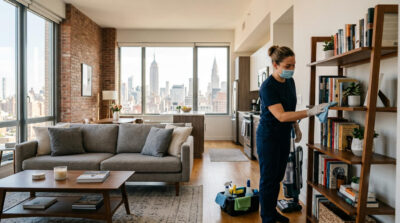
Professional cleaners bring their own supplies and equipment, so nothing extra needs to go up your stairs. A regular standard cleaning covers the routine work, like floors, bathrooms, kitchens and dusting, so your own trips up and down the stairs can be spent on things you actually want to carry.
The Walk-Up Advantage
Walk-ups ask more of you, but they give something back. The stairs mean you think twice before bringing things home, which tends to keep clutter under control. Small buildings often mean neighbors you actually know and supers who know your apartment. And there’s a certain satisfaction in coming home to a clean apartment at the top of five flights.
The key is to work with the building instead of against it. Keep a compact kit upstairs, never go down empty-handed, stop dirt at the door and rely on small daily habits instead of big weekend sessions. Your apartment stays cleaner, your stairs feel shorter, and your trash never waits by the door for a week again.
Get Your Custom Cleaning Quote — Free
Every NYC apartment is different. Get pricing tailored to your space in minutes.
Get My Free Quote