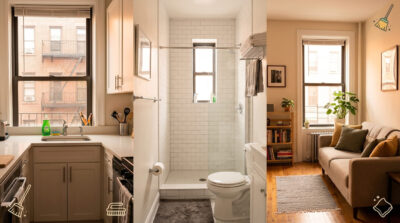
In most of the country, extra stuff has somewhere to go. There’s a garage, a basement, an attic, a spare room that slowly becomes “the storage room.” In New York, there’s usually just the apartment. Everything you own lives with you, in the same few hundred square feet where you sleep, cook, work and try to relax.
That’s why clutter hits New Yorkers differently. A pile of mail on the counter isn’t tucked away in a home office. The extra chairs from a party aren’t in the garage. The bags of clothes you meant to donate are sitting in the corner of the bedroom, and they’ve been there since March.
Decluttering a small apartment isn’t about minimalism or owning 100 things. It’s about making your space work: making it easier to clean, easier to live in, and easier to relax in at the end of the day. This guide covers how to decide what goes, where to start, how to actually get things out of a NYC apartment, and how to keep clutter from creeping back.
Why Clutter Matters More in a Small Apartment
Clutter isn’t just a matter of looks. In a small space, it affects nearly everything.
Everything is visible. In a studio or one-bedroom, there’s no closed door to hide things behind. A messy desk is part of the living room. A pile of laundry is part of the bedroom, which is part of the living room.
Cleaning takes longer. Every object on a surface is something you have to move, clean around or dust. Clear surfaces take seconds to wipe. Cluttered ones take minutes, and usually don’t get cleaned as thoroughly. Clutter also collects dust, which matters for anyone with allergies, a connection we explore in our guide to cleaning allergens out of your home.
It affects how you feel. Many people find that a cluttered space makes it harder to relax or focus, especially when home is also the office. Our article on whether cleaning is actually good for your health looks at the connection between a tidy home and mental well-being.
Pests love it. Piles of paper, boxes and stored items give roaches and mice places to hide and nest, and they make it harder to spot signs of pests early.
Moving costs more. In New York, you’re likely to move more than once. Movers often charge by time or volume, so every box you move costs money. Carrying boxes you’ll never open up and down stairs is even worse.
Before You Start
Decluttering goes much more smoothly with a little planning.
Set a time limit. Trying to declutter the whole apartment in one weekend usually ends in exhaustion and a bigger mess than you started with. Set aside an hour or two at a time, and focus on one area.
Start small. Pick a single drawer, shelf or cabinet for your first session. Finishing something small builds momentum.
Get your bags ready. Have separate bags or boxes for trash, recycling, donations and things to sell. Label them so items don’t end up in the wrong place.
Plan how things will leave. This is the step most people skip, and it matters more in New York than almost anywhere else. A donation bag that sits in your hallway for two months isn’t decluttering, it’s just moving clutter to a different spot. Before you start, know where things are going and when. More on this below.
Don’t buy storage first. It’s tempting to start by buying organizers and bins. Wait until you’ve decluttered. You’ll need far less storage than you think, and you’ll know exactly what size and type you need.
Where to Start
Start with areas that have a big impact and involve easy decisions. Save sentimental items like photos, letters and family belongings for last, when you’ve built some momentum and confidence.
Good starting points include:
The entryway. It’s the first thing you see when you come home and the place where shoes, bags, mail and packages tend to pile up.
Kitchen counters. Clear counters make a small kitchen easier to cook in and clean.
The bathroom cabinet. Expired medications, old makeup and half-used products are easy decisions.
Your nightstand. A clear nightstand makes the bedroom feel calmer almost immediately.
How to Decide What Stays
The hardest part of decluttering is deciding what to let go of. A few simple questions make it easier.
Have I used it in the past year? If you haven’t used something through a full cycle of seasons, you probably won’t use it in the next year either. The exceptions are rarely used essentials like a first-aid kit or important documents.
Would I buy it again today? If you saw it in a store right now, would you pay for it? If not, why are you keeping it?
Do I have more than one? Duplicate items are common in kitchens, bathrooms and closets. Keep the best one and let the rest go.
Am I keeping it “just in case”? This is where living in New York helps. You’re probably within a short walk of a hardware store, a pharmacy, a bodega and a dozen other shops. If you ever need that item you’re saving “just in case,” you can almost certainly get it within 20 minutes. Paying rent to store it isn’t worth it.
Am I keeping it out of guilt? Gifts you don’t like, expensive purchases you regret and things you feel you “should” use don’t have to stay. Letting them go doesn’t erase the thought behind them.
Does it have a place? If something doesn’t have a clear place to live in your apartment, it will always end up as clutter. Either give it a home or let it go.
Room by Room
The entryway
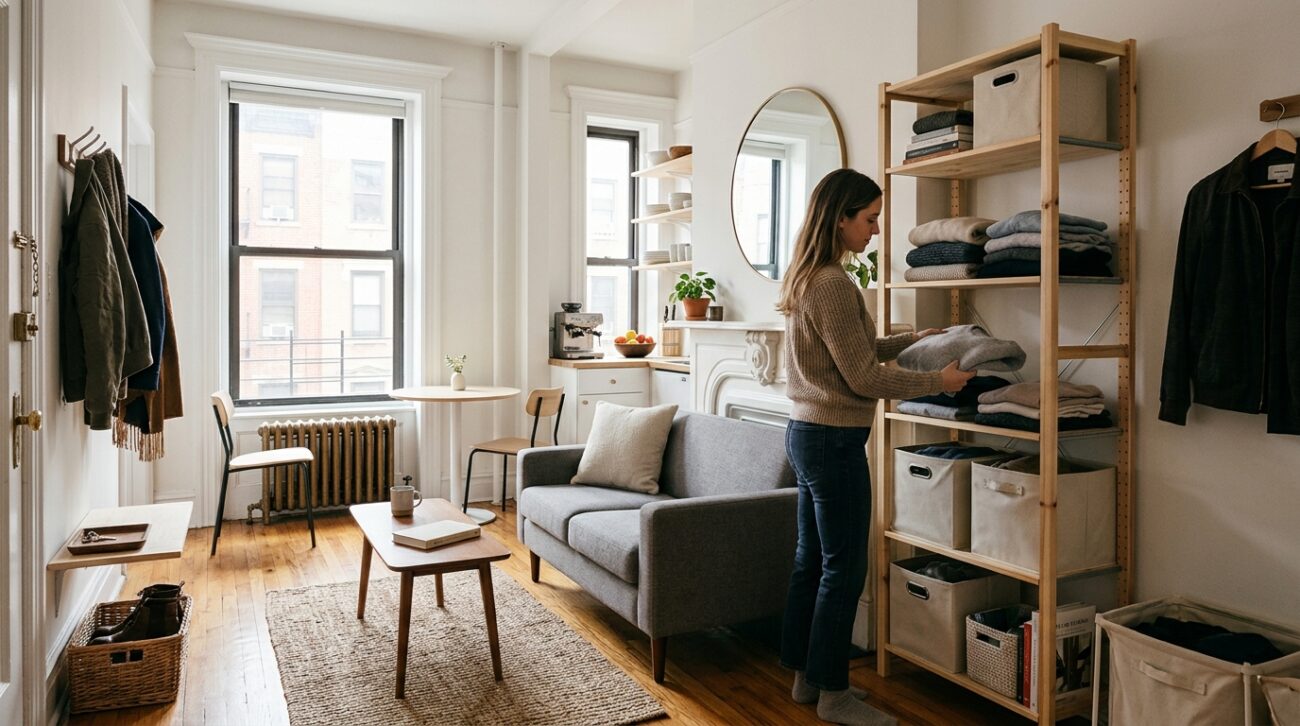
Clear everything out and bring back only what you use daily. Set up hooks for coats and bags, a small tray or bowl for keys, and a spot for shoes. Deal with mail right away. Recycle catalogs and junk mail at the door rather than bringing them further into the apartment. Opting out of catalogs and junk mail through the senders or opt-out services reduces how much comes in to begin with.
The kitchen
Kitchens collect clutter faster than any other room.
Gadgets and appliances. That spiralizer, bread maker or single-purpose tool you used twice can go. Keep what you use regularly.
Mugs and glasses. Most kitchens have far more mugs than anyone uses. Keep enough for daily use and a few guests.
Takeout containers. Keep a handful for leftovers. The rest can be recycled.
Plastic bags. Keep a small, manageable number for trash or errands, and recycle the rest where accepted.
The junk drawer. Every NYC kitchen seems to have one full of soy sauce packets, chopsticks, plastic cutlery, takeout menus and dead batteries. Empty it out, keep a few essentials and let the rest go.
Pantry. Check expiration dates, consolidate duplicates and toss anything stale.
Counters. Keep only the appliances you use daily out on the counter. Everything else can live in a cabinet.
The bathroom
Go through medicine cabinets, drawers and under the sink.
- Throw out expired medications safely. Many pharmacies offer take-back programs.
- Toss old makeup, which can harbor bacteria over time.
- Let go of hotel toiletries you’ll never use, products you tried once and didn’t like, and duplicates.
- Keep counters as clear as possible for easier cleaning.
The bedroom and closet
Clothes. Go through your wardrobe item by item. If it doesn’t fit, you don’t like it, or you haven’t worn it in a year, it can go. Using matching hangers frees up surprising amounts of space and makes closets easier to manage.
Under the bed. Pull everything out. Keep what you need, and store it in lidded bins to keep dust out. Leave some space under the bed if you can, since it makes vacuuming much easier.
Nightstands and dressers. Clear the surfaces. Keep only what you use every day within reach.
The living room
Books and media. Keep the books you love or will reread. Donate the rest. DVDs, CDs and old electronics you no longer use can go too.
Decor. Keep the pieces you truly love, and let the rest go. Fewer decorative objects make a small room look larger and make dusting much faster.
Cables and electronics. Old chargers, cables for devices you no longer own and outdated electronics tend to pile up. Keep what you use, and recycle the rest properly.
Paperwork
Paper clutter builds quietly. Sort it into three categories: documents to keep, such as your lease, tax records and important personal documents; things to act on, such as bills and forms; and things to recycle or shred. Scan documents you need to keep but rarely look at, and switch to paperless statements wherever you can.
Storage units
Many New Yorkers rent storage units for things that don’t fit in their apartments. If you have one, add up what you’ve paid for it over the years, and compare it to the value of what’s inside. Sometimes the answer is obvious.
Getting Things Out of Your NYC Apartment
This is where decluttering in New York gets specific. You don’t have a garage for a yard sale or a truck for a dump run. You need a plan for each type of item.
Donate. Thrift stores and charities throughout the city accept clothing, housewares, books and furniture. Some offer pickup for larger items, which is a big help if you don’t have a car. Call ahead or check online, since many have rules about what they accept.
Sell. Online marketplaces work well for furniture, electronics and designer clothing. Consignment shops are an option for higher-end items. Be realistic about prices, since the goal is to get items out of your apartment.
Give it away. Local “buy nothing” groups and neighborhood swap groups are popular in NYC. Neighbors come to you, and items find a new home quickly.
The stoop. New Yorkers have a long tradition of leaving usable items on the stoop or curb with a “free” sign. If you do this, leave only clean, usable items, and bring in anything that hasn’t been taken if it starts to rain or by the end of the day. Skip upholstered furniture and mattresses, which nobody wants to take home in a city that knows about bedbugs. Check your building’s rules too.
Recycle correctly. Follow the city’s recycling rules for paper, cardboard, metal, glass and plastic. Break down boxes before putting them out.
Bulky items. Large items like furniture have their own rules for curbside pickup. The city requires mattresses and box springs to be sealed in a plastic bag before they go out, and some bulky items require you to schedule a pickup. Check the Department of Sanitation’s website for current rules before putting anything large on the curb.
Electronics. New York State bans many electronics, including computers and TVs, from regular trash. Many retailers and manufacturers offer take-back programs, and the city holds electronics recycling and drop-off events.
Textiles. Clothing and fabric that’s too worn to donate can often be dropped off at textile recycling collection points instead of going in the trash.
Hazardous items. Old paint, batteries, cleaning products and similar items shouldn’t go in regular trash. The city holds special disposal events for these items.
The key is to get items out of your apartment as quickly as possible after you’ve decided to let them go. The longer they sit, the more likely they are to drift back into your life.
Smart Storage for Small Spaces
Once you’ve decluttered, you’ll have a clearer idea of what you need to store. Then it makes sense to think about storage.
Go vertical. Shelves, wall hooks and tall, narrow storage make use of wall space without taking up floor space.
Use the backs of doors. Over-the-door organizers work well for shoes, cleaning supplies, accessories and pantry items.
Use under-bed space wisely. Lidded bins keep stored items dust-free, and bed risers can create extra room.
Choose furniture that does double duty. Ottomans with storage, beds with drawers and benches with space inside make the most of small apartments.
Contain small items. Drawer dividers and small bins keep items organized and prevent drawers from becoming junk drawers.
Leave some empty space. Filling every shelf and drawer to capacity makes it hard to keep things organized. A little empty space makes everything easier to find and put away.
Keeping Clutter From Coming Back
Decluttering once is a project. Staying clutter-free is a set of habits.
One in, one out. When you bring something new home, let go of something similar. New sweater in, old sweater out.
Do a daily reset. Spend 10 minutes each evening putting things back where they belong. It prevents small messes from turning into big ones.
Deal with mail immediately. Open it at the door, recycle junk right away and put anything important in a designated spot.
Break down packages right away. Online orders bring a steady stream of boxes and packaging. Break them down and recycle them the same day, before they become a pile in the corner.
Think before you buy. Before buying something, ask where it will live in your apartment. If you don’t have an answer, reconsider.
Declutter seasonally. A quick review each season, when you swap your wardrobe or prepare for the holidays, keeps things manageable.
Declutter First, Then Clean
Decluttering and cleaning go hand in hand. Clear surfaces are faster and easier to clean, and clean spaces are easier to keep uncluttered.
If you’re planning a deep clean, declutter first. It’s much easier to clean every surface thoroughly when there isn’t a pile of stuff in the way. The same goes for professional cleaning. Cleaners can clean surfaces, but they can’t decide which of your papers to keep or where your things should go. A decluttered apartment means every minute of a cleaning visit goes toward cleaning. Many people pair a big decluttering weekend with a professional deep cleaning immediately afterward, for a complete reset.
When It Feels Overwhelming
Sometimes clutter builds up to the point where it feels impossible to know where to start. That’s more common than people think, and it’s nothing to be embarrassed about.
Start with 10 minutes. Set a timer and clear one small area. When the timer goes off, you can stop. Often, getting started is the hardest part.
Ask for help. A friend or family member can help you make decisions and keep you moving. Professional organizers can also help, especially for big projects or major life changes like moving or combining households.
Be kind to yourself. Clutter often builds up during busy or difficult periods of life. The goal is progress, not perfection.
If clutter feels connected to deeper stress or makes it hard to use parts of your home, talking to a professional can help. Many people find that working through the emotional side of their belongings makes decluttering much easier.
Living Better in Less Space
A small New York apartment will never have as much storage as a suburban house. But with less clutter, it can feel larger, calmer and easier to maintain. You’ll spend less time cleaning, less time searching for things and less money moving boxes you never open.
The goal isn’t an empty apartment. It’s an apartment filled with things you use, need and love, with enough space left over to actually live in it.
Not Sure What You Need?
Tell us about your space — we'll recommend the right service and give you a free, no-obligation quote.
Get a Free Consultation