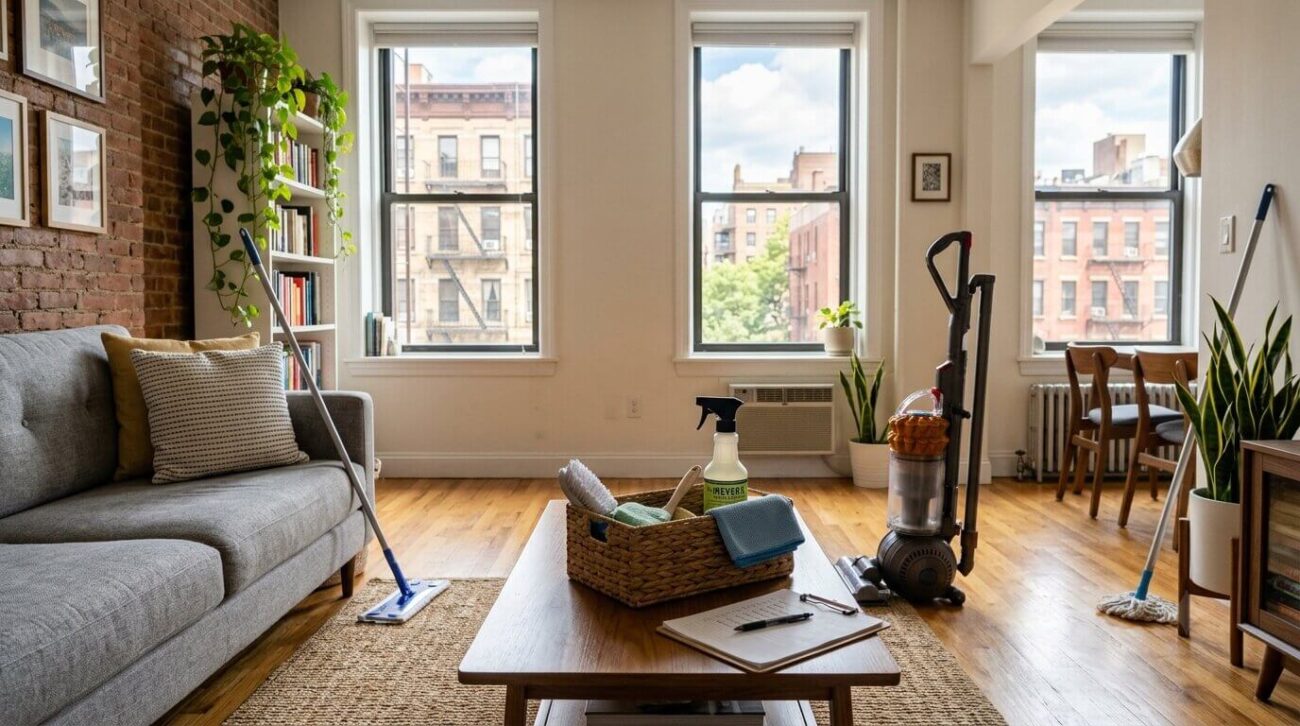
A 450-square-foot studio in Astoria and a three-bedroom in a Brooklyn brownstone have almost nothing in common — except that both will look like a disaster zone within four days of skipping the basics. Small-space living has a way of amplifying mess. One dish left in the sink of a galley kitchen reads as clutter. One dish left in the sink of a suburban kitchen with an island barely registers.
That’s the real starting point for cleaning an NYC apartment: it’s not about square footage, it’s about how fast a small system falls apart when nobody’s tending to it. This checklist is built around that reality — a realistic daily, weekly, and monthly rhythm that keeps a compact space livable without turning your weekend into a cleaning marathon.
Why NYC Apartments Play by Different Rules
Every city apartment deals with a version of the same problems. Storage is limited, so clutter has nowhere to hide and ends up on every visible surface instead. Street dust and soot work their way in through windows and hallway air, settling on sills and surfaces faster than in a house set back from traffic. Walk-up buildings and shared hallways track in more grime per square foot than a private driveway ever will. And if you’re sharing a building laundry room, sharing a kitchen with roommates, or living with a dog that spends half its day on city sidewalks, your cleaning load looks nothing like a suburban single-family home’s.
None of this means your apartment needs to be spotless around the clock. It means the tasks that matter — the ones that actually prevent odors, pests, and grime buildup — need to happen on a rhythm, not whenever the mess finally becomes impossible to ignore.
What Actually Separates Apartment Cleaning from House Cleaning
The difference isn’t the cleaning tasks themselves — a counter is a counter, a toilet is a toilet. It’s the margin for error. In a house, a cluttered corner stays a cluttered corner. In a 500-square-foot one-bedroom, that same clutter spreads into the walkway, onto the counter, and eventually into the “I’ll deal with it later” pile that swallows the coffee table.
That’s why an apartment checklist has to include reset habits alongside cleaning tasks — dishes, laundry, trash, and a quick clutter sweep — not because they’re technically “cleaning,” but because skipping them is what makes an apartment feel messy even when the actual dirt level is low.
Daily Checklist: The Five-Minute Habits That Prevent Everything Else
Daily tasks aren’t about deep cleaning — they’re about stopping small messes from compounding into a weekend project.
- Make the bed and clear surfaces in the bedroom
- Wash dishes or load the dishwasher, then wipe down the sink
- Wipe kitchen counters and the stovetop after cooking
- Take out food trash before it sits overnight — especially in summer
- Quick wipe of the bathroom sink, faucet, and counter
- Spot-sweep or vacuum entryway and high-traffic paths
None of this takes more than ten minutes total, and the payoff is disproportionate. An apartment where dishes get done daily and trash doesn’t linger will feel clean even on a week when nothing else gets touched. That’s the whole strategy: control the few things that compound fastest, and everything else becomes optional maintenance instead of an emergency.
Weekly Checklist: Where the Actual Cleaning Happens
Weekly cleaning is where dust, buildup, and high-touch grime actually get addressed. This is the pass that keeps the apartment from sliding from “lived-in” to “overdue.”
Whole apartment:
- Dust reachable surfaces — shelves, tables, window sills
- Wipe high-touch points: light switches, door handles, cabinet pulls
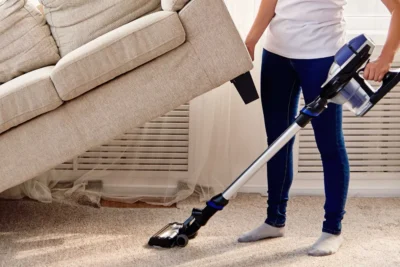
- Vacuum rugs and carpeted areas, including edges
- Mop hard flooring, especially kitchen and bathroom
- Empty all trash bins and replace liners
Kitchen:
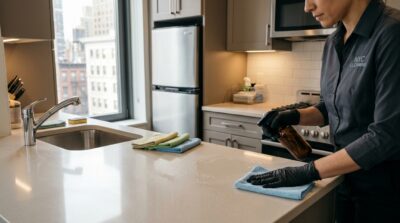
- Clean and sanitize counters and backsplash
- Wipe down appliance exteriors — fridge handle, microwave keypad, stove knobs
- Scrub the sink and faucet, including around the base
- Spot-clean cabinet fronts for fingerprints and cooking grease
- Sweep and mop the floor, corners included
Bathroom:
- Clean and disinfect the toilet, bowl and exterior
- Clean the sink, counter, and mirror
- Clean shower or tub surfaces, focusing on soap scum
- Wipe the door handle and light switch
- Sweep and mop, including behind the toilet if the layout allows
Bedroom and living areas:
- Change sheets and pillowcases
- Dust nightstands, dressers, and media surfaces
- Vacuum under the bed where reachable
- Reset clutter — mail, shoes, bags back to their designated spot
Monthly Checklist: The Detail Work Everyone Skips
These are the tasks that don’t show up on a quick visual scan but quietly make an apartment feel stale if they’re ignored long enough.
- Clean baseboards and door frames, especially near the entryway
- Wipe window tracks and clean interior glass
- Dust vents and the bathroom fan cover, if reachable
- Clean behind and under small kitchen appliances
- Wipe the trash can, inside and out
- Detail shower grout lines and corners
- Vacuum couch cushions, including underneath
- Check entryway corners and wall edges for buildup that’s easy to miss at eye level
The Spots Almost Everyone Forgets
Every apartment has a handful of zones that stay invisible until someone finally looks closely — usually a landlord doing a walkthrough, or a guest who leans against the wrong wall.
- The top of the fridge and cabinet tops, where dust and kitchen grease collect together
- Bathroom fan covers, which trap dust and can make a bathroom smell musty even when it looks clean
- Light switches and door handles — high-touch, almost never disinfected
- Window sills and tracks, where city dust and pollen settle fastest
- Under the bed and behind the couch, the two default hiding spots for dust and stray items in any apartment under 800 square feet
Apartment Cleaning vs. Deep Cleaning
Routine cleaning and a deep clean solve different problems, and mixing them up is how people end up disappointed with a “cleaning” that didn’t touch the grout. Apartment cleaning is upkeep — the weekly and monthly rhythm above, done consistently. Deep cleaning is a reset, aimed specifically at buildup that routine cleaning doesn’t reach: baseboards, grout lines, soap scum that’s been there a while, grease that’s worked its way into cabinet crevices.
| Apartment Cleaning | Deep Cleaning | |
| Purpose | Ongoing upkeep | Reset and remove buildup |
| Best for | Weekly or monthly maintenance | First clean, seasonal reset, neglected areas |
| Detail level | Moderate | High |
| Typical focus | Surfaces, kitchen, bathroom, floors | Baseboards, grout, soap scum, buildup zones |
| Time required | Shorter | Longer |
If it’s been a while since your last real deep clean, or you’re noticing grime in corners and grout that a quick wipe won’t move, that’s the signal to book a deep clean first — then settle into a maintenance schedule instead of trying to catch up with a weekly routine that isn’t built for restoration work.
Room-by-Room, for Anyone Who Thinks in Spaces Instead of Schedules
Entryway: Shake out or vacuum the mat, wipe the door and handle, sweep grit tracked in from the hallway, spot-check walls for scuffs from bikes, strollers, or moving day near-misses.
Kitchen: Counters, backsplash, sink, faucet, appliance exteriors, stovetop, floor, trash and recycling out.
Bathroom: Toilet, sink, counter, mirror, shower or tub, high-touch points, floor.
Bedroom: Dust reachable surfaces, change sheets, vacuum floors and rugs, empty trash if present.
Living room: Dust tables, shelves, and media stands, vacuum rugs and edges, mop hard flooring, reset the clutter zones — the mail pile, the shoes by the door, the bag that’s been on the chair since Tuesday.
What’s Different in a Studio, a Walk-Up, and a Prewar Layout
A studio apartment concentrates everything into one room, which means kitchen grease, bathroom moisture, and living-space dust all interact in the same air — a reason studios tend to need slightly more frequent dusting and airing out than a comparable square footage split across separate rooms. Keeping the kitchen and sleeping area visually and functionally separate, even with just a rug or shelf as a divider, makes a real difference in how fast the whole space feels cluttered.
Walk-up buildings without elevators mean more effort to haul trash, laundry, and cleaning supplies, which is exactly why the daily habits matter more here than the weekly deep-clean sessions — a five-flight walk-up apartment is not where you want to be doing a supply run mid-clean because you forgot the mop is still in the basement storage unit.
Prewar apartments bring their own quirks: older tile and grout that stains more easily, radiator covers that collect dust in ways modern HVAC vents don’t, and windows original to the building that need more careful handling than a newer double-pane unit. None of this changes the checklist fundamentally, but it does mean allowing a little extra time for grout and window sills in older buildings specifically.
Cleaning Around Pets in a Small Space
A dog or cat changes the math on apartment cleaning more than almost any other variable. Fur accumulates fastest along baseboards and under furniture — exactly the spots already easy to overlook — so a pet household benefits from adding a quick daily floor pass in high-shed areas rather than waiting for the weekly vacuum. Litter boxes need daily scooping regardless of how often the rest of the bathroom gets attention, and food and water bowls should get a rinse daily and a real wash a few times a week, since residue builds up faster than most people expect in a bowl that’s refilled without ever being emptied first.
Dogs walked on NYC sidewalks also track in more than the average paw print — road salt in winter, general grime year-round — which means a wipe-down of paws at the door isn’t just a nice habit, it’s the difference between a clean entryway and one that needs mopping twice as often.
Adjusting the Checklist by Season
NYC weather changes what an apartment actually needs on a week-to-week basis, and a checklist that ignores this ends up either overcleaning in the easy months or falling behind in the hard ones.
Winter brings salt and slush tracked in from the street, which means entryway floors need more frequent mopping than the rest of the apartment, and mats or rugs near the door should get shaken out or vacuumed more often than the monthly schedule calls for. Dry heat from radiators also means dust circulates more visibly — a sign to bump up surface dusting slightly during the coldest months.
Spring allergy season adds pollen to the usual street dust coming through windows, so window sills and tracks deserve a bit more attention than they’d otherwise get on the monthly list, especially in apartments with windows that stay open for ventilation.
Summer humidity affects the bathroom most — mildew and soap scum develop faster in a humid, poorly ventilated bathroom, which is reason enough to run the exhaust fan during and after every shower and to check shower surfaces slightly more often than the weekly default.
Fall doesn’t bring a dramatic shift, but it’s a reasonable checkpoint to do a light version of the deep-clean tasks before winter settles in — vents, baseboards, window tracks — so the apartment starts the heavier indoor season already caught up rather than behind.
Splitting the Load With Roommates
Shared apartments add a coordination problem that solo living doesn’t have — the checklist works the same, but who’s responsible for what needs to be explicit, not assumed. A rotating schedule for shared spaces (kitchen, bathroom, living room) tends to hold up better than a vague “we’ll all just pitch in” arrangement, which almost always drifts toward whoever has the lowest tolerance for mess doing the most work.
Splitting by task rather than by day often works better in practice — one roommate consistently handling kitchen counters and dishes, another handling the bathroom, rather than a weekly rotation that requires everyone to remember whose week it is. Daily habits (dishes, trash, quick wipes) are easiest to hold everyone accountable for individually, since they’re tied to whoever made the mess. Weekly and monthly deep-clean tasks are where an explicit split matters most, since those are the tasks that silently don’t happen when everyone assumes someone else has it covered.
Keeping Supplies Where You’ll Actually Use Them
A cleaning routine survives or collapses based on how much friction it takes to start. Supplies stored in a hallway closet three rooms away from the kitchen make even a five-minute daily wipe-down feel like more effort than it’s worth. Keeping a small caddy of essentials — all-purpose cleaner, a microfiber cloth, disinfecting wipes — under the kitchen sink and a second small set in the bathroom removes the single biggest reason daily habits get skipped: the supplies weren’t within arm’s reach when the moment to use them showed up.
When a Checklist Isn’t Enough
A solid routine handles day-to-day upkeep, but there are moments where a checklist alone won’t get the apartment where it needs to be:
- Moving in or moving out, when the space needs a full reset regardless of who lived there before
- After a stretch of guests, travel, or a schedule that made even the daily basics slip
- When soap scum or grout discoloration keeps returning no matter how often it’s wiped down
- When kitchen grease has worked its way into cabinet fronts and backsplash grout
- When dust reappears within days of cleaning and the apartment feels stale despite regular upkeep
None of these are failures of the checklist — they’re just outside what routine maintenance is designed to fix. Recognizing the difference is what keeps a small apartment consistently livable instead of cycling between “fine” and “overwhelming” every few months.
Making the Routine Actually Stick
The checklist above only works if it survives contact with an actual week — deadlines, plans, the days where getting home and doing anything beyond dishes feels like a stretch. A few things make it more durable in practice: keeping cleaning supplies somewhere genuinely accessible instead of buried in a closet, splitting weekly tasks across a few short sessions instead of saving them all for one weekend block, and treating the daily list as non-negotiable while treating the weekly and monthly lists as flexible, movable, and forgivable if a week gets away from you.
An apartment doesn’t need to be spotless to feel good to come home to. It needs the handful of habits that keep small messes from turning into a full afternoon of catch-up — and a realistic sense of which tasks can wait a few extra days without anything actually going wrong.
Get Your Custom Cleaning Quote — Free
Every NYC apartment is different. Get pricing tailored to your space in minutes.
Get My Free Quote