“Can you also clean inside my oven while you’re here?” is one of the most common questions a cleaning company hears mid-visit — and also one of the clearest signs that “standard cleaning” means something different to the person asking than it does to the company doing the work. It’s not anyone’s fault. The term gets used loosely across the industry, and most people book their first cleaning with only a rough idea of what falls inside the scope versus what counts as an add-on.
Getting this clear upfront saves everyone a mid-appointment negotiation. Here’s what a standard house cleaning actually covers, what it typically leaves out, and how to know when your home needs something more than routine maintenance.
Standard Cleaning, Defined
Standard cleaning — sometimes called basic or routine cleaning — is built around consistency, not intensity. It covers the surfaces and areas that get used the most and matter most for day-to-day hygiene: kitchens, bathrooms, floors, and the general dusting and tidying that keeps a home from sliding into disorder. It’s designed to run on a repeating schedule — weekly, biweekly, or monthly — so the same categories of tasks happen every visit, and dirt never gets the chance to become buildup.
The value isn’t in how deep any single visit goes. It’s in the consistency of a recurring visit doing the same core tasks reliably, so a home stays at a steady baseline instead of drifting toward a deep-clean-level mess between visits.
What a Standard Cleaning Actually Includes
Throughout the Home
- Dusting reachable surfaces — tables, shelves, décor, window sills
- Wiping high-touch points like door handles and light switches
- Vacuuming carpets and rugs
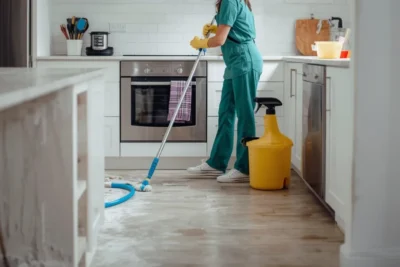
- Sweeping and mopping hard flooring
- Emptying trash and replacing liners
Kitchen
- Wiping countertops and backsplash
- Cleaning the sink and faucet
- Wiping down appliance exteriors — refrigerator, stove, dishwasher, microwave
- Spot-cleaning cabinet fronts for fingerprints
- Sweeping and mopping the floor
Bathrooms
- Cleaning and disinfecting the toilet, bowl and exterior
- Cleaning the sink, faucet, and counter
- Cleaning mirrors
- Cleaning shower and tub surfaces, to a light or moderate degree depending on existing buildup
- Sweeping and mopping the floor
Bedrooms
- Dusting reachable surfaces — nightstands, dressers
- Light tidying, if agreed on in advance
- Vacuuming floors and rugs
- Emptying trash if present
Living Areas and Common Spaces
- Dusting tables, shelves, and media stands
- Light tidying and reset
- Vacuuming and mopping floors
Hallways and Entryways
- Quick dusting of reachable surfaces
- Vacuuming or mopping floors
- Spot-wiping touchpoints as needed
What Standard Cleaning Doesn’t Cover
This is the list that actually prevents the mid-visit surprise. Standard cleaning generally does not include:
- The inside of the oven
- The inside of the refrigerator
- Inside cabinets and drawers
- Heavy grout restoration or severe soap scum removal
- Washing walls
- Carpet shampooing or extraction
- Post-construction or post-renovation dust removal
- Organizing closets or storage areas
- Cleaning inside a fireplace or chimney surround
- Exterior window washing
None of these are excluded because they’re unimportant — they’re excluded because they take meaningfully more time, sometimes different equipment, and don’t need to happen on every visit the way wiping a counter does. Most companies offer them as add-ons precisely because bundling them into every standard visit would make the recurring rate impractical for anyone who doesn’t need the oven cleaned monthly.
Standard Cleaning vs. Deep Cleaning
The difference comes down to maintenance versus reset. Standard cleaning keeps a home that’s already in reasonable shape from sliding backward. Deep cleaning is what actually restores a home that’s fallen behind — targeting the buildup and detail areas that routine visits are never scoped to reach.
| Standard Cleaning | Deep Cleaning | |
| Purpose | Ongoing maintenance | Reset and remove buildup |
| Best for | Recurring weekly, biweekly, or monthly service | First-time clean, seasonal reset, neglected areas |
| Detail level | Moderate | High |
| Typical focus | Surfaces, kitchen, bathroom, floors | Baseboards, grout, soap scum, buildup zones |
| Time required | Shorter | Longer |
A useful pattern for most NYC households: start with one deep clean to bring the home to a genuinely clean baseline, then move to standard cleaning on a recurring schedule to maintain it. Trying to skip the deep clean and go straight into standard maintenance on a home that’s been neglected for months usually leaves both sides frustrated — the client feels like corners were cut, and the cleaner was never scoped or paid for the level of work the home actually needed.
Why the Scope Matters More Than It Seems
A clearly defined scope isn’t bureaucratic box-checking — it’s what makes a recurring cleaning relationship actually work long-term. When both sides know exactly what a standard visit covers, there’s no ambiguity about whether “clean the kitchen” includes wiping down the inside of the microwave, and no awkward moment where a client expects a task that was never part of the agreed service.
This is also where a lot of first-time bookings go sideways. Someone books “a cleaning,” pictures the deepest clean their home has had in years, and is disappointed when the visit — correctly, per the standard scope — didn’t touch the grout lines behind the shower fixtures. The fix isn’t more effort on the cleaner’s part. It’s a clearer conversation up front about what “standard” actually means for that specific company, since the term isn’t standardized across the industry the way the name implies.
How NYC Homes Complicate the Standard Scope
New York housing stock adds its own wrinkles to what “standard” realistically covers. A prewar apartment with original tile and grout wears differently than a newly renovated condo, and what counts as “light” soap scum removal in a newer bathroom might already be a deep-clean-level job in a bathroom that’s decades old and hasn’t been professionally maintained in a while.
Multi-floor townhouses and brownstones add scope questions of their own — does “standard cleaning” cover every floor equally, or does a client need to specify which floors get full attention on a given visit versus a lighter pass? Homes with a finished basement, a home office, or a converted attic space often fall into a gray zone that’s worth clarifying before the first visit, since these rooms don’t always fit neatly into the standard bedroom/bathroom/kitchen categories a scope is usually built around.
Older buildings with radiators instead of central HVAC also change what “dusting reachable surfaces” practically involves — radiator covers and window units collect dust differently than a modern vent, and it’s worth confirming whether they’re included in the standard dusting pass or treated as a detail task reserved for deep cleaning.
Setting Yourself Up for a Smooth First Visit
A few habits make the difference between a standard cleaning that meets expectations and one that leaves you wondering what you actually paid for:
Get the scope in writing before the first visit. A verbal “we’ll clean everything” is not a scope. Ask specifically what’s included in a standard visit and what counts as an add-on, and don’t be shy about asking for edge cases — do they wipe inside kitchen cabinets, do they move furniture to vacuum underneath, is the inside of the microwave standard or extra.
Do a light pre-clean pass yourself. Standard cleaning assumes a baseline level of tidiness — dishes not overflowing the sink, laundry not covering the floor. A cleaner’s time is scoped around cleaning, not organizing clutter out of the way first, so a quick five-minute tidy before they arrive means more of the visit goes toward actual cleaning.
Flag priority areas explicitly. If the bathroom grout has been bothering you for months, or a specific spot in the kitchen needs extra attention, say so before the visit rather than assuming it’s automatically covered. Standard scope is a baseline, not a mind-reading exercise.
Ask how add-ons are priced before you need one. Knowing in advance that “inside the oven” or “inside the fridge” is a flat add-on rate, rather than discovering it mid-visit, makes it much easier to say yes on the spot instead of scheduling a second trip.
Revisit the scope periodically. A standard cleaning agreement made when you first booked doesn’t automatically stay relevant forever — a home with a new pet, a new baby, or simply more years of wear may need a different standard scope than it did at the start, and it’s worth checking in on that every so often rather than assuming nothing’s changed.
How Frequency Changes What “Standard” Actually Looks Like
The scope of a standard cleaning doesn’t stay identical regardless of how often it happens — a weekly visit and a monthly visit are both “standard cleaning,” but the starting condition of the home is different each time, which changes how much a cleaner can realistically accomplish within the same scope.
A weekly visit is maintaining a home that was cleaned recently, so the same standard tasks go faster and cover more ground within the visit. A monthly visit is working against four weeks of accumulated dust, buildup, and general wear, which means the same nominal scope — dusting, wiping, floors — takes longer to execute properly and leaves less room for anything beyond the core list. This is worth knowing before assuming a monthly standard cleaning will feel identical in thoroughness to a weekly one; the tasks are the same, but the starting point isn’t, and that changes what “done” looks like at the end of the visit.
For homes on a biweekly or monthly schedule specifically, it’s worth having an honest conversation with the cleaning company about whether the standard scope realistically covers everything given the accumulation between visits, or whether certain tasks — a more thorough floor clean, extra bathroom attention — should be treated as semi-regular add-ons rather than assumed as part of the baseline.
How Pricing Usually Reflects Scope
Pricing for standard cleaning is typically structured around square footage, number of bedrooms and bathrooms, and frequency — a home on a weekly schedule generally costs less per visit than the same home cleaned monthly, since less time is needed to maintain an already-clean space. Add-ons (inside the oven, inside the fridge, interior windows, organizing) are priced separately precisely because they fall outside the recurring scope and take meaningfully more time per visit.
Understanding this pricing logic upfront helps make sense of quotes that otherwise look confusing side by side — a lower quote isn’t necessarily a better deal if it’s scoped to less frequent service or a narrower task list, and a higher one isn’t automatically excessive if it includes add-ons bundled in that would otherwise cost extra elsewhere. Comparing quotes on scope and frequency, not just the bottom-line number, is the only way to actually compare apples to apples.
Common Misunderstandings Worth Clearing Up Early
A few specific points cause more confusion than anything else on a standard cleaning scope, and they’re worth asking about directly rather than assuming either way:
“Wiping appliance exteriors” is not the same as “cleaning inside the appliance.” A standard visit wipes the outside of the fridge, oven, and dishwasher. What’s happening inside those appliances is almost always a separate task, whether that’s framed as an add-on or reserved for a deep clean.
“Vacuuming” doesn’t automatically mean moving furniture. Standard cleaning covers reachable, visible floor space. Moving a couch or bed frame to vacuum underneath is often treated as a deep-clean or add-on task, not a given part of a standard pass — worth confirming if under-furniture buildup is a specific concern.
“Tidying” and “organizing” are different services. A light tidy — putting stray items back roughly where they belong — is sometimes included in standard cleaning. Actually organizing a closet, a pantry, or a junk drawer is a different service entirely, usually priced and scheduled separately.
A “quick dust” is not the same as detail dusting. Standard cleaning dusts reachable, visible surfaces efficiently. Getting into every decorative object, picture frame edge, and blind slat individually is detail-level work that belongs to a deep clean, not a recurring maintenance visit.
Clearing up these specific points before the first visit — not after a disappointing one — is what actually prevents the “I thought this was included” conversation from happening at all.
When It’s Time to Upgrade From Standard to Something More
A standard cleaning schedule works well right up until a home’s actual condition outpaces what routine maintenance is scoped to handle. A few signs that a deep clean — or a permanent adjustment to the standard scope — is overdue:
- Grout lines have visibly darkened and don’t respond to routine wiping
- Kitchen cabinet fronts have a layer of grease that a quick spot-clean doesn’t remove
- It’s been over a year since the inside of the oven or refrigerator has been properly cleaned
- Dust reappears within days of a standard visit, suggesting vents or less-visible areas need attention
- You’re preparing for a move, a lease walkthrough, or hosting a major event and want the home at its absolute best, not just its usual maintained state
None of these mean the standard cleaning has failed — they simply mean the home has reached a point where routine maintenance and a genuine reset are solving two different problems, and it’s worth booking the right one for what’s actually needed rather than stretching a standard visit past its intended scope.
The Real Value of Knowing the Difference
Once the scope is clear, a standard cleaning stops being a source of mid-visit renegotiation and starts being exactly what it’s meant to be: a predictable, recurring service that keeps a home at a consistent baseline without either side guessing at what’s included. The homes that get the most out of a standard cleaning relationship are the ones where both sides — client and cleaner — are working from the same list, with deep cleaning booked separately and intentionally whenever the home actually needs a reset rather than routine upkeep.
The best version of this relationship isn’t complicated. It’s a written scope both sides agree on, a schedule that matches how the home actually gets used, and an honest check-in every few months to make sure the standard definition still fits. Get those three things right, and “what’s included” stops being a question you have to ask every time the cleaner shows up — it just becomes the baseline everyone already understands.