Spring cleaning gets all the attention. It has the better branding, the open windows, the sense of a fresh start. But in New York, the cleaning that arguably matters more happens at the other end of the year, in the few weeks before the apartment gets sealed up for winter.
Once October arrives, the rhythm of city life changes. Windows close. The heat comes on, often with a clank and a hiss. Boots, coats, umbrellas and road salt start coming through the door. The holidays bring guests, cooking and a lot more time spent indoors. For the next five or six months, your apartment becomes a closed box, and whatever is in the air, on the floors and in the vents is what you’ll be living with until April.
This guide covers how to prepare your apartment for the cold months, how to keep it in good shape once winter arrives, and the NYC-specific details that most seasonal checklists leave out.
Why Fall Cleaning Matters in NYC
A few things make the fall transition especially important in city apartments.
Heat season changes the air. In New York City, the official heat season runs from October 1 through May 31. During those months, landlords are required to keep apartments at minimum temperatures, and many buildings run the heat hard. Steam and hot-water heat dry out the air, stir up dust and bake anything sitting on or near heating units.
Windows stay shut. Once it’s cold, most people stop opening windows. Dust, cooking odors and humidity from showers have nowhere to go. Whatever you bring into the apartment tends to stay there.
The outside comes in. Rain, slush, mud and road salt get tracked in on boots and umbrellas every day. Entryways and floors take the hardest hit.
Pests look for shelter. As temperatures drop, mice and other pests start looking for warm places with food. Older buildings with gaps around pipes and walls make that easier.
You’re home more. Shorter days, cold weather and the holidays mean more time indoors, more cooking and more wear on every part of the apartment.
Cleaning in the fall is about getting ahead of all of this. The work you do in September and October makes the whole winter easier.
Start With the Air: Heating, Cooling and Ventilation
The biggest seasonal change in your apartment is the switch from cooling to heating. Getting the equipment ready is the first step.
Clean and store your window air conditioner
If you have a window AC unit, fall is the time to deal with it. Before it goes into storage, or gets covered for the winter, clean it properly:
- Unplug it, remove the front panel and wash the filter in warm soapy water. Let it dry completely.
- Vacuum the fins on the front and back gently with a brush attachment, being careful not to bend them.
- Wipe down the exterior and the front grille.
- Check for any signs of mold inside the unit. If you see it, don’t store the unit without dealing with it, because it will be worse in the spring.
If you’re removing the unit, store it upright in a dry place, ideally covered to keep dust out. If it stays in the window, use an interior cover to block drafts and an exterior cover if your building allows it. Uncovered AC units are one of the biggest sources of cold drafts and outside dust in NYC apartments over the winter.
Some buildings have rules about removing window units in the winter or about how they must be installed. Check with your building before deciding.
Clean through-wall units and vents
Many newer NYC buildings use through-the-wall heating and cooling units, often called PTACs, or central systems with vents in each room. Before heat season, clean or replace the filters according to the manufacturer’s instructions. Dirty filters reduce efficiency and blow dust around the apartment all winter.
Remove vent covers if they come off easily, wash them in warm soapy water, and vacuum as far inside the ducts as you can reach.
Give radiators a quick pre-season clean
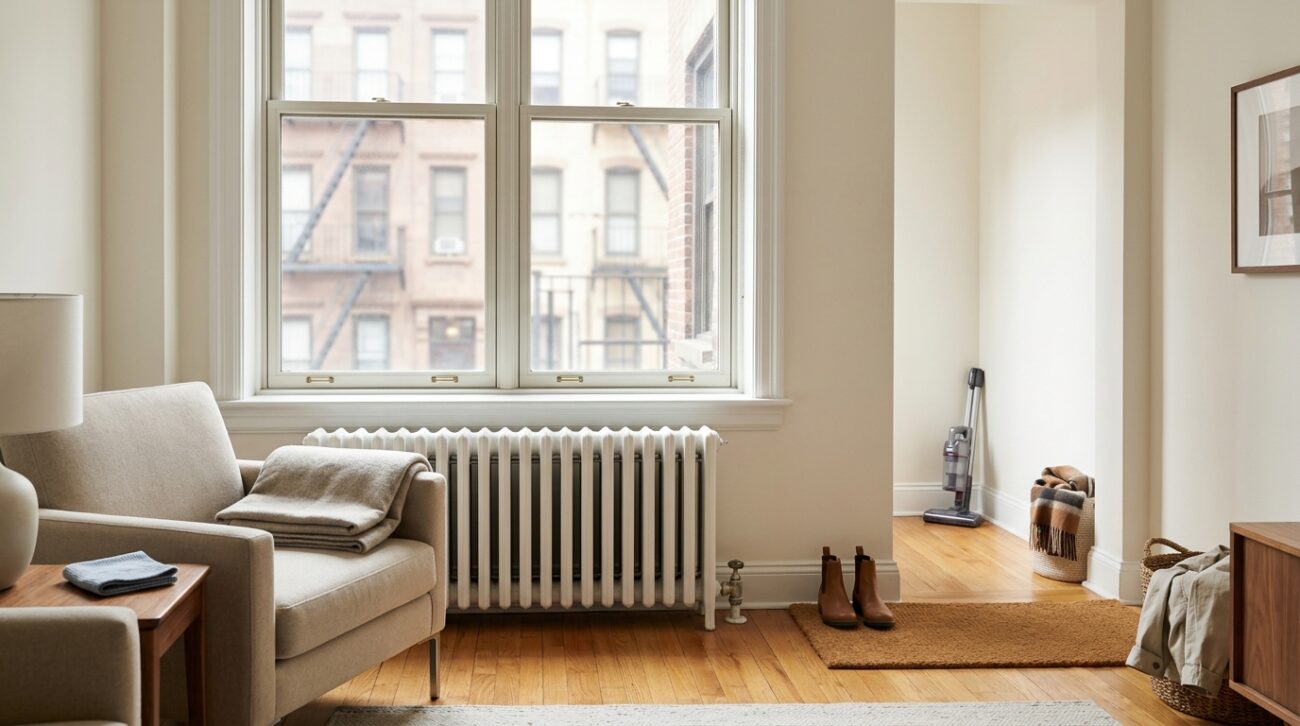
If your apartment has radiators, give them a thorough vacuum before the heat comes on for the first time. Dust that sits on a hot radiator all winter bakes on and circulates through the room, and it’s much easier to remove before the season starts than halfway through it. Clear anything stored on top of or right next to the radiators, both for safety and so heat can circulate freely.
Check smoke and carbon monoxide detectors
Heat season is the right time to test every smoke and carbon monoxide detector in your apartment. Press the test button on each one. If a detector doesn’t respond, or if it’s past its replacement date, let your landlord know. Wipe dust off the covers while you’re at it, since dust buildup can affect how well they work.
Deal With Dry Air and Humidity
Winter heat can drive indoor humidity down to very low levels. Dry air can irritate skin, eyes and sinuses, and it can cause wood floors and furniture to shrink and crack. Many people use humidifiers to counteract it, but humidifiers create their own cleaning challenges.
Clean humidifiers regularly. Standing water in a humidifier can grow bacteria and mold, which are then released into the air. Empty the tank daily, rinse it and let it dry. Clean it thoroughly once a week according to the manufacturer’s instructions.
Watch for white dust. Some humidifiers release minerals from tap water as fine white dust that settles on furniture. New York’s soft water helps, but using distilled water eliminates the problem entirely.
Aim for a middle range. Too much humidity is as much of a problem as too little. Indoor humidity above about 50 percent, combined with cold windows, leads to condensation, which can cause mold on window frames and sills. A small, inexpensive hygrometer helps you keep humidity in a comfortable range.
Wipe condensation from windows. On cold mornings, check window glass and sills for moisture. Wipe it away before it has a chance to cause mildew or damage paint and wood.
If you or someone in your household has allergies, winter can be a tough season, with dust mites thriving in warm bedding and pet dander building up in closed rooms. Our guide to cleaning allergens out of your home covers the details.
Windows: Clean Them Before You Close Them
It’s easy to overlook windows in the fall, but it’s one of the best times to clean them. Once it’s cold, you won’t want to open them, and clean glass lets in as much of the limited winter daylight as possible.
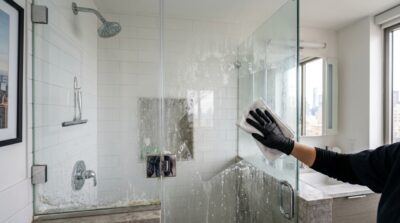
Clean the inside of the glass, the frames and the sills. Vacuum the tracks, which collect a summer’s worth of soot and dust in city apartments. If your windows open safely from inside, clean the outer surface of the lower sash too. Anything beyond that, especially on higher floors, is a job for professionals with the right equipment. A professional window cleaning in the fall means you get clear glass for the darkest months of the year.
While you’re at it, check for drafts. Hold your hand near the edges of windows on a windy day. Gaps in weatherstripping let in cold air, dust and sometimes pests. In a rental, this is usually the landlord’s responsibility, so report drafts early in the season.
Prepare the Entryway for Winter
From November to March, the entryway takes more abuse than any other part of the apartment. Setting it up properly in the fall will save you a lot of cleaning.
Put down a good doormat system. A coarse mat outside the door scrapes off grit, and an absorbent mat inside catches moisture and salt. Wash or replace them regularly through the winter.
Add a boot tray. A waterproof tray by the door gives wet boots a place to drain without soaking the floor. It’s the single most effective way to protect hardwood floors from road salt.
Make space for wet gear. Hooks for coats, a spot for umbrellas and somewhere for bags to go when you walk in all help keep wet, dirty items from being dropped on floors and furniture.
Keep a towel handy. A small towel by the door is useful for wiping off boots, umbrellas and pets coming in from the rain or snow.
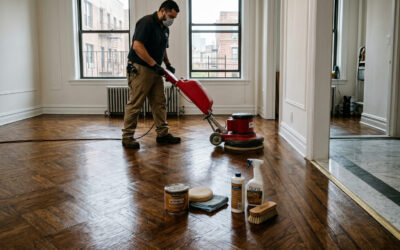
Protect hardwood from salt. Road salt leaves a white film on wood floors and can dull the finish over time. Wipe it up promptly with a damp mop and a solution of warm water and a small amount of white vinegar, then dry the floor. Don’t let salt residue sit for days.
Swap Out Your Closets
The fall wardrobe change is a good opportunity to clean closets and storage spaces, which are often neglected the rest of the year.
Clean summer clothes before storing them. Wash or dry clean everything before it goes into storage. Stains that aren’t visible now can set and become permanent over months, and food residue or sweat on fabric attracts moths and other pests.
Store clothes properly. Use breathable storage bags or bins with lids. Avoid storing clothes in plastic dry-cleaning bags, which can trap moisture. Cedar blocks or lavender sachets help deter moths.
Clean the closet itself. With clothes out of the way, vacuum the floor and corners, wipe down shelves and check for any signs of moisture or pests.
Check your winter clothes. Before wearing winter clothes for the first time, look for moth damage, and wash or air out items that have been in storage.
Declutter as you go. If you didn’t wear something this summer, consider whether you need to store it until next year. Space in a NYC apartment is too valuable to spend on things you don’t use.
Switch Your Bedding
Fall is also the time to switch to heavier bedding.
Wash duvets, comforters and blankets before using them. Bedding that’s been stored for months collects dust and can develop a musty smell. Many duvets and comforters are too large for home washers or small laundromat machines. The large-capacity machines at many laundromats, or a wash-and-fold service, can handle them.
Wash or replace pillows. Check the care labels. Many pillows can be washed, and those that can’t should be replaced every few years.
Vacuum the mattress. Use an upholstery attachment to vacuum the top and sides of your mattress, then let it air out for a few hours if possible.
Consider mattress and pillow covers. Covers that can be removed and washed help protect bedding from dust mites, which thrive in warm, humid bedding during the winter.
Keep Pests From Moving In
Fall is when mice start looking for warm places to spend the winter. In NYC apartment buildings, where units share walls, pipes and utility lines, it doesn’t take much for them to find a way in.
Keep food sealed. Store dry goods in airtight containers. Don’t leave food out on counters overnight.
Clean up crumbs promptly. Wipe counters, sweep kitchen floors and clean under appliances regularly.
Take out trash regularly. Use a trash can with a tight-fitting lid.
Look for entry points. Check under sinks, behind appliances and in closets for gaps around pipes and holes in walls. Report them to your landlord, who is responsible for pest prevention in most buildings.
Watch for signs. Droppings, gnaw marks and scratching sounds in walls are signs that pests have arrived. Report them early, since infestations are much easier to deal with before they grow.
Get Ready for the Holidays
For many New Yorkers, the stretch from Thanksgiving through New Year’s is the busiest time of year for hosting. A bit of preparation makes it much easier.
Deep clean the kitchen before the cooking starts. Holiday cooking puts more demand on your oven, stovetop and refrigerator than any other time of year. Cleaning the oven, degreasing the range hood and clearing out the refrigerator in early November gives you a clean start.
Prepare guest spaces. If guests will be staying over, wash spare bedding, clean the bathroom thoroughly and clear some storage space for their things.
Plan for extra cleaning. More guests and more cooking mean more dishes, more trash and more wear on floors. Build extra time for cleaning into your holiday schedule, or book help in advance, since cleaning services book up quickly in December.
Handle decorations carefully. Real trees drop needles constantly. A tree skirt or sheet under the tree helps, and vacuuming regularly keeps needles from spreading. Candles leave soot on walls and ceilings over time, so trim wicks and keep candles away from walls.
Keeping Things Clean Through the Winter
Once winter settles in, the focus shifts from preparation to maintenance. A few habits make a big difference.
Vacuum more often. With windows closed and the heat on, dust builds up faster. Vacuuming floors and rugs at least weekly, especially in bedrooms and living areas, keeps it under control.
Dust regularly. Pay special attention to surfaces near heating units, where dust tends to collect.
Run bathroom and kitchen fans. With windows closed, fans are the main way to remove humidity and cooking odors. Use them every time you shower or cook.
Clean up after snow days. Wet boots, coats and umbrellas can leave puddles, salt and grime. Deal with them the same day to protect floors and prevent mildew.
Air out the apartment on mild days. On the occasional warm winter afternoon, open windows for 10 or 15 minutes to exchange stale indoor air for fresh air.
Check filters monthly. Heating and air purifier filters work harder during the winter. Check them monthly and clean or replace them as needed.
A Simple Fall and Winter Timeline
September to early October: Clean and store AC units. Clean radiators, vents and heating filters. Test smoke and carbon monoxide detectors. Clean windows inside and, where safe, outside. Check for drafts and report them.
October: Swap closets and store summer clothes. Wash winter bedding. Set up the entryway with mats and a boot tray. Seal food and check for pest entry points.
November: Deep clean the kitchen before holiday cooking. Prepare guest spaces. Plan for holiday cleaning.
December to February: Vacuum and dust weekly. Clean up salt and snow promptly. Monitor humidity and wipe window condensation. Check filters monthly.
March: Start thinking about spring. The end of winter brings its own cleaning needs, from salt residue to stale air, and our realistic NYC spring cleaning checklist picks up where this guide leaves off.
Make Winter Easier on Yourself
Winter in New York is long, and your apartment is where you’ll spend most of it. A thorough fall clean means you start the season with clean air, clean floors and a home ready for guests, holidays and snow days. Small habits through the winter keep it that way.
The work isn’t complicated, but it does take time, and the weeks before the holidays tend to fill up quickly. Whether you tackle it yourself over a few weekends or get help with the bigger jobs, the effort you put in during the fall pays off every day until spring.
Skip the Cleaning. Keep the Weekend.
Book your cleaning in 60 seconds — we handle the rest.
Book Now