Most cleaning advice for busy people assumes the problem is time. Make a schedule, it says. Set aside 20 minutes a day. Assign tasks to each weeknight. All reasonable, and all slightly beside the point for anyone who has come home at 7:45 p.m. after a packed day and a delayed train.
The real problem usually isn’t time. It’s energy. By the time a full-time worker in New York gets home, there’s technically an hour or two before bed. But after the commute, the emails, the grocery stop and dinner, there’s very little left for scrubbing anything. So the cleaning gets pushed to the weekend, the weekend fills up with everything else, and the apartment slowly slides.
This guide takes a different approach. Instead of trying to find more time for cleaning, it focuses on making cleaning require less of you: less effort, fewer decisions and fewer big sessions. It’s built for people with demanding jobs, long commutes and weekends they’d like to actually enjoy.
Why Cleaning Falls Apart When You’re Busy
Understanding why things slip helps you design a system that won’t.
Decision fatigue. After a day of making decisions at work, deciding what to clean, how and when feels like one more task. When cleaning requires a decision, it usually loses.
Everything gets saved for the weekend. It seems efficient to do it all on Saturday, but a whole week’s mess takes hours to clear. And every weekend, cleaning competes with friends, errands, rest and everything else you didn’t have time for during the week.
Small messes compound. A dish left in the sink becomes three. A jacket on the chair becomes a pile. By Thursday, the apartment feels chaotic, which makes it even harder to start.
Standards set too high. If your idea of cleaning is a spotless apartment every time, even a small task feels like the start of a big project. That makes it easier to do nothing.
The apartment works against you. When supplies are hard to reach, surfaces are cluttered and there’s no obvious place for things to go, every cleanup takes longer than it should.
A good system addresses all of these: fewer decisions, smaller and more frequent tasks, realistic standards and an apartment set up to stay clean.
Stop Mess Before It Starts
The easiest cleaning is the cleaning you never have to do. A few changes reduce how much mess your apartment produces in the first place.
Shoes off at the door. City sidewalks carry dirt, grit and grime that ends up on your floors. A shoes-off rule, with a small rack or tray by the door, cuts down floor cleaning dramatically.
A landing spot for everything you carry. Hooks for coats and bags, a bowl for keys and a spot for mail keep the entryway from becoming a pile. Most apartment clutter starts at the door.
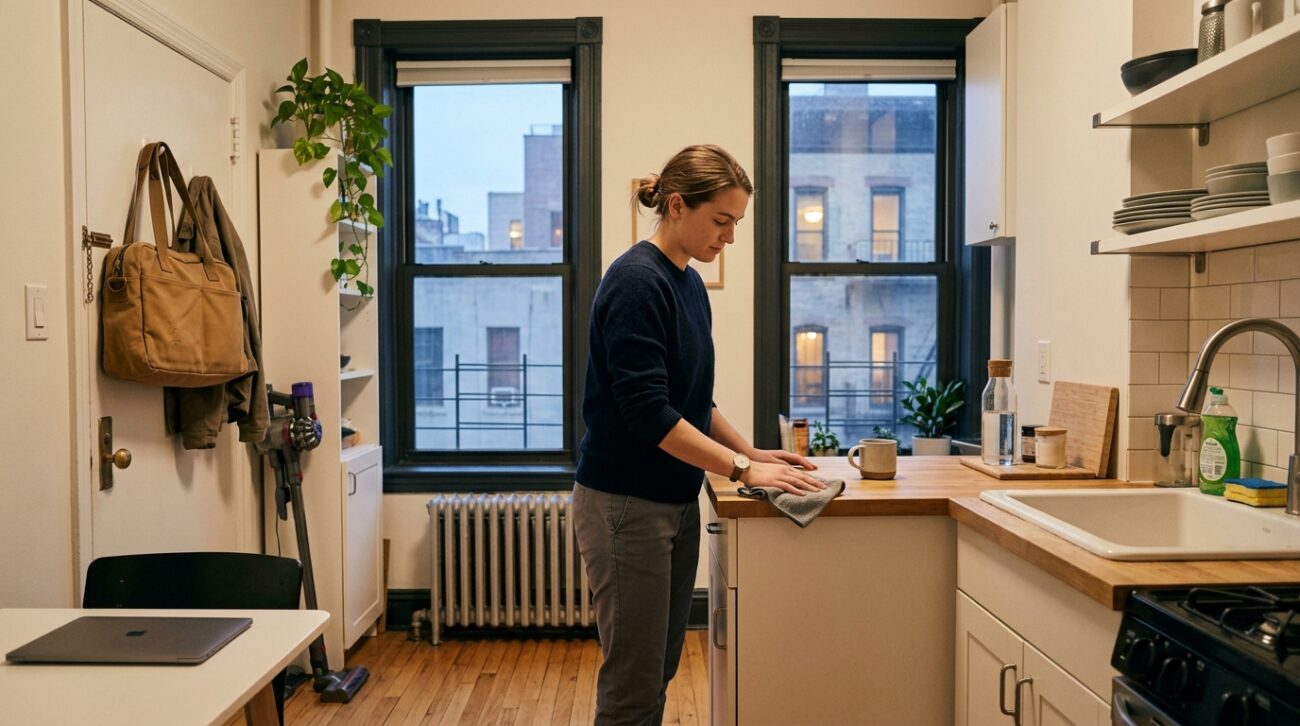
Fewer things on surfaces. Every object on a counter, dresser or table is something to move and clean around. Clear surfaces take seconds to wipe. Keep only what you use daily out in the open.
Put trash cans and hampers where mess happens. A small trash can in the bathroom, bedroom and near your desk, and a hamper where you actually take off your clothes, mean things end up where they belong instead of on the floor.
Keep the tools where you need them. Stash a spray cleaner and cloth under the bathroom sink, another under the kitchen sink and a small handheld vacuum somewhere accessible. If cleaning supplies are in a closet across the apartment, quick cleanups won’t happen.
Squeegee and wipe as you go. A squeegee in the shower and a cloth by the sink make it easy to keep glass and faucets clean with a few seconds of effort each day, instead of scrubbing buildup later.
Attach Cleaning to Things You Already Do
The most reliable way to build cleaning habits without extra willpower is to attach them to things you already do every day. You don’t have to remember or decide. The existing habit becomes the reminder.
While your coffee brews, empty the dishwasher or put away the dishes from the drying rack.
Right after you shower, squeegee the glass and hang up your towel.
While you brush your teeth, give the bathroom sink and faucet a quick wipe.
When you leave for work, take the trash or recycling with you.
While dinner is cooking, wash the prep dishes and wipe the counter.
After you eat, put your dishes in the dishwasher or wash them right away.
When you get home, put your keys, bag and coat in their place instead of dropping them on the nearest surface.
Before bed, do a quick reset of the room you spent the most time in.
None of these takes more than a couple of minutes, and none requires a separate decision to clean. Over a week, they add up to a surprising amount of maintenance.
The 10-Minute Evening Reset
If you add only one new habit, make it this one. Every evening, spend 10 minutes putting the apartment back in order. Set a timer if it helps. When it goes off, you’re done.
A typical reset covers:
- Dishes washed or loaded, and the kitchen counter wiped
- Things returned to their places: clothes in the hamper or closet, bags hung up, shoes at the door
- Surfaces cleared: coffee table, dining table, nightstand
- Trash taken out if it’s full
- A quick look at the floor for anything that needs picking up
The goal isn’t cleaning, exactly. It’s resetting, so that each morning starts with an apartment in reasonable order rather than yesterday’s mess. It also means the weekend is for actual cleaning rather than digging out from a week of clutter.
Match Tasks to Your Energy
Some evenings you’ll have energy to spare. Others you’ll barely make it to the couch. Instead of a rigid schedule that fails on low-energy days, keep a mental menu of tasks for different energy levels.
Two-minute tasks, for days when you’re exhausted. Load the dishwasher. Wipe the bathroom sink. Take out the trash. Put away one pile of clothes. Doing even one of these keeps things from sliding.
Ten-minute tasks, for ordinary evenings. Vacuum the main room. Clean the toilet. Wipe down the stovetop and kitchen counters. Change the sheets. Sort the mail.
Thirty-minute tasks, for evenings when you have energy. Clean the whole bathroom. Mop the floors. Clean out the refrigerator. Do a load of laundry from start to finish.
When you have energy, use it. When you don’t, do a two-minute task and let the rest wait. The system flexes with your life instead of breaking the first busy week.
Plan Around Your Actual Schedule
Many New Yorkers no longer work the same schedule every day. Hybrid work, travel and late nights all change how much time and energy you have. Your cleaning plan should reflect that.
Office days and home days. If you work from home a few days a week, those days offer small gaps that office days don’t. A load of laundry can run during a meeting. The dishwasher can be emptied during a coffee break. The bathroom can be cleaned during lunch. Save bigger tasks for home days and keep office days to the evening reset.
Keep in mind that working from home creates more mess. When you’re home all day, you use the kitchen more, walk the same floors more and fill the trash faster. Plan for a bit more maintenance on those days.
Travel weeks. Before a trip, take out the trash, clear the refrigerator of anything that will spoil and run the dishwasher. Coming home to a clean apartment after a trip is much better than coming home to one that smells like whatever you left behind.
Busy seasons. Most jobs have periods that are more demanding than others. During those stretches, drop to the bare minimum: dishes, trash, the evening reset. Accept that some things will wait, and catch up when things calm down.
A Weekly Plan That Doesn’t Eat Your Weekend
Daily habits keep things in order, but some cleaning still needs to happen weekly. The trick is to spread it out so no single day carries the load.
One approach is to assign one bigger task to each of a few weeknights, keeping each to about 20 or 30 minutes:
- One evening: clean the bathroom
- Another evening: vacuum and mop the floors
- Another evening: laundry and changing the sheets
- Another evening: kitchen deep wipe and refrigerator cleanout before grocery day
That leaves the weekend mostly free, with maybe an hour for dusting and anything that got skipped. If you want to go further with scheduling, our guide on how to make a cleaning schedule covers how to organize tasks by frequency.
The specific days don’t matter much. What matters is that each task has a place in the week, so you’re not deciding every evening what needs to be done.
What This Looks Like in a Real Week
Here’s how it might play out for someone living in a one-bedroom in Crown Heights, commuting to Midtown three days a week and working from home the other two.
Monday, office day. Trash goes out on the way to the subway. Home around 7:30, dinner, dishes loaded while the pasta water boils, 10-minute reset before bed. Nothing else.
Tuesday, home day. A load of laundry runs during the morning standup and gets folded at lunch. The bathroom gets a proper 20-minute clean in the late afternoon, between the last call and dinner.
Wednesday, office day. Rough day, late train. Two-minute tasks only: dishes and a wipe of the kitchen counter. The reset gets skipped, and that’s fine.
Thursday, office day. Quick vacuum of the main room after dinner, since that takes 10 minutes and Wednesday left a little catching up to do.
Friday, home day. Refrigerator cleanout before the weekend grocery delivery, then sheets into the wash. The evening reset puts the apartment in good shape for the weekend.
Weekend. Twenty minutes of dusting on Saturday morning, then nothing. The rest of the weekend belongs to the person, not the apartment.
Total time across the week is maybe three hours, broken into pieces small enough that none of them feels like a chore session. That’s the whole idea.
Lower the Bar in the Right Places
Not everything in your apartment needs to be perfect. Deciding where you’ll accept “good enough” frees up time and energy for the things that matter most.
Focus on what affects daily life. The kitchen and bathroom affect hygiene and comfort. A clean bed makes a difference to sleep. These deserve attention.
Let the rest slide a bit. The baseboards can wait a few weeks. Dusting the tops of door frames isn’t urgent. The closet doesn’t need to be perfectly organized.
Use shortcuts. Microfiber cloths clean most surfaces with just water. A cordless vacuum is faster to grab than a heavy one. Disposable wipes for the bathroom sink make quick cleanups easy. None of these is the most thorough option, but all of them get used more often.
Accept a lived-in apartment. A home that’s generally clean and comfortable, with a few things out of place, is a success. The goal is a place you can relax in, not a showroom.
Outsource What You Can
In New York, many services exist specifically because people don’t have time to do everything themselves. Outsourcing some chores isn’t a luxury for everyone, but it’s often more affordable than people assume, and it can free up hours every week.
Laundry. Wash-and-fold services, often with pickup and delivery, are common throughout the city. For people without in-unit laundry, they save hours of hauling bags to the laundromat and waiting for machines.
Groceries. Grocery delivery saves the trip and the carrying, especially if you live in a walk-up.
Meal prep. Meal kits or prepared meals cut down on cooking time and kitchen cleanup on busy weeknights.
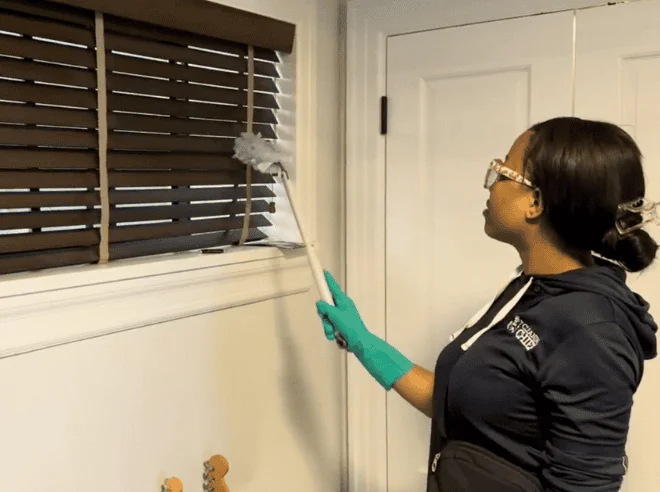
Cleaning. A regular cleaning service takes care of the bigger tasks, like bathrooms, kitchens, floors and dusting, so your part is limited to daily habits. For many full-time workers, a visit every week or two means weekends are completely free. If you’re thinking about a recurring arrangement, our breakdown of whether a recurring cleaning membership is worth it for busy NYC professionals walks through the numbers.
A useful exercise is to estimate how many hours a week you spend on cleaning and chores, and consider what that time is worth to you. For many people, handing off even one or two of these tasks changes how the whole week feels.
Make Professional Cleaning Work for You
If you do hire help, a few habits make it more effective.
Keep up the daily habits. Professional cleaning handles deeper tasks. Daily habits like dishes, trash and the evening reset keep the apartment livable in between.
Tidy before the visit. Cleaners can clean surfaces, but they can’t decide where your things go. A quick pickup the night before means the visit is spent on cleaning rather than moving piles.
Communicate your priorities. If you care most about the kitchen and bathroom, say so. If there’s something you’d like done every time, make sure the cleaner knows.
Choose a frequency that fits your life. A busy household with pets or kids may need weekly visits. A single person who travels a lot may be fine with every two weeks. A regular standard cleaning covers the routine work that tends to pile up when your schedule is full.
When You’ve Fallen Behind
Everyone has weeks when things fall apart. A big project at work, a trip, an illness or just a stretch of low energy can leave the apartment in rough shape. Here’s how to recover without losing a whole weekend.
Start with the basics. Take out the trash, do the dishes and clear the kitchen counter. These three things make the biggest difference to how an apartment feels.
Do one room at a time. Don’t try to fix everything at once. Pick the room that bothers you most, get it back in order and stop there if you need to.
Use a timer. Set a timer for 20 or 30 minutes and see how much you can get done. Often, it’s more than you expect, and stopping when the timer goes off keeps it from becoming overwhelming.
Get help if you need it. A one-time deep clean can reset an apartment that’s gotten away from you, giving you a clean slate to start your daily habits again.
Don’t beat yourself up. Falling behind is normal, especially with a demanding job. What matters is getting back to the routine, not being perfect.
A Clean Apartment Without Losing Your Life
Keeping an apartment clean while working full time in New York isn’t about finding more hours in the day. It’s about making cleaning require less: less mess to begin with, fewer decisions, smaller tasks spread through the week and help where it makes sense.
Build a few habits around things you already do. Take 10 minutes each evening to reset. Match tasks to your energy. Accept “good enough” in the places that don’t matter. And consider handing off the bigger tasks if it means getting your weekends back. The result is an apartment that stays comfortable most of the time, without taking over the little free time you have.
Tired of Dealing With This Yourself?
Let our NYC pros handle it — fast, thorough, done right the first time.
Book a Cleaning