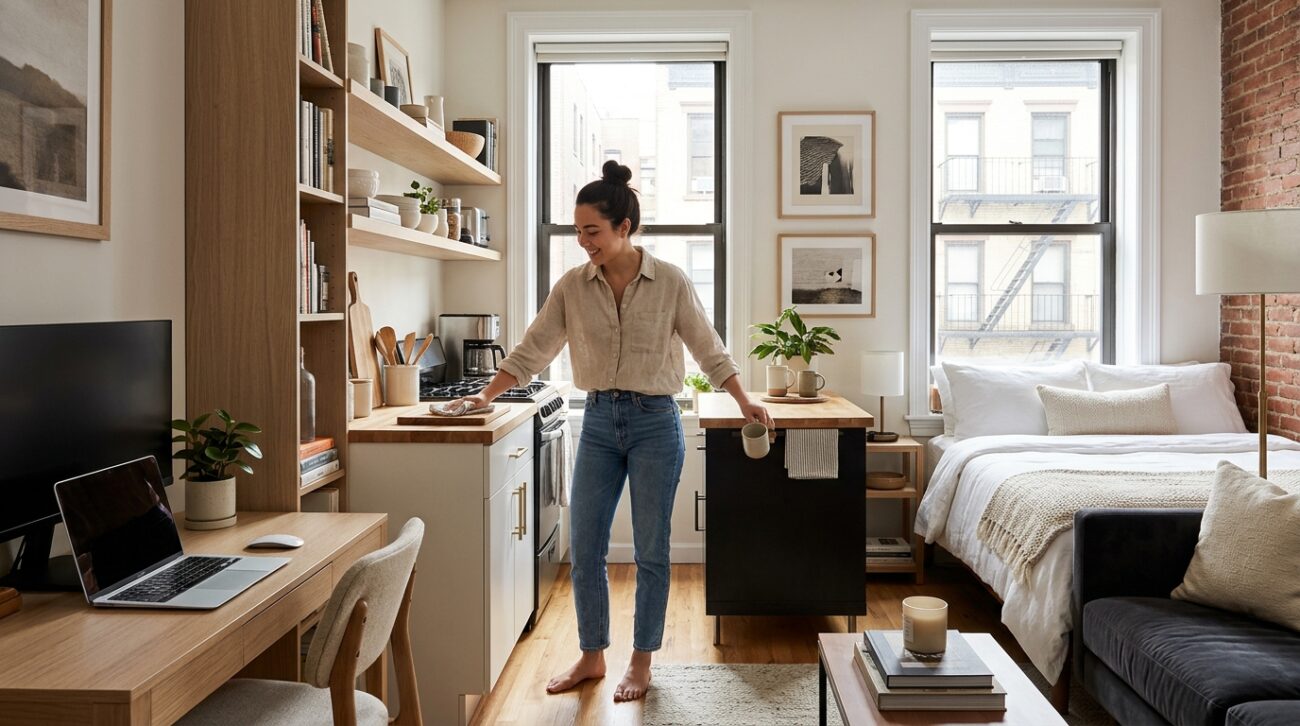
A studio apartment in New York is a lot of rooms pretending to be one. It’s a bedroom, living room, dining room, home office and, often, a kitchen, all sharing the same few hundred square feet and the same air. The bed is ten feet from the stove. The desk is next to the dresser. The front door opens more or less directly into everything.
That setup has real advantages. Studios are affordable by Manhattan and Brooklyn standards, easy to heat and quick to clean in theory. In practice, they have a habit of feeling messy faster than larger apartments, even when they aren’t actually dirtier. When every part of your life happens in one room, every dish, sock and stack of mail is part of the view.
This guide covers what makes studios different to clean, how to organize the space so it stays under control, which problems are specific to one-room living and how to handle them, and what to expect when you bring in professional help.
Why Studios Feel Messy So Fast
A studio doesn’t generate more mess than a one-bedroom. It just has nowhere to put it.
There’s no closing a door. In a larger apartment, an unmade bed or a messy desk can sit behind a closed door. In a studio, everything is visible from everywhere.
Every activity shares the same space. Cooking, sleeping, working and relaxing all happen within a few steps of each other. Mess from one activity spills into the space used for the next.
Small surfaces fill up fast. With limited counter space, a single cutting board or a couple of dishes can cover most of the kitchen. A few items on the coffee table can make the whole room feel cluttered.
The air is shared. Cooking smells, shower humidity and dust all circulate through the same space. There’s no separate room for any of it to stay in.
Storage is tight. Many NYC studios have one closet, or sometimes none. Things that would normally be put away end up living in the open.
The upside is that a studio is also the fastest apartment in New York to turn around. When it’s under control, it looks great, and a small amount of effort goes a long way.
Divide the Room Into Zones
The single most effective strategy for a studio is to treat it as several distinct areas, even though there are no walls between them. Zones make it easier to keep each area tidy, easier to clean and easier to relax in.
A typical studio has four or five zones:
- Sleeping: the bed and nightstand
- Living: the sofa, coffee table and TV area
- Working: the desk or wherever you use your laptop
- Kitchen: the cooking and food prep area
- Entry: the space just inside the front door
Rugs, shelving, furniture placement and lighting can all help define zones visually. A bookshelf between the bed and the sofa, or a rug that marks off the living area, makes the room feel more organized even before you clean anything.
Zones also help with the most common studio problem: things migrating. When each item has a home in a specific zone, it’s much easier to notice when it’s out of place and to put it back. Dishes don’t end up on the nightstand. Laptops don’t end up in bed. Mail doesn’t end up on the kitchen counter.
For a full cleaning checklist that adapts to studios and other NYC layouts, see our guide to the NYC apartment cleaning checklist that actually fits your space.
Control Kitchen Smells and Grease
In a studio, the kitchen isn’t a separate room. What you cook ends up in the air you sleep in, and the grease that escapes the stove settles on nearby furniture, curtains and bedding.
Use the range hood every time you cook. Many studio kitchens have recirculating hoods rather than ones that vent outside, but they still capture some grease and odors if the filters are clean. Wash the metal filter monthly and replace the charcoal filter when it’s due.
Open a window when you can. Even a few minutes of fresh air after cooking makes a big difference.
Choose cooking methods carefully. Frying, searing and anything with strong smells, like fish or heavy spices, fills a studio quickly. Some people save those dishes for when they can ventilate well.
Wipe up right away. Grease and splatter are much easier to clean when they’re fresh. Wipe the stovetop and nearby counters after every use.
Keep fabrics away from the stove. Curtains, dish towels and upholstered furniture close to the kitchen absorb cooking smells. If you can, position soft furniture away from the cooking area.
Take out food trash promptly. Food waste in a studio smells more quickly than in a larger apartment. Use a lidded bin and take it out often, especially in summer.
Manage Moisture
A studio’s bathroom is usually small, often without a window, and only a few feet from where you sleep. Humidity from showers can spread into the main room, where it settles on walls, windows and fabrics.
Run the bathroom fan. Turn it on during showers and leave it on for at least 20 minutes afterward.
Keep the bathroom door open after showering, if the fan is weak and the main room has a window you can open. Letting the moisture spread and escape is better than trapping it in a small bathroom where it can cause mildew.
Hang towels to dry properly. A towel hook in the bathroom is fine if the bathroom dries well. If it doesn’t, hang towels somewhere with better airflow.
Be careful with indoor drying. Drying laundry on a rack inside a studio adds a lot of moisture to a small space. Open a window, run a fan, or dry clothes at a laundromat when possible.
Watch windows in winter. Condensation on cold windows is common in studios. Wipe it off in the morning to prevent mildew on sills and frames.
Keep the Bed Clean, Since It’s Also the Couch
In many studios, the bed is also the main seating. People eat, work and watch TV on it. That means bedding gets dirtier faster than it would in a separate bedroom.
Wash sheets every week. If your bed doubles as a couch, weekly washing is the minimum.
Use a throw or cover during the day. A washable throw or bedspread over the bed protects sheets from crumbs, dust and daytime use.
Make the bed every morning. A made bed instantly makes a studio look tidier, and it keeps dust and crumbs off the sheets.
Vacuum the mattress regularly. Use an upholstery attachment every few weeks to remove dust and skin cells.
Keep food off the bed. It’s tempting, especially when the bed is the most comfortable seat in the apartment. Crumbs in bedding attract pests and are hard to remove completely.
Make Storage Work Harder
Clutter is the number one enemy of a clean studio. Good storage keeps things out of sight and surfaces clear.
Use vertical space. Wall shelves, tall bookcases and hooks take advantage of height without using floor space.
Choose furniture with storage. A bed with drawers, an ottoman with space inside or a coffee table with shelves can hold a lot without adding clutter.
Use the space under the bed. Lidded bins keep stored items dust-free and make it easier to vacuum underneath.
Add storage to doors. Over-the-door organizers on the bathroom or closet door hold shoes, cleaning supplies and accessories.
Keep surfaces as clear as possible. Clear counters, a clear coffee table and a clear nightstand make a studio look twice as clean and make wiping surfaces quick.
Declutter regularly. In a studio, there’s no room for things you don’t use. A quick review every season keeps things manageable.
Choose Your Tools and Products Carefully
In a studio, cleaning supplies compete for space with everything else. A small, versatile kit works best.
A cordless stick vacuum is easy to store and quick to grab for small messes.
Microfiber cloths clean most surfaces with just water or a small amount of cleaner, and they take up almost no space.
An all-purpose cleaner handles most surfaces, so you don’t need a separate product for every job.
A spray mop with washable pads replaces a bulky mop and bucket.
A small caddy keeps everything together and portable.
Product choice matters more in a studio, too. Strong fumes from cleaning products fill a small space quickly and linger where you sleep. Many people living in studios prefer gentler, low-fragrance products. Our guide to eco-friendly cleaning products that work in small NYC spaces covers what actually performs.
Clean in the Right Order
Because a studio is one open space, dust and debris from one area can easily land in another. Cleaning in the right order saves time and prevents having to redo work.
Start high, finish low. Dust shelves, the tops of cabinets and light fixtures first, then surfaces, then floors.
Start with the kitchen and bathroom. These areas need the most effort and often involve products that need time to work. Apply cleaner to the shower or stovetop, then move on while it does its job.
Work from the far side toward the door. Clean the sleeping area and living area, then the kitchen, then the entry. Finish with the floors, starting at the far wall and ending at the door.
Change the bedding before you vacuum. Shaking out sheets and blankets releases dust and lint, which then settle on the floor. Vacuum afterward to pick it up.
A Realistic Studio Routine
Studios respond well to short, frequent cleaning rather than long sessions.
Every day, about 10 minutes:
- Make the bed.
- Wash dishes or load the dishwasher.
- Wipe the stovetop and counters after cooking.
- Put things back in their zones.
- Take out trash if it’s full.
Every week, about an hour:
- Clean the bathroom.
- Vacuum and mop the floors.
- Dust surfaces.
- Wash the sheets.
- Clean the kitchen more thoroughly, including the sink and appliance fronts.
Every month:
- Clean the range hood filter.
- Vacuum the mattress and upholstered furniture.
- Clean inside the microwave and refrigerator.
- Wipe down doors, light switches and baseboards.
Every season:
- Deep clean the kitchen and bathroom.
- Wash curtains and throws.
- Declutter closets and storage.
- Clean windows and sills.
Studio Variations: Alcoves, Lofts and Murphy Beds
Not every NYC studio is a simple rectangle. The layout changes where cleaning attention needs to go.
Alcove studios. An L-shaped studio with a sleeping nook gives you a natural zone for the bed. The alcove often has less airflow than the main room, so dust and humidity can build up there. Vacuum under and around the bed regularly, and keep the alcove from becoming a storage overflow area.
Loft beds. Lofted beds free up floor space, but they come with a high sleeping area close to the ceiling, where warm air, dust and cooking vapor collect. Dust the loft frame and the ceiling area around it, wash bedding often and make sure the space under the loft doesn’t turn into a dumping ground for everything that doesn’t have a home.
Murphy beds and sofa beds. Beds that fold away keep the room open during the day, but the mattress spends hours pressed into a cabinet or folded frame with little airflow. Leave it open for a while after getting up so it can air out, and vacuum the mattress and the inside of the cabinet or frame regularly.
Micro-units and tiny studios. In the smallest apartments, under 300 square feet, every surface is multi-purpose. The same table may be desk, dining table and kitchen counter. Wipe it down between uses, especially between cooking and working, so food residue doesn’t end up on your laptop and papers.
Quick Fixes for Common Studio Problems
The room smells stale. Air it out daily for a few minutes if possible, run the bathroom and kitchen fans, and wash fabrics like throws, curtains and cushion covers, which hold on to odors.
The kitchen counter is always full. Store appliances you don’t use every day in a cabinet, and use a wall rail or magnetic strip for utensils and knives.
Dust keeps building up under furniture. Choose furniture on legs high enough to fit a vacuum underneath, or lift and vacuum under low pieces every couple of weeks.
Pet hair is everywhere. In a studio, a pet uses the entire apartment. Brush pets regularly, vacuum often and keep a lint roller near the door and the bed.
Laundry piles up in view. A hamper with a lid, placed in a corner or closet, keeps dirty clothes out of sight until laundry day.
Is Standard Cleaning Enough for a Studio?
Many people assume a studio is too small to need professional cleaning. But because studios get messy quickly and are used for everything, a regular professional clean can make a big difference.
For most studios, a standard cleaning covers the essentials: the kitchen, bathroom, floors, dusting and general tidying. Because the space is small, the visit is usually quick, which also makes it one of the more affordable ways to have a professionally cleaned home in New York. For details on what a regular visit typically includes, see our standard cleaning page.
There are times when a studio needs more than a standard clean:
- Grease buildup. Kitchen grease can build up on cabinets, walls and nearby furniture, especially in studios where the kitchen is part of the main room.
- Moving in or out. An empty studio needs a thorough clean inside cabinets, appliances and closets.
- After a long gap. If the apartment hasn’t been cleaned professionally in a while, a deep clean resets everything before regular maintenance begins.
- Specific problems. Mildew, persistent odors or pet hair in upholstery may need more attention than a standard visit allows.
For regular upkeep, many studio residents find that a professional cleaning every two weeks, combined with their own daily habits, keeps the apartment in good shape without much effort.
Make the Most of Small Space
A studio will never have the room of a larger apartment. But it does have one big advantage: it’s small enough to be completely clean in a short amount of time. With clear zones, good storage, smart ventilation and a few daily habits, a studio can feel spacious, calm and comfortable, even in a city where square footage is at a premium.
The key is consistency. A studio left alone for a week starts to feel chaotic. A studio that gets 10 minutes of attention every day stays a pleasure to come home to. And in a city where most of your life happens outside your front door, coming home to one calm, clean room is worth more than the square footage suggests.
Get Your Custom Cleaning Quote — Free
Every NYC apartment is different. Get pricing tailored to your space in minutes.
Get My Free Quote