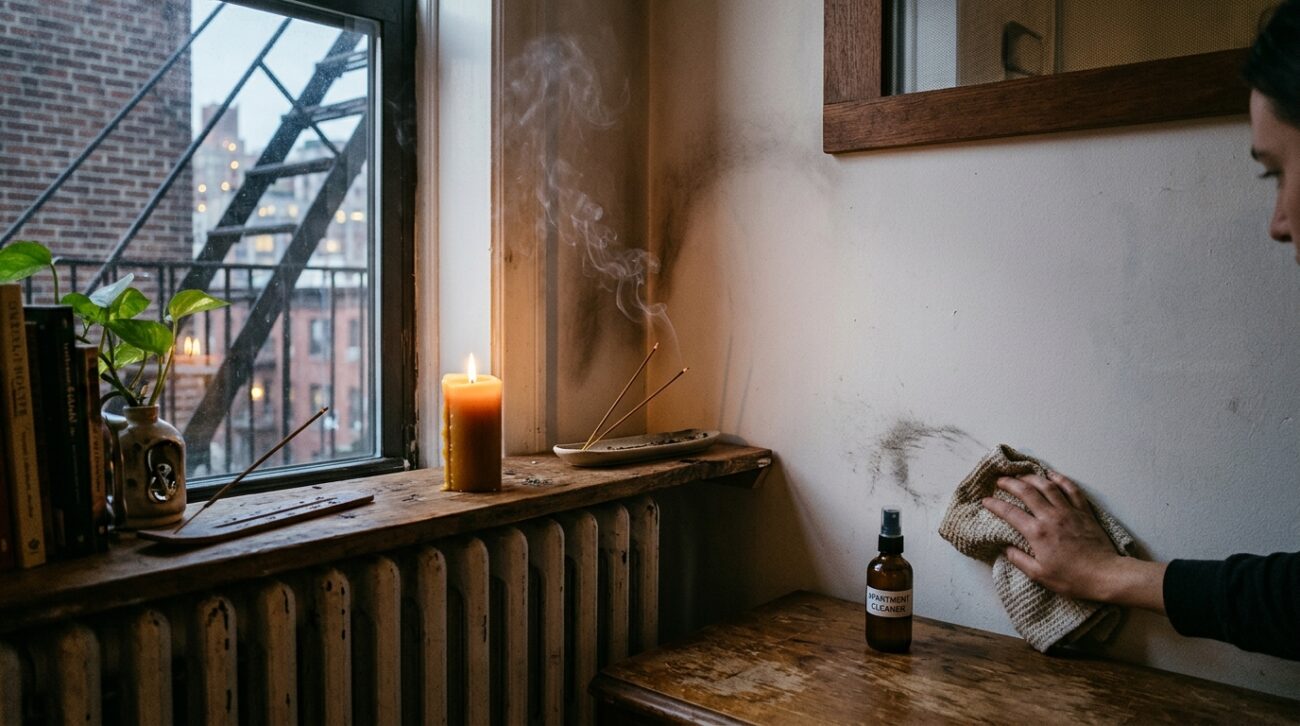
You run your finger along the shelf above the incense holder and it comes up gray. Not fluffy dust-bunny gray. A fine, slightly tacky gray that doesn’t quite wipe off with a dry paper towel. Then you look up and notice the ceiling over the living room candle has a faint dark smudge, like a thumbprint someone pressed there while you weren’t looking.
Both are the same story. Burning things indoors puts material into the air, and that material has to land somewhere. In a big suburban house with high ceilings and a dozen windows, most of it drifts away or spreads thin enough that nobody notices. In a New York apartment, it lands on your stuff.
This guide covers what that residue really is, why city apartments collect it faster, where to look for it (it’s rarely only on the shelf), how to remove it without smearing it deeper into the paint, and how to burn less of it in the first place. It also covers the question people usually ask second: whether burning incense and candles indoors is something to worry about.
What the gray dust actually is
The stuff on your shelf isn’t one thing. It’s three, and they behave differently.
Ash is the easy one. It’s the powdery gray residue that falls off a burning stick or cone. Most of it lands within a few inches of the holder, and a damp cloth takes care of it.
Soot is the smoke itself. Burning incense and candles produce very fine particles, far smaller than a speck of household dust. They don’t drop straight down. They float for hours, ride whatever air current is moving through the room, and settle on horizontal surfaces everywhere: shelves, TV tops, window sills, the top of the refrigerator in the next room.
Condensed film is the part most people miss. Smoke carries oily, resinous compounds that cool as they travel and stick to surfaces as a thin, slightly tacky layer. It’s often faintly yellow or brown, and it builds slowly. This is why a surface can look clean and still feel a little grabby, and why ordinary dust seems to pile up faster near the spot where you burn things. The dust isn’t being attracted by magic. It’s sticking to a film that wasn’t there before.
That film also explains why a dry duster or a feather duster makes things worse. A dry tool pushes the particles around and drags the sticky layer across the surface in streaks. Anything that’s going to remove the residue needs to be either slightly damp or specifically designed to lift soot (more on that below).
One way to tell what you’re dealing with: wipe a small area with a damp white cloth. Gray powder that comes up easily is mostly ash and loose soot. A cloth that comes up with a brownish or yellowish tint, and a surface that feels smoother afterward, means there was a film.
Why a New York apartment collects more of it
The same stick of incense does not leave the same mess in every home. Three things about city apartments turn up the volume.
Less air to dilute the smoke. A 550 square foot one-bedroom holds a fraction of the air a typical suburban house does. The smoke from one cone has far less room to thin out, so the concentration is higher, and so is what settles out.
Closed windows for half the year. From November through March, windows in most NYC apartments stay shut, and a lot of them are old enough that they barely open anyway. With nothing moving smoke outside, it stays in the apartment and works its way into everything.
Heat that moves smoke around. Steam radiators and baseboard heat create steady convection currents, warm air rising and cool air sinking. Soot rides those currents. The result is a pattern many tenants notice without understanding: the residue concentrates above radiators, along the top of walls, and on cold surfaces like exterior walls and window glass.
That last one has a name. Soot particles are pushed toward cold surfaces by the temperature difference in the air, a process that cleaning professionals call thermal tracking or, informally, ghosting. It’s why you sometimes see dark stripes on a wall that line up perfectly with the framing behind it. The studs and the lath conduct heat differently from the empty space between them, so the wall surface has slightly colder and slightly warmer bands, and the soot lands on the cold ones. In pre-war buildings with old plaster over wood lath, this can leave a faintly striped wall. It also happens in corners where an exterior wall meets the ceiling, which is usually the coldest spot in the room.
If you’ve ever wondered why the inside of your bedroom window feels slightly gritty or looks hazy even though you never touch it, that’s the cold-glass effect at work.
Candle soot is its own problem
Incense and candles both leave residue, but candle soot has a different cause, and it’s more fixable.
A candle that burns cleanly produces mostly water vapor and carbon dioxide. Soot appears when the flame isn’t getting enough oxygen or the wick is feeding it more fuel than it can burn. In practice that means one of a few things:
- The wick is too long. A tall wick makes a tall, flickering flame that gives off a thin black ribbon of smoke. Most candle makers recommend trimming it to about a quarter inch before every lighting.
- There’s a draft. A flame bent sideways by air from a window, fan, or vent burns unevenly and smokes. In an apartment with a leaky window and a radiator running, there’s almost always a draft somewhere.
- The wick is “mushrooming.” If a dark lump has formed on the end of the wick, the candle is overdue for a trim, and it will smoke until you take it off.
- The candle has been burning too long. Most manufacturers suggest burning for no more than about four hours at a stretch. Past that, the wick overheats, the flame grows, and the jar often blackens from the inside.
- The wax is loaded with fragrance and dye. Heavily scented and deeply colored candles burn less cleanly than simple ones. The wax type (soy, beeswax, paraffin) makes a smaller difference than people expect. Wick length and drafts matter more.
Taper candles and tea lights deserve a special mention. Tapers sit in the open and catch every little air current. Tea lights burn in thin metal cups that overheat and smoke near the end of their life. If a dark patch keeps appearing on your ceiling, check which of these you light most often.
How you put the flame out matters too. Blowing a candle out sends a long gray plume of smoke straight up. A snuffer (or dipping the wick into the wax and straightening it) puts the flame out without that plume.
Where to look: the soot map
The shelf above the holder is the obvious spot, and it’s usually the least of it. Smoke residue collects in places you don’t touch every day, which is why people often discover it by accident. Check these:
- The ceiling above where you burn things. Look at it from a low angle with a light held sideways. A shadow or a faint discoloration shows up that you can’t see looking straight up.
- The top corners of walls, especially exterior walls.
- The inside of windows, including the upper part of the glass and the frames.
- Radiator covers and the radiator itself. Residue bakes onto hot metal and can give off a burnt smell all winter.
- Vents, window AC units, and fan blades. Anything that moves air collects what the air is carrying.
- Curtains and any fabric near the burning spot. Fabric traps smoke and holds the smell long after the surface looks fine.
- Books, picture frames, and electronics. Screens and glass-front frames pick up a hazy film that can look like a smudge but won’t buff out dry.
- Light fixtures and shades. Heat pulls smoke upward, and fixtures sit right in the path.
- Upholstery and bedding, especially if you burn incense in the bedroom.
A single inspection, once, is worth the effort. It tells you how far the residue has spread and whether you’re dealing with a quick wipe-down or a bigger cleaning job.
How to clean it, in the right order
The order matters here more than with most cleaning. Soot falls and film smears, so you work from the top down, and you work dry before wet.
What you’ll need: a dry cleaning sponge (sometimes sold as a soot sponge or chemical sponge, a block of vulcanized rubber that lifts dry soot without water), microfiber cloths, dish soap, a bucket of warm water, a vacuum with a brush attachment, rubber gloves, and a drop cloth or old towels for the floor.
1. Open the windows and let the room air out. Fine particles stay airborne while you clean, and disturbing a sooty surface kicks some of them up.
2. Start with the ceiling and the tops of the walls. Gently wipe a small section with the dry cleaning sponge using straight, overlapping strokes. Don’t scrub in circles, and don’t press hard. The sponge crumbles as it works, which is normal. Turn it to a fresh face as each side turns gray. Because it’s dry, it lifts soot without turning it into a wet gray smear that sinks into the paint.
3. Test the paint before going further. Flat and matte paint are the hardest finishes. Rubbing too hard can polish the surface into a shiny patch that shows up in the light. Test somewhere hidden, like behind a bookcase, before you do the whole wall. Eggshell and satin finishes tolerate more.
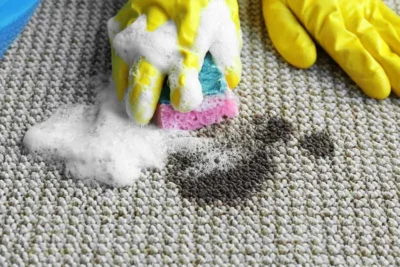
4. Follow with a lightly soapy damp cloth for the film. A few drops of dish soap in a quart of warm water is plenty. Wring the cloth out until it’s barely damp, wipe, then go over the area with a clean damp cloth to remove any soap. Dry it afterward.
5. Do the windows. Warm water with a little dish soap cuts the oily film on glass better than most spray cleaners do. Wipe, then use a squeegee or a dry microfiber cloth to finish. Inside glass is a simple job. The outside is a different story, and our guide to window cleaning in a NYC high-rise or walk-up explains what’s safe to do yourself and what isn’t.
6. Handle radiators when they’re cool. Wait until the heat is off, vacuum the fins with a brush attachment, then wipe the surface with a damp cloth. Cleaning a radiator while it’s hot is both unpleasant and ineffective.
7. Wash what can be washed. Curtains, throw pillow covers, and bedding that sat near the burning spot should go through the machine. For upholstery that has taken on the smell, our piece on couch and upholstery cleaning in NYC covers what you can do at home and when it’s time to call someone.
8. Wipe electronics and glass-front frames with a dry, clean microfiber cloth first, then a barely damp one if a film remains. Never spray liquid directly on a screen or on anything plugged in.
9. Deal with ghosting last. Those faint stripes on exterior walls are the hardest, because the soot has been pushed into the paint instead of resting on it. The dry sponge helps. If a shadow remains after a thorough cleaning, a stain-blocking primer before repainting keeps it from bleeding through the new coat.
A note on what not to do: don’t reach for a wet sponge and a strong cleaner first. Wet-wiping heavy soot turns it into a paste, and a powerful degreaser can strip or dull the finish on walls. Dry first, mild soap second, and stop as soon as the surface is clean.
Burn less soot to begin with
Cleaning is the second half of the job. The first half is cutting the amount of smoke that ends up in the room.
- Give the smoke somewhere to go. Crack a window or turn on the bathroom or kitchen exhaust fan while you burn. Even a small amount of airflow moves a surprising amount of smoke outside.
- Pick a bigger room, not a smaller one. The living room beats the bedroom. A closed bedroom is the worst place to burn anything, because the smoke has nowhere to dilute and you’ll be breathing it all night.
- Keep the flame out of drafts. Away from windows, fans, vents, and the path of the radiator’s warm air.
- Trim the wick every time. Quarter inch, no exceptions.
- Burn for shorter stretches. An hour or two does the job. Four hours straight is how you end up with a black jar and a gray ceiling.
- Choose a holder with a wide, non-flammable base. Ceramic or metal catches ash and falling embers.
- Run an air purifier with a HEPA filter if you burn things regularly. It catches a good share of the fine particles. It won’t remove the gases from smoke, so ventilation still matters.
- Replace filters on window AC units and fans more often if you burn incense or candles regularly, because they pull in and trap the residue.
Is it safe to burn indoors?
This is the question behind the cleaning question, so it deserves a straight answer.
The particles landing on your shelf are the same ones you inhale while the incense burns. Indoor air studies measuring incense burning have found that fine particle levels in a room rise sharply while it burns and stay elevated for a while afterward. Smoke from incense and candles also contains gases you can’t see, including carbon monoxide and, depending on what’s burning, volatile organic compounds. Fine particles can irritate the eyes, nose, and throat, and can aggravate asthma and other breathing conditions.
That doesn’t make every stick a problem. A single stick in a ventilated living room now and then is a very different situation from several hours a day in a closed bedroom. How much, how often, and how much fresh air the room gets all matter. People with asthma, allergies, or other respiratory conditions, older adults, young children, and pets (birds especially) are more sensitive to smoke in general. If someone in the home gets headaches, a cough, or irritated eyes when incense is burning, treat that as information and ask a doctor about it. We’re a cleaning company, not a medical one.
Fire safety is the other piece, and it’s mostly common sense:
- Never leave a burning candle or incense unattended or burn it while you sleep.
- Keep flames at least a foot from curtains, bedding, paper, and anything else that can catch.
- Use holders that can’t burn and won’t tip.
- Keep smoke alarms working. Heavy smoke close to an alarm can set it off, and the fix is ventilation, not removing the battery.
What this means for a rental
Most New Yorkers rent, and that adds a wrinkle. Smoke film is invisible on a single shelf, but it shows up on a bare wall at move-out, often as a yellowish cast on the ceiling or around a window. In New York, a security deposit is capped at one month’s rent and the landlord has to return it, or provide an itemized list of deductions, within 14 days after you move out. Ordinary wear and tear isn’t supposed to come out of it. Whether years of incense counts as ordinary wear is the kind of thing that can turn into an argument, and heavy yellowing is where those arguments tend to start.
The practical move is simple: wipe walls, ceilings, and window glass before you leave, the same way you’d clean the oven and the bathroom. Walls, ceilings and glass are the three spots most likely to give it away.
When a professional clean makes sense
A weekly damp wipe of shelves and sills keeps a light film from building, and a periodic go-over with the dry sponge handles the ceiling. Some situations are bigger than that:
- Months or years of regular burning, with a visible film on walls, ceilings, and baseboards
- Textured or popcorn ceilings, which trap soot and are hard to clean without leaving marks
- Heavy buildup on window glass, fixtures, and radiators in more than one room
- A smoke smell that persists after you’ve cleaned what you can reach
In those cases, a deep cleaning tends to go faster and gets better results than another weekend of scrubbing. If you book one, tell the crew that the residue is from incense or candles. Knowing it’s a smoke film and not regular dust changes which tools and products they reach for.
Quick answers
Can I just repaint over it? Not directly. Paint over smoke film and soot can fail to adhere or let the stain bleed through. Clean first, then use a stain-blocking primer, then paint.
Does an air purifier fix the problem? It reduces how much soot lands on surfaces, and it’s worth running when you burn things. It doesn’t remove gases, and it doesn’t replace opening a window.
How often should I wipe things down? If you burn incense or candles a few times a week, a quick damp wipe of nearby shelves and sills weekly is enough. The ceiling and top-of-wall check can happen every few months.
Why does the dark spot on my ceiling keep coming back after I clean it? Because the cause hasn’t changed. Check the wick length, drafts, and how long the candle burns, and think about where the warm air from your radiator is carrying the smoke.
Does soy or beeswax wax make a difference? Possibly a small one. Wick length and drafts make a much bigger difference, and no candle burns completely soot free.
The short version
The gray film on your shelves is smoke that settled, and in a small, closed-up apartment there’s more of it per stick than there would be anywhere else. Clean from the ceiling down, use a dry sponge before water, and keep the soap mild. Cut the amount that lands in the first place by opening a window, trimming wicks, avoiding drafts, and keeping burn sessions short. If you burn every day in a small room, it’s worth thinking about how much smoke you’re breathing as well as how much is on the shelf.
Skip the Cleaning. Keep the Weekend.
Book your cleaning in 60 seconds — we handle the rest.
Book Now